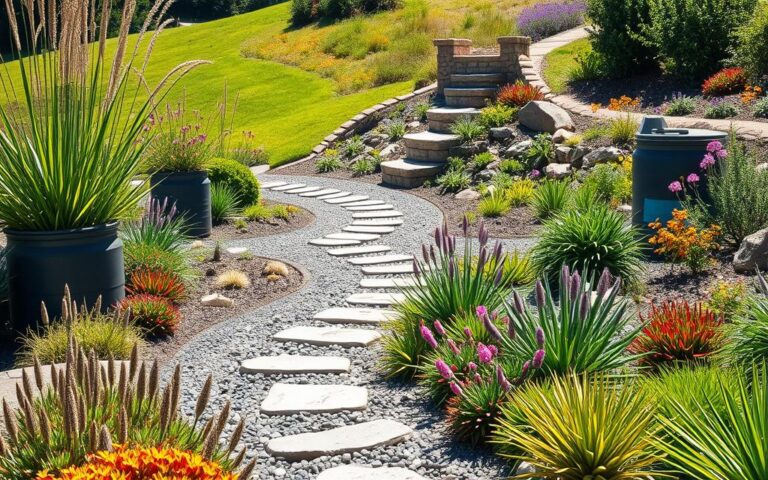

Today, knowing about drought-tolerant plants is key for those wanting a great garden. These amazing plants make your garden look good and save water. By picking these plants, your garden will do well, even in tough times. This helps the environment too. With water becoming scarcer, using these plants is a smart move.
Key Takeaways
- Drought-tolerant plants are essential for sustainable landscaping.
- Incorporating xeriscape plants can enhance your garden’s beauty.
- Water-wise plants help conserve water in arid conditions.
- A diverse selection of hardy plants can thrive even when water is limited.
- Understanding plant needs is crucial for successful gardening.
Introduction to Drought-Tolerant Plants
Drought-tolerant plants are great for making your garden look good while saving water. By using these plants in your garden, you can make a pretty space that’s easy to take care of. With less water available nowadays, it’s smart to choose plants that don’t need much water. You can help your garden do well by picking the right plants that don’t need a lot of water.
Benefits of Choosing Drought-Tolerant Plants
Choosing drought-tolerant plants has many benefits:
- Reduced Water Consumption: These plants do well in dry places, so you’ll save a lot on your water bills.
- Lower Maintenance Requirements: When you use plants that don’t need much water, your garden is easier to care for.
- Support for Local Ecosystems: By using plants that handle heat well, you’re also helping local wildlife have a home.
Understanding Water Needs for Plants
It’s important to know what plants need to grow well. Even though many drought-resistant plants can handle tough conditions, they still need some special care when they’re starting out. Think about these things:
| Plant Type | Watering Frequency (Establishment) | Long-Term Care |
|---|---|---|
| Low Water Plants | 1-2 times a week | 1-2 times a month |
| Heat-Tolerant Plants | 2-3 times a week | As needed based on rainfall |
| Drought-Resistant Options | Once a week | Minimal, observe plant health |
Selecting the Right Climate for Your Garden
Knowing how climate and plant selection work together is key for a thriving garden. The U.S. has various hardiness zones that guide you in choosing the right plants. When you pick drought-tolerant plants, look into these zones and your local conditions. This helps your garden stay resilient and beautiful, no matter the weather.
Hardiness Zones in the United States
The USDA Plant Hardiness Zone Map is vital for gardeners. It maps out the U.S. into different zones by the coldest temperatures. Learning your zone helps you pick plants that can handle your area’s weather. Let’s look at some main zones:
| Hardiness Zone | Temperature Range (°F) | Common Plants |
|---|---|---|
| Zone 3 | -40°F to -35°F | Pine, Juniper |
| Zone 5 | -20°F to -10°F | Maple, Black-eyed Susan |
| Zone 7 | 0°F to 10°F | Lavender, Sedum |
| Zone 9 | 20°F to 30°F | Agave, Aloe |
Microclimates: What You Need to Know
Microclimates are small areas with their own climate, different from the nearby areas. They’re affected by things like elevation, water, or cities. Knowing about microclimates helps you choose the right drought-tolerant plants for these special spots. For example, a south-facing slope might be perfect for plants that love sun and little water.
Top 10 Drought-Tolerant Plants
You don’t have to give up on beauty to have a sustainable landscape. Choosing plants for dry areas lets you create a beautiful garden and save water. Here are some plants that are great because they need little water and can handle tough conditions.
1. Agave Americana
Agave Americana, with its bold rosettes and tall flowers, loves the heat. It doesn’t need much water after it’s settled in, making it perfect for dry places. Its unique shape brings a dramatic look to any garden.
2. Lavender
Lavender smells wonderful and doesn’t need much water. It does well in sunny spots with good drainage, adding a splash of color to your garden. It also brings in bees and butterflies and can be used in cooking.
3. Sedum
Sedum plants come in many shapes and colors, from low growers to taller plants. They hardly need any water and do well even in poor soil. They’re a great pick for an easy-care garden.
4. Coneflower
The Coneflower, or Echinacea, has bright flowers that attract butterflies. It’s happy in different soils and keeps your garden colorful in summer. Because it doesn’t mind the dry, it’s perfect for gardens that get hot.

How to Care for Drought-Tolerant Plants
To care for drought-tolerant plants properly, focus on soil prep and how you water. Good care makes them grow strong with less effort. Knowing how to set up your garden helps these tough plants do well in different situations.
Soil Preparation Tips
Getting the soil ready is key for these plants to succeed. Here’s what to do for better soil:
- Assess soil drainage: Make sure the soil can drain extra water to avoid root rot.
- Add organic matter: Mix in compost or aged manure to up the nutrients and improve the soil’s structure.
- Test soil pH: These plants like a pH from 6.0 to 7.5. Change the soil chemistry if it’s needed.
Watering Techniques for Establishment
Using the right watering methods at the start is important. Here are tips to help your plants get used to their new home:
- Deep watering: Water well but not often to encourage roots to grow deep.
- Timing: Water early in the morning so less water evaporates.
- Observation: Check the soil’s wetness to know when to water, trying to keep it even but not soggy.

Designing a Drought-Tolerant Garden
To make a beautiful drought-tolerant garden, you need good planning and the right selection of plants and materials. You aim for a garden that looks great and uses water wisely by designing with layers and water-saving in mind. Adding elements like stones and walkways also looks good and cuts down on the need for water, fitting the idea of xeriscaping perfectly.
Creating Layers with Plants
Putting plants in layers makes your garden more interesting. By mixing plants of different heights and textures, you create depth and catch the eye. Consider adding:
- Tall plants like Agave Americana and Lavender as focal points.
- Medium-sized plants such as Sedum to fill gaps.
- Low-growing plants, including ground covers, to create a lush base.
This approach of layering not only makes your garden look better but also helps plants share water better. This reduces how much water you need to use.
Incorporating Hardscaping Elements
Adding hardscaping like paths and patios is key for a well-designed garden. These parts add:
- Defined areas to relax and have fun.
- Improved drainage, which keeps plants from getting too wet.
- A beautiful contrast to drought-tolerant plants.
By focusing on hardscaping and following xeriscaping ideas, you make your garden more sustainable. It also becomes a beautiful setting for your drought-tolerant plants.

Common Mistakes to Avoid
Starting with drought-tolerant plants means learning to avoid simple gardening mistakes. Many gardeners don’t see how their actions affect their plants and the surrounding nature. Knowing about local nature and how to care for these strong plants helps your garden bloom.
Overwatering Drought-Tolerant Plants
Overwatering is a big mistake in caring for drought-tolerant plants. Even plants that do well in dry areas can get damaged by too much water. This can cause root rot and make the plant weaker.
To avoid this, set a watering schedule that matches the rain patterns. Also, check the soil’s wetness before watering. Learn the water needs of your plants to keep them thriving.
Ignoring Local Flora
Not thinking about local plants when adding drought-tolerant varieties is risky. Ignoring the value of local ecosystems may lead you to pick plants that don’t fit well with your area’s native species. This mistake can harm pollinators and wildlife depending on these native plants.
Try to choose native drought-tolerant plants that match your local environment. This supports a strong ecosystem by promoting good interactions among local plants.
Resources for Drought-Tolerant Landscaping
If you’re interested in learning more about drought-tolerant landscaping, lots of resources are available. You can find books that offer advice on choosing and caring for plants. They also guide on designing a sustainable garden. Online support groups are great too. There, you can share tips with fellow gardening fans.
Recommended Books and Guides
- The Dry Garden: How to Make a Beautiful and Sustainable Garden in Arizona by Mary Irish
- Designing a Dry Garden: A Hands-On Approach by Anne Marie S. and Frances L. McSherry
- Water-Wise Plants for the Southwest by Nan Sterman
Online Communities and Forums
Joining online support groups is a smart move. They offer valuable advice and tips. Some popular places to connect include:
- Reddit Gardening community
- Facebook Groups focused on xeriscaping
- Drought-Tolerant Gardening Forums
Seasonal Considerations for Planting
Choosing the right time to plant is crucial for success. Each area in the United States faces different weather patterns. These patterns affect the best times for planting drought-tolerant plants. Knowing gardening tips for your region helps plants grow well.
Best Times to Plant in Different Regions
Every area has certain seasons ideal for planting. Here’s a table showing the best planting months across different regions:
| Region | Best Planting Months |
|---|---|
| Northeast | April – June |
| Southeast | March – May |
| Midwest | May – June |
| Southwest | March – May |
| Northwest | April – June |
Adjusting Care by Season
As the seasons shift, so should how you care for your plants. Consider the changes in weather and rainfall. In hot months, water more and use mulch to keep the soil moist. As fall approaches, cut back on water to get your plants ready for winter. This helps them grow strong roots.
Conclusion: Embracing a Water-Wise Garden
Making your garden beautiful and sustainable is important. Using drought-tolerant plants is a key practice for bettering the environment. By doing this, you save more water and create a lovely garden.
Encouraging Sustainable Practices
Adding plants that don’t need much water fits well with eco-friendly gardening. It makes your garden look good and helps local wildlife. You also support water conservation, making the environment healthier.
Your Impact on the Environment
Choosing a water-wise garden makes a big difference. It shows you care about the earth. You help fight climate change and keep natural areas safe. Your garden inspires others to help our planet too.
FAQ
What are drought-tolerant plants?
Why should I choose drought-resistant landscaping?
How do I select the right drought-tolerant plants for my garden?
What are the best practices for caring for drought-tolerant plants?
How can I design a drought-tolerant garden?
What are common mistakes to avoid when planting drought-tolerant plants?
Where can I find resources for drought-tolerant landscaping?
When is the best time to plant drought-tolerant species?
Applied Decision Framework
This section was added to improve practical use. Before applying any recommendation, define one baseline metric (cost, usage, or time), run a 7-day test, and compare outcomes before scaling.
Action Checklist
- Track current baseline for one week
- Change one variable only (timing, frequency, or method)
- Measure cost + resource impact
- Keep only what improves results consistently
Risk Controls
- Avoid over-correcting based on one-day results
- Adapt strategy to weather and local conditions
- Re-check assumptions monthly
Content Quality Boost: 2026-03-05
Article Trust & Methodology
Author: Rosalie Clark
Editorial Review Date: 2026-03-05
Purpose: Deliver practical, user-first guidance with clear limitations and realistic implementation steps.
How this article was prepared
- Topic intent mapping based on common reader problems
- Step-by-step structure with measurable checkpoints
- Risk notes and scenario-based adjustments
- Readability review for mobile and desktop
Who this article is for
This content is for everyday readers who need practical decisions they can apply safely and consistently, not theoretical advice only.
Sources and validation approach
Recommendations are organized around established best-practice principles (measurement, controlled testing, and periodic review). Readers should adapt guidance to local regulations, climate, infrastructure, and budget constraints.
For editorial standards and correction requests, see Editorial Policy and contact contact@everydaytechfinance.com.
Final Implementation Notes
For best outcomes, avoid changing multiple variables at once. Build a small decision log, review results weekly, and keep only changes that improve measurable outcomes over time. Consistency and clarity are more important than intensity.