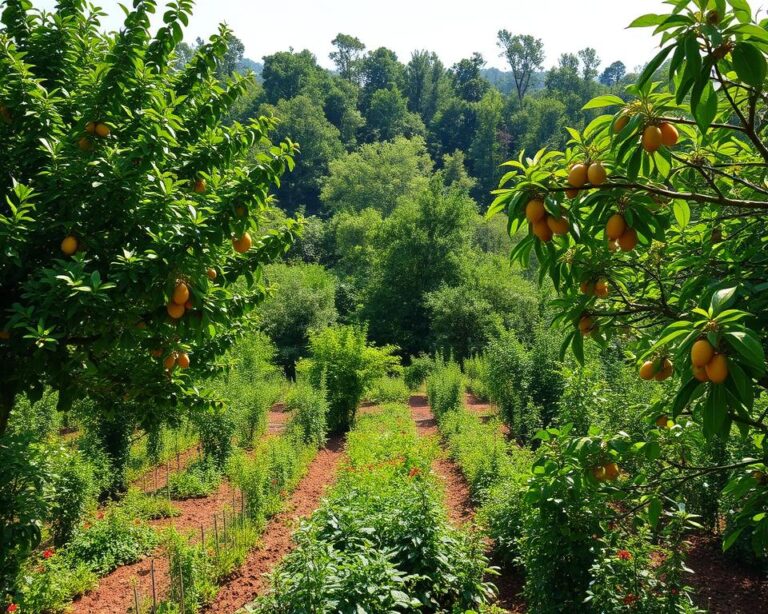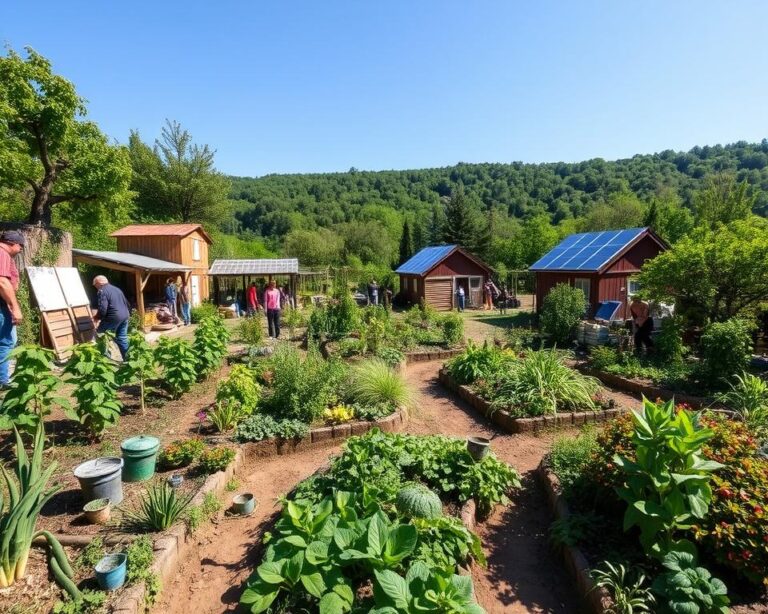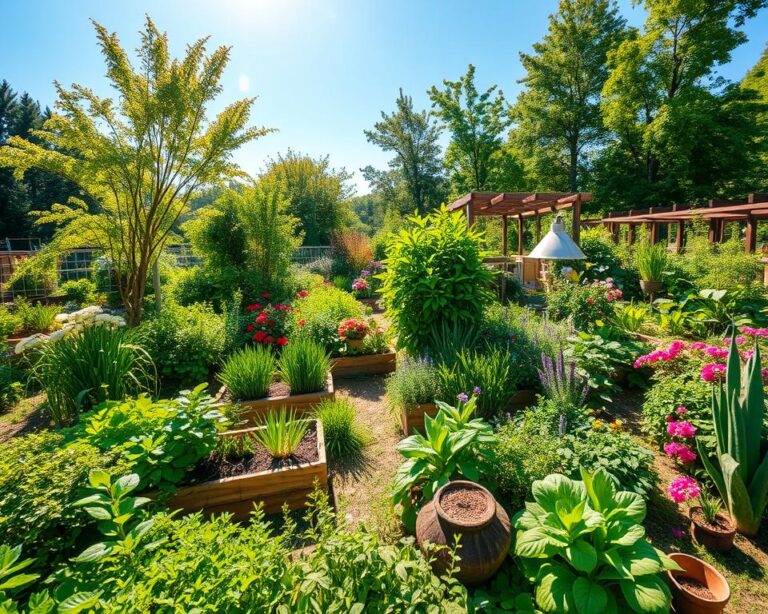

Backyard permaculture helps homeowners and those with small plots create gardens that need little and give much. This guide focuses on practical steps for better soil, water management, and plant communities that help each other. It is for readers in the U.S. who wish for a sustainable backyard garden that keeps giving year after year.
Permaculture’s goals are to increase resilience, cut down on stuff like synthetic fertilizer, build healthy soil, and design plant guilds that work together. This method uses observation, easy techniques, and choices that match your property’s size and climate. You will learn how to check your site conditions, improve fertility, and keep water where it falls.
The article starts with the basics of permaculture gardens and their principles. It then covers improving soil health and managing water. It goes on to talk about picking the right plants, making effective plant guilds, and maybe adding small animals or pollinators. It also covers layout, upkeep, adapting to your climate, and how to check if you’re succeeding. Each section offers practical advice for real-life use.
Expected results include testing and boosting soil fertility, setting up simple ways to catch rain, picking the right plants, and building plant guilds that work well together. Homeowners might also learn how to mix in chickens or bees, if local laws permit, and how to track success with signs like more organic matter in the soil and better water holding.
Readers should remember to check U.S. safety and local rules, like zoning for backyard chickens, rules on collecting rainwater, and the usefulness of talking to Cooperative Extension offices for soil tests and advice on plant diseases.
Key Takeaways
- Backyard permaculture focuses on lasting, low-input setups for homeowners.
- Main goals are healthy soil, smart water use, and plants that help each other.
- The guide covers everything from the basics to practical soil and water methods.
- Expected results include evaluating your site, bettering soil, and easy rain collection.
- Remember to check local laws and consult with Cooperative Extension on soil and plants.
Understanding the Principles of Permaculture
Permaculture blends ideas from ecology, landscape design, and sustainable farming into a single philosophy. It was created by Bill Mollison and David Holmgren. They wanted to help build systems that work like natural ecosystems. Permaculture is all about creating smart, sustainable designs for long-lasting abundance with minimal outside help.
The core values of permaculture guide every decision in creating a garden. These include caring for the earth, caring for people, and sharing resources fairly. These principles encourage us to save resources and give back to our environment.
There are key ideas that form the foundation of permaculture. They connect each design step to a practical benefit for home gardens.
Observe and interact: It starts by understanding your garden’s environment. This includes noticing the sun, wind, and how the weather changes. These observations help plan your garden’s layout.
Catch and store energy: This means using the sun, collecting rain, and using mulch to keep heat and nutrients. This helps reduce the need for outside resources.
Obtain a yield: Aim to get valuable results like food and shelter. A garden that provides can sustain itself.
Apply self-regulation and accept feedback: Watch how your garden grows and change things as needed. Learning from what works helps your garden thrive.
Use and value renewable resources and services: Choose natural composting, helpful bugs, and local materials. These choices are better for the planet and can save money.
Produce no waste: Recycle waste in your garden. This keeps the soil rich without needing outside materials.
Design from patterns to details: Plan the big parts like water flow and tree placement first. Starting with the big picture makes smaller decisions easier.
Integrate rather than segregate: Combine different plants and functions. For example, a garden with plants that help each other grows better than one without.
Use small and slow solutions: Small, affordable steps are best. They’re easier to keep up with.
Use edges and value the marginal: Productive edges, like where land meets water, are very rich. They often have more life and variety than central areas.
Creatively use and respond to change: Be ready to adjust to new challenges like weather or pests. Being flexible helps your garden stay productive.
Using these permaculture principles can really affect how you garden. Choices like what mulch to use can change how your garden handles water and life in the soil. Things like rain barrels can decide where trees or garden groups go. Mixing different types of plants gives more benefits from the same area. For tailored advice, it’s a good idea to talk to local permaculture experts or your county’s extension office. They can help apply these ideas to your specific location.
Importance of Soil Health in Permaculture
Soil is crucial for any permaculture system. It holds water, gives nutrients, and keeps roots in place. By being healthy, soil cuts down the need for chemical fertilizers. It also lets gardens handle drought and stress through strong soil life and structure.
Nutrient Cycling in Soil
Breaking down plant leftovers and compost helps cycle nutrients. Tiny life forms decompose organic stuff, freeing up nitrogen, phosphorus, and potassium. Sometimes, these nutrients are stored until they’re needed by plants.
Mycorrhizal fungi build networks for moving nutrients and water to plants. Things like compost, fallen leaves, and certain crops feed the soil. Cover crops, such as clover and lupine, grab nitrogen from the air and stop soil erosion.
To know what your soil needs, test it regularly at a lab. These tests check for things like pH and nutrient levels. This helps figure out what to add to your soil without guessing.
Organic Matter and Soil Structure
Organic matter in soil creates better structure and porosity. This improves how well soil holds water, its drainage, and lets roots grow easier. Adding organic matter benefits both sandy and clay soils in different ways.
To boost soil organic matter, try composting or using aged manure. Also, biological aids like compost tea can increase healthy microbes. Stay away from products with unproven claims.
For better soil structure over time, don’t till much, use permanent beds, and mulch regularly. These methods keep the soil healthy, encourage worms, and support beneficial fungi networks.
| Practice | Benefits | Recommended Frequency |
|---|---|---|
| Compost addition | Feeds microbes, raises soil organic matter, improves porosity | 2–4 times per year |
| Cover cropping (clover, vetch, lupine) | Captures nitrogen, prevents erosion, adds biomass | Each off-season or between plantings |
| Mulching and sheet mulching | Reduces evaporation, protects structure, supplies slow-release organic matter | Continuous surface cover |
| Soil testing (Extension/commercial lab) | Informs pH and nutrient corrections, measures organic matter | Every 1–3 years |
| Minimal tillage and permanent beds | Maintains soil aggregates, supports soil microbiology and earthworms | Always; avoid routine deep cultivation |
Water Management Techniques
Water is key but often limited in U.S. areas. Smart landscape design can lower city water use and make gardens more drought-tolerant. Here, we explain how to collect, store, and help water sink into the ground effectively.
Rainwater harvesting is an easy way to make a big difference for your home or small space. Collecting rain from roofs into barrels or big tanks works great with devices that keep out leaves and bugs. Using screens on top also stops mosquitoes from breeding.
Figuring out tank size starts with knowing 600 gallons of water comes from one inch of rain on 1,000 square feet. This info helps choose between several 55-gallon drums, a 500-gallon tank, or even bigger ones for more storage. This stored rainwater can then water plants through gravity-driven drippers, soaking systems, or by hand.
Getting ready for winter is a must in cold places. People should empty movable barrels, wrap pipes, or use cisterns that don’t freeze to prevent damage. Also, it’s good to know local rules as some places have laws about collecting rainwater.
Swales are carved out channels that slow down water runoff and help more water seep into the ground. Beds shaped along land levels hold water close to plant roots. Both strategies are about keeping water onsite and making soil wetter over time.
It’s easy to map out land levels with a straightforward tool or a water-level hose. Swale size should match the area catching rain and the usual heavy rains. Don’t forget to plan for overflow paths for the water to go during big storms.
When planting near swales, choose deep-rooted trees, bushes that don’t mind wetness, and local grasses to keep the soil in place. Adding mulch and planting ground cover increase soil health and stop erosion. In clay, water seeps in slow; sandy grounds let water through quickly and might need smaller swales or more organic stuff mixed in.
Contour beds are great for not-so-big yards. Bigger areas can add swales, water basins, raised mounds, and mulched slopes. These methods all help gardens save water by keeping soil moist, cutting down on water loss, and giving plant roots their own mini water sources.
When planning, consider how steep the land is, how water moves through the soil, and local rain patterns. On very sloped areas, put in terraces or walls to stop soil from moving before digging swales. Smart placement and basic tools can make water-saving gardens successful in the long run.
Selecting the Right Plants for Your Garden
Choosing plants wisely shapes a strong garden. It means less work, supports wildlife, and increases food production. Pick plants that fit your area’s climate, soil, and the amount of sunlight and water available.

Native vs. Non-Native Plants
Going with native plants usually means needing less water and fewer chemicals. They help local bees and bugs, creating a healthy garden balance.
Non-native species have their place, too. They can offer more options like apple trees or special veggies. Just make sure they’re safe for your area, and keep an eye on them so they don’t spread too much.
Look at the USDA plant zones and local plant groups to pick the right plants. These guides help you choose plants that are more likely to do well in your garden.
Companion Planting Explained
Companion planting groups plants that help each other grow. It’s good for keeping pests away, attracting bees, and sharing nutrients. This way, your garden can do well without too much chemical stuff.
For example, pairing beans with plants that need a lot of nitrogen or putting smelly herbs near veggies to keep bugs away. Marigolds are also popular for fighting off root pests, but it might depend on the situation.
Some advice: Don’t plant too close, change up your crops, and watch out for plants like black walnut that can harm others. Mixing different kinds of plants together can help keep pests down and make your garden stronger.
Seasonal Planting Strategies
Planting at the right time extends your harvest and cuts down on waste. Planning different planting times can keep your garden going year-round.
Using cold frames, coverings, and mulch can protect your plants from cold and heat. Mix perennials with quick-growing annuals to get both quick and long-lasting harvests.
Check planting guides from your local Extension or university for the best planting times. Good planning means steady crops and a more dependable garden.
Creating Effective Plant Guilds
Plant guilds are designed around a central plant to provide, support, protect, and improve the soil. They make care easier and increase the yield. This part tells how the guild works and gives examples to try in your garden.
Understanding guild dynamics starts with knowing what role each plant plays. Trees at the top create shade. Shrubs under them offer fruits or nuts. Groundcovers, like strawberries or clover, keep the soil safe and stop weeds.
Plants’ roots work together at different levels. Some dig deep for nutrients, others stay near the surface for moisture. How plants grow over time is also key. Fast-growing plants provide early yields. This smart design stops plants from fighting over sunlight and water.
Certain plants, like clover, help bring back nitrogen. Others, like comfrey, pull up minerals to use again. Plants that keep pests away or attract helpful insects also play crucial roles.
Matching plants to your soil and water conditions is very important. Choose plants that fit your garden’s specific needs. Think about spacing and how plants grow over time so they don’t compete with each other.
Examples of common guilds
Apple tree guild: An apple tree is the star, surrounded by comfrey for nutrients, clover as a green mulch, and chives or garlic to keep pests away. Nasturtiums trap pests. Deep-root plants bring nutrients to the tree.
Nut tree guild: Pair a walnut or chestnut with plants that don’t mind the shade. Groundcovers that like this setting and plants that partner well with roots make the tree stronger.
Herb and vegetable guild: Mix perennial veggies like asparagus or artichoke with herbs. Place nitrogen-fixers around to help feed the plants. This saves you from needing a lot of fertilizer.
Pollinator corridor guild: A mix of native plants supports bees and other helpful insects throughout the year. This kind of planting also increases what you get from the garden.
Practical implementation
Begin with picking a spot that has the right kind of soil and water. Add compost and, if needed, a light helping of fungus that helps plants use soil nutrients. Place the main plant first, then follow with others, layer by layer.
Mulch helps keep the water in and weeds out. Watch how things grow, and may adjust. Starting with one guild and learning from it before adding more can make your garden better.
Using these permaculture patterns for plant guilds leads to gardens that need less from you but give more. By studying how guilds work and trying out these ideas, gardeners can make spaces that are full of life and variety.
Incorporating Animals in Permaculture
Animals play key roles in permaculture such as enhancing soil fertility, managing pests, and providing food. They are integrated into garden designs with attention to their needs, local regulations, and disease prevention. Wise planning safeguards plant areas while obtaining eggs, meat, honey, and valuable manure.

Benefits of Poultry and Livestock
Consider chickens vital for permaculture benefits. They offer eggs, help control insects, and clean up garden waste. With chicken tractor systems, they move around, refresh grasslands, and leave behind manure, enriching compost piles.
Ducks are great for damp spaces, consuming pests like slugs. They provide both eggs and meat. Yet, they require secure homes and access to water. Rabbits’ droppings are garden-ready, enriching soil directly. Goats and sheep excel in clearing vegetation and utilizing pruning remains, where allowed.
Raising backyard animals means setting up fences, managing parasites, and offering shelter according to the season. Rotating grazing spots protects plants. Turning manure into compost eliminates harmful pathogens. Ensuring predator safety and humane treatment is crucial for responsible care.
Integrating Bees into the Design
Beekeeping within permaculture improves crop fruiting and harvests. Honey bees are perfect for managed colonies, while local pollinators ensure area-wide plant fertilization. Diverse pollinator species enhance system robustness.
Install hives in sunny, sheltered spots close to water but away from busy areas. Hive type comes down to beekeeper choice and community support. Getting educated about pests and diseases is handy, often through local clubs.
Ensure diverse, year-long blooming to supply bees with nectar and pollen. Steer clear of powerful pesticides around blooms. Offer homes for solitary bees with bee hotels, enriching pollination and the health of the whole ecosystem.
Keeping animals should always comply with local laws, humane practices, and communication with neighbors. Adequate training and record-keeping foster harmony and success in integrating animals into home gardens.
Designing a Permaculture Layout
A well-planned permaculture design makes it easier to arrange elements for better efficiency, energy savings, and maintenance. Each layout is specific to its place and can change over time. To start, designers often use a checklist for site analysis. This checklist covers climate, land slope, water sources, access points, trees, buildings, and soil type. This helps identify what needs attention first.
Functional Zone Design Basics
In permaculture, space is divided from the home outward based on how often something is used and its care needs. Zone 0 includes the house and areas right next to it, like pots with herbs inside and places to store water.
Zone 1 is for things you use every day. It’s where you should put kitchen gardens, compost bins, veggies that need lots of care, and paths for easy access. This zone should be close to water sources and doors for convenience.
Zone 2 is for perennials, small animals, and fruit trees that don’t need daily care but still require attention. Zone 3 is best for crops or pasture that you only need to check on seasonally.
Zone 4 includes areas for gathering wood and foraging. Zone 5 is the wild space for nature and long-term watching.
Key Considerations for Your Site
Start by really getting to know your site. Look at how sunlight, wind, cold spots, and shade might affect plants. Understanding these small climate zones helps you know where to plant what.
Land shape affects how water moves. Check for slopes, areas where water runs, and flat places where water can collect. Tools like Google Earth and a simple A-frame can show where to manage water better.
Understanding your soil is key. Test its acid level and nutrients, check for harmful chemicals, and plan to fix any issues. Good soil means less work and more produce.
Think about how people and tools will move around. Create paths and gateways that make getting around easy. Short, straight paths save time and keep the land better.
Make your space both useful and beautiful. Include areas for wildlife, privacy plants, and nice-looking edible plants. These choices can increase your land’s value and help nature’s workers like bees and bugs.
Learn about local rules early on. Things like how far buildings need to be from the property line, community rules, and what’s allowed with animals can affect your plans.
Use easy tools like grid paper, your smartphone, and Google Earth to sketch out ideas. If your land is complicated, consider getting help from a permaculture expert or take a class. To learn how to turn your observations into a real plan, visit design your permaculture garden.
| Feature | Typical Zone | Backyard Design Considerations |
|---|---|---|
| Kitchen beds & compost | Zone 1 | Place close to kitchen door, near water source for ease of use |
| Orchard & small livestock | Zone 2 | Ensure access for pruning, feeding, and seasonal harvest |
| Staple crops / larger fields | Zone 3 | Allocate space for machinery, crop rotation, and storage |
| Woodlot / forage | Zone 4 | Plan for sustainable harvest and trails |
| Wild habitat | Zone 5 | Keep undisturbed for wildlife and observation |
Maintenance Strategies for Your Permaculture Garden
Good permaculture gardens start with smart design to cut down on work. By placing guilds, water systems, and paths thoughtfully, we deal with fewer breakages and less daily tasks. Keeping an eye on things, recording observations, and fixing problems early keeps everything running smoothly and efficiently.
A calendar for garden tasks helps split big jobs into smaller, doable steps. Having a solid plan for each season—spring, summer, fall, and winter—ensures our soil stays fertile, plants keep producing, and everything stays in working order.
Seasonal Maintenance Tasks
Spring starts with checking the soil and adding what’s needed based on the tests. It’s time to plant early veggies and cover crops, prune fruit trees, and fix up water systems. We also set up supports for plants that will grow back every year.
In summer, we focus on mulching and fine-tuning the water drip schedule. By planting in succession and harvesting on time, we keep our garden productive. We also look out for pests and prune strategically to reduce plant stress.
Fall is for cleaning up diseased plants and planting crops for winter. We use mulch to protect plants over the winter, pick and store our crops, and get our water systems ready for cold weather.
Winter is a quieter time for planning and learning new things. Ordering seeds, taking care of tools, and pruning dormant fruit trees gets us ready for spring. It’s also a good time for big repairs and turning the compost.
Doing checks like soil tests every few years and fixing big issues as they come helps keep the garden healthy over the long haul. These actions are part of a longer-term plan for easy and sustainable garden care.
Pest Management Practices
Integrated pest management (IPM) is our main tool against garden pests. It involves keeping an eye on things, knowing exactly what the problem is, and only acting when really necessary. We prefer using natural methods—cultural, biological, and mechanical—before reaching for chemicals.
Cultural methods involve rotating crops, keeping things clean, and using plants to trap pests. We also make spaces for helpful insects like ladybugs. Plants in good condition are better at fighting off pests on their own.
For biological tactics, we might use helpful bugs, certain worms, and bacteria like Bacillus thuringiensis when it makes sense. Mechanical strategies include picking pests off by hand, using protective covers, and setting up traps.
If we have to use chemicals, we pick the safest ones, such as oils or soaps made for plants, and follow the instructions carefully. We avoid harsh sprays that can harm helpful insects or the environment.
Managing diseases means spacing plants for good air flow and choosing ones that are naturally hardy. The local extension service can advise whether copper or sulfur might help with specific fungal or bacterial issues.
Keeping a garden journal helps us make smarter choices in the future. Writing down when we plant, what pests show up, how much we harvest, and what we do about problems gives us valuable info for keeping our garden healthy and sustainable.
Exploring Climate Adaptation in Permaculture
Backyard permaculture now faces new challenges like intense storms, long droughts, and changing zones across the U.S. Gardeners planning with climate adaptation in mind choose species and practices to keep yields up and maintain ecosystem services, even when conditions are tough.
Selecting tough plants starts with looking at local data and plant lists. Including a variety of plants and perennials reduces risks from pests and harsh weather. Having different kinds of plants helps the garden bounce back if one type doesn’t do well.
Climate-resilient plant choices
- Pick plants that can handle dry conditions for dry areas, like Artemisia, Salvia, and local prairie grasses that don’t need much water.
- Choose heat-tolerant varieties like some tomatoes, peppers, and perennials for places that get very hot, so you still get a good yield.
- For colder areas, go with plants that can survive the cold. Use methods like cloches and cold frames to extend growing seasons.
- Save seeds and connect with local seed sharing groups. This helps keep plants that do well in your specific climate strong.
Using water wisely is key in climate-smart permaculture. Cutting back on water-hungry lawns and planting native groundcovers and edible perennials helps save water. Adding mulch and building healthy soil helps keep moisture in and supports healthy plants.
Water conservation strategies
- Set up drip irrigation systems with timers and sensors to make sure water goes exactly where it’s needed.
- Capture rain with barrels, design your landscape to help absorb water, and use paving that lets water through to keep soil moist.
- When water is scarce, make sure the plants that need it most get it. Have a plan to save your most important plants during droughts.
- Add organic materials or biochar to your soil to hold more water. This encourages plants to grow deep roots, which helps them find water.
Keeping an eye on how your garden does over time lets you tweak your plant choices and care strategies. By choosing the right plants and using water smartly, you’re on your way to a garden that can handle climate changes.
Evaluating the Success of Your Permaculture Plan
Evaluation is key in fine-tuning your permaculture setup. It checks on nature’s health, how much we produce, and if people are happy. This way, your design grows better over time. A quick look now and then keeps everything on track. It shows if the ecosystem is doing well or needs tweaks.
Metrics for Success in Permaculture
We measure success by looking at how much we harvest, the variety of plants, and how long food lasts. Checking the soil and nature’s well-being is done by looking at soil quality, water soak-in, worms, and bees. To see how well water is used, we look at less city water use, more rainwater collected, and better water soak-in.
We also look at how many different animals and plants are around, how many bees make homes, and animal visits. Another way to see if we’re doing well is noting how much time we spend gardening, if we buy less harmful stuff, and how much compost we make and use. Socially, we check if people like the garden, spend time there, and get involved with things like sharing food or hosting workshops.
Reflecting on Lessons Learned
Keeping track of each season helps us see what worked or didn’t. Changes we make often include switching plants, fixing water paths, changing ground cover, or rotating animals differently. Trying small tests helps us know what works best before doing more.
Talking with local experts, permaculture folks, or neighbors helps us learn faster. The best plan is to start small, measure everything carefully, and adjust as needed. This way, we see improvements over time and make smarter choices for our gardens.