
This guide shows easy ways to save water at home, in gardens, and at work. It outlines small, daily steps to use less water and make less wastewater.
It uses information from the U.S. Environmental Protection Agency and the U.S. Geological Survey. This way, readers can see real numbers for how much water households use. It shows how making small changes, like shorter showers or fixing leaks, can save lots of water.
This guide covers why saving water is important, gives tips for inside and outside the home, and talks about gadgets that help save water. It also discusses how to teach others, keep track of water use, and learn about new water-saving methods. The aim is to use less water, save money, and help the planet by forming eco-friendly habits.
Key Takeaways
- Daily water saving habits are repeatable actions at home, work, and in the yard that reduce freshwater demand.
- Small changes scale: two fewer shower minutes or fixing a 10‑gallon leak can save thousands annually.
- EPA and USGS benchmarks provide context for typical household water use and opportunities to cut waste.
- The guide covers indoor and outdoor tips, appliance choices, community education, and monitoring tools.
- Savings deliver both environmental benefits and lower utility bills when reducing water consumption.
Understanding the Importance of Water Conservation
Our planet is seeing a strain on its freshwater supplies. Cities, farms, and factories are using more water. At the same time, changes in climate affect rainfall. This leads to a gap between the water available and the amount we need. This gap is causing seasonal water shortages and more droughts, especially in the western part of the United States.
These water shortages affect more than just our drinking water. They impact agriculture and energy too. When rivers and aquifers dry up, food and electricity production can drop. This connection shows how important it is to use water wisely for our communities to thrive.
The Global Water Crisis
Many places are running low on freshwater because of increasing demand. More people means more water needed for homes and cities. Farms need lots of water for crops, and factories need it to keep cool. Climate change is also messing with water supplies, changing when and where water is available.
Studies are finding more droughts in the western U.S., longer dry periods in Africa and Asia, and smaller reservoirs in some countries. These trends are making it harder to get water. They also put our food and energy at risk.
Water’s Role in Daily Life
Water is part of our daily routines, like drinking, cooking, and cleaning. In the U.S., bathrooms use the most water inside homes. During dry months, outdoor watering can use as much or more water than all the indoor use.
Having clean water is crucial for staying healthy. It helps prevent diseases and supports good hygiene. By using less water every day, we can ease the pressure on our local water supplies.
Benefits of Saving Water
Using less water helps our environment. It eases the pressure on rivers and wetlands. This helps keep animal homes healthy. It also means using less energy for water, which reduces pollution.
When we save water, it also saves us money. It helps families and cities spend less. It slows down the need for new water projects. Saving water means we’re better prepared for droughts. It also ensures everyone has fair access to water.
Even small steps towards saving water can make a big difference. When many of us take action, our communities use water more wisely. Simple changes at home can lead to huge benefits everywhere.
| Area | Typical U.S. Household Share | Potential Savings from Simple Actions |
|---|---|---|
| Bathroom (showers, faucets, toilets) | 40% of indoor use | 15–30% by shorter showers and low-flow fixtures |
| Laundry | 15% of indoor use | 10–25% by washing full loads and high-efficiency machines |
| Kitchen (dishes, cooking) | 10% of indoor use | 5–15% by mindful dishwashing and efficient faucets |
| Outdoor irrigation | up to 30% of total household use | 20–50% by drought-tolerant plants and targeted watering |
Practical Daily Habits to Reduce Water Usage
Small steps at home can make a big difference. Here we cover easy, effective ways to cut your water use. These tips will help lower your bills and conserve water for everyone.
Shortening Showers
Most showers use about 2.5 gallons of water every minute. Low-flow showerheads approved by EPA WaterSense use 2.0 gallons or less. Shortening your shower by 1–3 minutes can save 2.5–7.5 gallons each time.
Try using a timer or a short music playlist to keep showers under 5 minutes. You can also turn the water off while soaping up. Installing a WaterSense showerhead helps too. If a family of four cuts two minutes off every shower, they could save about 7,300 gallons a year.
Fixing Leaks Promptly
Leaks often waste water at home. The usual suspects are faucet washers and toilet flaps. Even a tiny drip can waste a lot, especially if the toilet runs non-stop.
Find leaks by looking closely, watching your water meter, or using a dye in your toilet tank. You can fix many leaks yourself, like changing a toilet flap. For big leaks, it’s best to call a pro. Fixing leaks quickly saves a ton of water.
Fixing leaks quickly not only saves water but is easy to do. This can save thousands of gallons of water every year.
Utilizing a Dishwasher Efficiently
Energy Star dishwashers use about 3–4 gallons per wash. Washing dishes by hand can use a lot more—up to 27 gallons. Using your dishwasher fully loaded and on eco mode helps use less water.
It’s good to scrape dishes clean instead of rinsing them first. Always wait until you have a full load before running your dishwasher. Picking a dishwasher with an Energy Star label also helps save water and energy. Making these changes can save a lot of water every year.
| Habit | Typical Water Use | Simple Action | Estimated Annual Savings (Household) |
|---|---|---|---|
| Shorter showers | 2.5 gpm (standard) vs 2.0 gpm (low-flow) | Cut 2 minutes per shower; install WaterSense showerhead | ~7,300 gallons for family of four |
| Fixing leaks | Varies; running toilet can waste 200+ gal/day | Dye test, tighten fittings, replace flappers | Hundreds to thousands of gallons per year |
| Efficient dishwasher use | 3–4 gallons per cycle (Energy Star) | Run full loads, use eco cycles, skip pre-rinsing | 1,000–3,000+ gallons depending on prior habits |
Outdoor Water-Saving Techniques
Outdoor water-saving tips can keep your yard looking great with less water. By choosing smart designs and habits, you can cut down on watering. These ideas work for any climate or budget.
Choosing native and drought-tolerant plants
Local and drought-tolerant plants need less water because they’re made for your area’s weather and soil. They help local wildlife and cut down on yard work. For example, California poppies are great in California, while prairie grasses are perfect for the Midwest.
Native plants fit right in, whether you’re in the Southeast or elsewhere. Check with local plant organizations for the best choices in your area. They’ll guide you on what to plant and how to care for them.
Design your garden to save water by putting plants with similar water needs together. This is called hydrozoning. Use less grass and choose paths and patios that let rainwater through. This helps the ground absorb rain instead of letting it run off.
Collecting rainwater
Gathering rainwater saves precious drinking water and gives you a free supply for watering your plants. Even small rain barrels help, and bigger setups can water your whole yard. Remember to check your local rules on collecting rainwater first.
Just one inch of rain on a 1,000 square foot roof can give you 600 gallons of water. Use screens to keep your collected water clean and bug-free. Make sure extra water flows away from your house’s foundation and get your system ready for winter.
Using a broom instead of a hose
Using a broom instead of spraying water can save lots of water. Just sweeping can keep things clean without using any water. If you really need water for tough spots, use a pressure washer on a gentle setting only when you have to.
Cleaning up your yard in the fall helps keep things tidy and saves water. Simple things like raking leaves and fixing up mulch mean you won’t need to rinse your yard as often. This means even more water saved over time.
Indoor Water Efficiency Tips
Making small changes inside your home can reduce water use and lower utility bills. This section shares easy, practical tips for different areas of your home, from bathrooms to laundry rooms. Each suggestion is simple, doable, and affordable.

Installing Low-Flow Fixtures
Low-flow fixtures like faucets, showerheads, and toilets help save water without sacrificing performance. They include options like 1.5–2.0 gallons per minute (gpm) for showerheads and 1.28 gallons per flush (gpf) for toilets. Look for products with EPA WaterSense or Energy Star labels for quality replacements.
Replacing faucets and showerheads can often be a DIY job. For things like toilets, you might need a licensed plumber. The initial cost depends on the brand, but the savings on water and energy usually pay off in a few years.
Washing Full Loads of Laundry
Always wait for a full load or adjust the machine settings for the load size to save water. Modern machines, especially front-load and HE washers, use much less water than old models. Look for ENERGY STAR washers to save the most water and energy.
Choosing the right temperature and cycle can also save energy. Use eco or quick wash for lightly soiled clothes. New machines let you adjust for load size, which helps avoid wasting water.
Mindful Toilet Usage
Toilets use a lot of indoor water. Less flushing and not treating them like trash cans can save a lot of water. Consider dual-flush toilets or efficient 1.28 gpf models to reduce water use.
To find leaks, put food coloring in the tank and wait. If you see color in the bowl after 15 minutes, you may need to fix a leak. A simple flapper replacement or float adjustment can save a lot of water and money.
| Action | Typical Savings | Estimated Cost | Ease |
|---|---|---|---|
| Install low-flow showerhead (1.5–2.0 gpm) | 20–40% shower water savings | $20–$80 | Easy (DIY) |
| Replace toilet with 1.28 gpf model | Up to 60% toilet water savings vs older models | $120–$400 | Moderate (plumber recommended) |
| Use HE washer and wash full loads | 30–50% per-load water reduction | $600–$1,200 (appliance) | Easy to implement habit |
| Fix running toilet (flapper/float) | Prevents continuous loss; equals thousands of gallons/year | $5–$40 | Easy to moderate |
The Impact of Water-Saving Appliances
Switching to more efficient home systems saves on water and energy costs. Homeowners notice that combining new devices with simple habits gives quick, noticeable savings. We will look at how modern products work, what to check for, and how little changes make a big difference.
Benefits of Energy Star Appliances
Energy Star appliances are checked for saving both water and energy. To get this label, products like dishwashers, clothes washers, and water heaters must pass tough EPA standards. A new Energy Star clothes washer uses 20–50% less water than older ones, saving money and reducing repair calls over time.
In the U.S., you can get rebates or incentives for buying Energy Star items. These offers help lower the upfront cost and make the savings come sooner. Thinking ahead, the savings over time can outweigh the initial cost.
Smart Irrigation Systems
Smart irrigation systems use weather updates, soil sensors, targeted watering, and schedules to water plants just right. Brands like Rachio and Rain Bird adjust watering based on local weather, avoiding it on rainy days.
Soil sensors and setting zones prevent too much watering. Drip systems get water right to plant roots, lowering loss from running off and evaporating. In dry U.S. areas, these setups can hugely reduce outdoor water use. Getting advice from a certified professional ensures the system fits your local environment.
Utilizing Water-Saving Technology
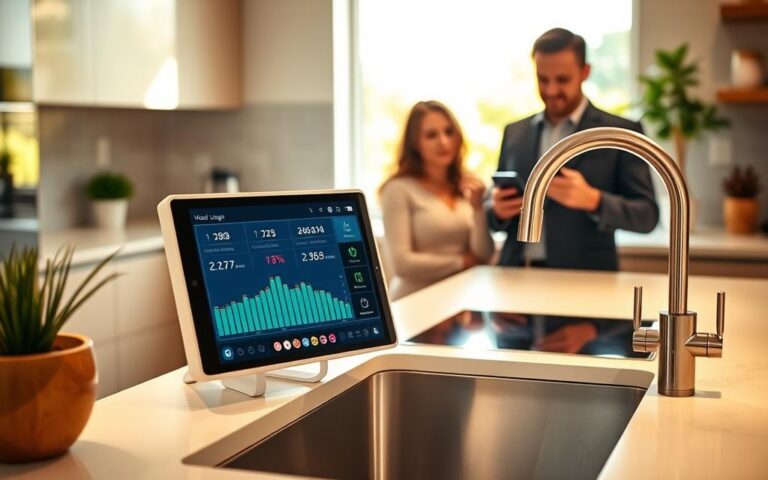
Improving plumbing with better aerators, showerheads, and leak detectors saves more water. Smart technology warns you of unusual water use and can stop leaks by turning off the water. Using smart meters and apps can also help by giving customized saving tips.
Upgrade your home bit by bit. Begin with easy wins like a new washing machine or a leak detector. Later, add smart watering or home systems. Using new tech wisely brings the biggest water and cost savings.
Strategies for Sustainable Gardening
Sustainable gardening helps use less water and keeps yards looking good. It combines smart design, picking the right plants, and proper care. This way, gardens need less water but stay strong against dry spells and bugs.
Xeriscaping Principles
Xeriscaping is a way to design gardens that don’t need much water. It uses smart planning, water-wise plants, and efficient watering. There are seven main ideas behind it, including the right plant choices and reducing lawn areas.
Begin with small steps, like choosing areas that don’t need much water. Switch out thirsty grass for native plants bit by bit. Getting advice from local experts can really help make your garden fit the local climate and soil.
Mulching to Retain Moisture
Mulch helps soil keep moisture, stay cool, and fight weeds. It also makes soil healthier as it breaks down. You can use organic mulches like wood chips or inorganic ones like gravel.
Apply mulch 2–4 inches thick but don’t let it touch plant bases to avoid rot. What mulch is best depends on where you live. Local garden stores or experts can suggest the right mulch for your area.
Drought-Resistant Plants
Choosing plants that don’t need much water is smart. Examples include agave and lavender or native grasses in different regions. Some vegetables and herbs also don’t need much water.
Plant them at the right time with a good initial watering, then water less often. Local plant groups or experts can advise on the best plants for your garden. They’ll know about the right plants for your light, shade, and soil.
Upgrades like automatic rain shutoffs for sprinklers can save water. Fixing leaks also helps save a lot of water. For more tips on saving water in your garden, check out this guide: water-saving tips for yards and gardens.
| Strategy | What it Saves | Typical Action |
|---|---|---|
| Xeriscaping principles | Large reduction in irrigation need | Plan zones, choose native species, retrofit turf |
| Mulching to retain moisture | Lower evaporation, healthier soil | Apply 2–4 inches of appropriate mulch, avoid stem contact |
| Drought-resistant plants | Less frequent watering after establishment | Pick region-appropriate species, deep initial watering |
| Irrigation upgrades | Reduced water waste | Install rain shutoff, smart controller, efficient emitters |
| Leak elimination | Prevents thousands of gallons lost | Inspect hoses, valves, and emitters annually |
The Role of Education in Water Conservation
Education turns knowledge into action. It teaches us why saving water is important and how our actions make a big difference. Working together, community groups, utilities, and schools can create lasting change.
Raising Awareness in the Community
Workshops and library talks offer in-person learning opportunities. They’re complemented by utility bill tips and neighborhood events that share easy water-saving steps.
Social media, NGOs, and water utilities help spread the word even further. Cities like Tucson and Austin encourage people with rebate programs for grass replacement and rain barrel giveaways. These show real results.
It’s important our messages fit local needs and cultures. When our outreach feels personal, it builds trust and encourages environmentally friendly choices.
School Programs on Water Saving
Schools engage students with STEM lessons focused on water and gardens that save water. Visits to treatment plants link these lessons to real life.
The EPA’s WaterSense and Project WET offer schools great resources. Kids learn to take practical steps and even teach their families to save water.
Sharing Tips and Success Stories
Newsletters and social media are perfect for sharing water-saving tips. Showing how much water and money we save makes the message clear.
Featuring different success stories motivates everyone. Case studies show us how to be more responsible with our water use.
Monitoring and Tracking Water Usage
Watching how much water you use at home can help you find waste and make better plans. By checking often and keeping track, you can turn confusing bills into clear steps. This part shares easy steps to monitor water use, make the most of water meters, set water-saving goals, and watch the progress.

Reading the meter
Start by learning how to read your home water meter. Look at the dial or digital display and write down the reading at the same time each day or week. To check for leaks, turn off all water outlets and watch if the meter changes.
Simple fixture tests
To check fixture flow, try the bucket test. Time filling a bucket with water from a faucet or shower. Then, divide the bucket’s volume by time to find the flow rate. Check if your fixtures use more water than they should, compared to what they’re supposed to use.
Advanced meter options
Now, many places use smart meters or AMI, which show how much water you use almost right away. You can see your usage by hour or day using online tools or apps. This helps you find leaks faster and understand your water use patterns.
Using Water Meters Effectively
Make it a habit to check your meter often and write down what it says. Use pictures or lists to keep track of these readings along with when you took them. After doing certain activities like washing clothes or watering the garden, check your meter to link the water use to that activity.
If you have access to smart meter data, look at when you use water the most. If you notice water use late at night or other unexpected times, tell a plumber or an expert. Data from meters can help figure out what needs fixing or updating first.
Setting Personal Goals for Water Savings
Create clear goals to reduce water use, like using 15% less water in six months or watering the garden less each week. Split these big goals into daily actions, like shorter showers or waiting for a full load before using the washing machine.
Use tools online or from your utility company to see how much money you could save. Celebrate small achievements each week to keep motivated. When everyone can see the goals, the whole family starts using water more wisely.
Tracking Changes Over Time
Use a log or app to compare your water use from month to month and year to year. Write down when you change a habit, get a new machine, or change something in your garden. Match these changes to meter readings to see the impact.
Tell your family about your progress to keep everyone accountable and celebrate together. Change your goals as you learn what works best. Checking in regularly keeps you focused and helps improve water use over time.
Encouraging Family and Friends to Save Water
Small efforts in a community can lead to big changes. By getting household members and neighbors involved in easy practices, we can use less water and create new habits. This part shares steps to help your family and friends save water. We talk about setting up friendly contests, giving clear advice, and changing daily routines.
Kick off a fun contest with goals everyone can see and measure. You could try to shorten showers by a minute, fix leaks in two weeks, or water the lawn less during hot times. Track everyone’s progress with a community app or a shared spreadsheet. This keeps things transparent.
Keep people interested with simple rewards. Try using a leaderboard that changes, a small gift card, or giving shout-outs at community gatherings. Plan these activities when water use is high, like in summer, to really see a difference. It’s a good way to get quick results and keep everyone engaged.
Sharing resources and information
It’s important to give people reliable information so they know what to do. Suggest looking at EPA WaterSense for advice, the U.S. Geological Survey for facts, or local groups for specific tips. State water boards and groups like The Nature Conservancy offer help and money-saving deals, too.
Create easy-to-read guides and social media posts that share info on rebates, local classes, and where to find experts. This makes it easier for your circle to get involved and more likely they’ll join in.
Creating a water-conscious culture
Make saving water a regular part of life by adding reminders and traditions at home. You can put up notes in bathrooms and kitchens, have quick family meetings to look over water bills, and celebrate when you reach saving goals together.
People look up to leaders. When grown-ups or team leaders show they save water every day, it encourages others to do the same. Connect water saving with other green actions like composting and reducing energy use to build stronger eco-friendly habits at home.
| Action | How to Track | Incentive Idea | Best Season |
|---|---|---|---|
| Shorten showers by 1 minute | Shared spreadsheet with minutes saved | Monthly recognition and a reusable water bottle | Year-round |
| Repair leaks within 2 weeks | Photo proof and contractor receipt log | Discount on next household bill paid by group | Spring |
| Reduce lawn watering | Weekly irrigation schedule and meter read | Neighborhood BBQ for top savers | Summer |
| Install low-flow fixtures | Before-and-after usage comparison | Shared rebate guidance and group purchase help | Fall |
The Future of Water-Saving Innovations
Changes in water conservation are moving quickly. New methods promise cleaner reuse and smarter homes. They also bring better policy support. These steps are shaping the future of water-saving innovations. They offer real benefits for households and cities alike.
Emerging water-saving technologies
New filtration technologies make reusing water at home easier. Companies like Pall Corporation and Evoqua are expanding their projects. They’re moving beyond tests to small commercial launches.
Devices that capture water from the air are getting more common. They’re used in isolated places and for emergencies. And, because they’re being made in larger numbers, they cost less.
Designs for low-flow faucets and showers have gotten better. Brands like Kohler and Delta are focusing on efficiency. They use smart designs to keep water flow low but make sure it still feels good. This means lower water bills over time.
Smart home solutions
Devices now link to smart home systems like Amazon Alexa. Products from companies like Flo by Moen offer automatic warnings. They can also manage water use while you’re away.
Dashboards that track water use help spot leaks fast. Smart sprinkler systems can adjust based on the weather. This prevents unnecessary watering.
Using a mix of smart devices can lead to big savings. Homes equipped with these technologies use less water. They also keep appliances running longer.
The role of policy and legislation
Laws at all levels push for the use of water-saving tech. Requirements for efficient fixtures in new buildings increase demand. Utility rebates make buying efficient appliances cheaper.
Towns encourage saving water through pricing and upgrading infrastructure. Rules about landscaping and plans for drought help guide community efforts. They make us more capable of handling water shortages.
Advocacy is key to change. Policies that make water-saving tech affordable for everyone are crucial. They help spread benefits to people of all income levels.
Conclusion: Making a Lasting Impact
Starting with little things can make a big difference over time. Taking shorter showers, fixing leaks, and using energy-efficient appliances help a lot. Just by taking shorter showers, fixing a leak, doing full loads of laundry, and using a low-flow showerhead, a family can save a lot of water and money in a year.
They can inspire others by sharing what they’ve done. Talking about their actions, helping neighbors check their water use, or supporting local water-saving programs makes a big difference. Taking simple steps like checking home water usage, adding a water-saving fixture, and changing one habit for 30 days can encourage others to do the same.
It’s important to keep talking about saving water; this keeps the effort going. Keeping track of water use, learning about new ways to save water, and pushing for better water policies make communities stronger. Regularly checking how water’s used at home and adopting green habits helps keep water available for everyone and encourages a lifestyle that uses resources wisely.