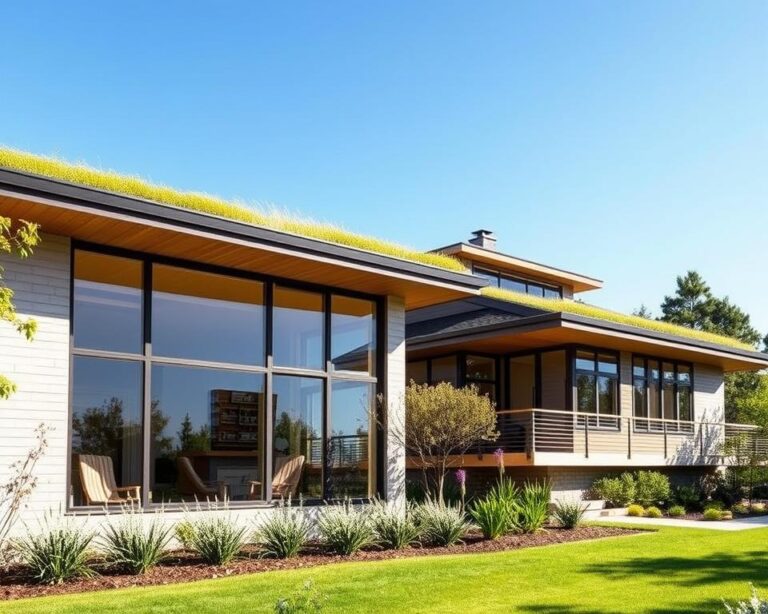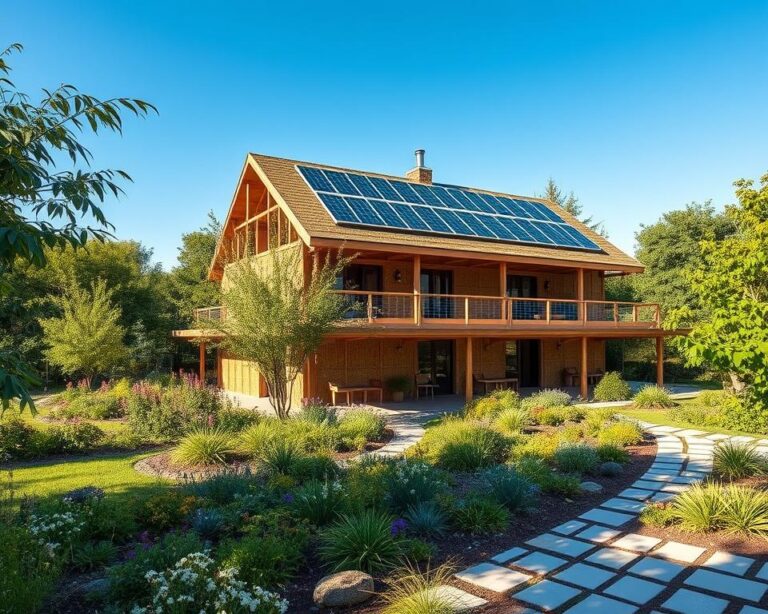

Energy-efficient home upgrades are smart changes made to use less energy. They help lower monthly bills and make your home more comfortable. These changes include better insulation, quality windows, efficient heating and cooling systems, and smart thermostats. They’re a part of eco-friendly home improvements that decrease your energy costs. They also reduce your home’s impact on the environment.
Homes in the U.S. use a lot of energy. The Department of Energy and ENERGY STAR say smart upgrades can reduce this by 10–30%. This depends on what improvements you make. These changes make your home more comfortable, more valuable, and better for the planet.
This article is a handy guide for homeowners everywhere. It talks about improving insulation and windows, choosing high-efficiency HVAC systems, and picking energy-saving appliances. It also looks at renewable energy options like solar panels, smart home technology, ways to save water, and how to landscape smartly. Plus, it explains how to pay for these upgrades, common myths, and what trends are coming. This guide helps you figure out which projects are most worth your time and money.
Before making upgrades, look at your recent utility bills. You could also try the ENERGY STAR Home Energy Yardstick or get a professional energy audit. This starting point helps you pick the best energy-saving projects for your home. It helps you plan your eco-friendly improvements step by step.
Key Takeaways
- Energy-efficient home upgrades reduce utility bills, boost comfort, and cut emissions.
- Typical upgrades can lower household energy use by 10–30%, per DOE and ENERGY STAR data.
- Start with a review of utility bills or an ENERGY STAR Yardstick to set priorities.
- Focus on insulation, windows, HVAC, appliances, renewables, and smart tech for best results.
- Financing options and incentives can make eco-friendly home renovations more affordable.
Benefits of Energy-Efficient Home Upgrades
Upgrading your home to be more energy-efficient brings big benefits. You’ll save money, breathe cleaner air, and boost your home’s value. By choosing smart improvements, you get quick savings and more home comfort over time. This guide highlights the advantages of reducing energy use and boosting your home’s performance.
Understanding energy savings
By focusing on key areas, you can slash your energy use. Better insulation means your heating and cooling need less energy. Switching to efficient appliances and LED lights cuts electricity use. For example, LEDs use 75% less energy than old bulbs. And a newer heat pump can lower heating costs by 30–50% compared to old gas furnaces.
It’s smart to check how soon upgrades pay for themselves. Look at the initial costs versus how much you’ll save in the long run. This can help you decide where to spend your money first, especially with a tight budget.
Environmental impact
Using less energy means your home will have a smaller carbon footprint. This helps reduce the need for fossil fuels and electricity. Both the U.S. Environmental Protection Agency and the Department of Energy say that making homes more efficient lowers greenhouse gases in our communities. This also takes some pressure off local power grids during busy times.
Beyond this, you’ll enjoy cleaner air inside your home and less burden on local services. Choosing eco-friendly upgrades supports wider efforts to fight climate change. It also makes your day-to-day life healthier and your community stronger.
Enhanced property value
Homes with energy-saving features are more appealing to buyers. Things like Energy Star appliances, efficient windows, and solar panels are big pluses. Studies show that eco-friendly homes can sell for more money and faster too.
When thinking about home projects, consider the energy savings, environmental perks, and how much your property’s value may increase. Keeping all these in mind will help you pick the best investments. These should make your home comfier and more valuable over time.
Insulation Improvements
Good insulation makes homes comfier, lowers bills, and helps the planet. Before choosing materials, check for air leaks and wet areas. Planning makes eco-friendly renovations easier.
Types of Insulation Materials
Fiberglass batts are used in walls and attics. They’re affordable but have moderate insulation power. Blown-in cellulose is great for attics and weird spaces because it insulates well and is made from recycled paper.
Spray foam insulation can be open-cell or closed-cell. Open-cell works well in tight spots for both sealing and insulating. Closed-cell offers better insulation and is waterproof, good for lower and outer house areas. Rigid foam board is perfect for walls and outdoor use.
Mineral wool can handle fire and water well, making it ideal for damp places. There are also fiberglass options without formaldehyde for cleaner indoor air. Think about insulation power, water resistance, and how well it seals when choosing.
| Material | Typical R-Value per Inch | Moisture Resistance | Best Use Cases | Eco-Friendly Note |
|---|---|---|---|---|
| Fiberglass Batts | 3.1–4.3 | Low; can hold moisture if exposed | Framed walls, attics, floors | Available formaldehyde-free options |
| Blown-in Cellulose | 3.2–3.8 | Moderate; susceptible if wet | Attics, retrofits, irregular cavities | Made from recycled paper |
| Open-Cell Spray Foam | 3.5–3.7 | Low resistance; good air seal | Interior walls, attics for air sealing | Less material, good air control |
| Closed-Cell Spray Foam | 6.0–7.0 | High; vapor barrier properties | Rim joists, basements, exterior sheathing | High performance, higher embodied energy |
| Rigid Foam Board | 3.8–7.0 | High; resists bulk water | Foundation walls, continuous exterior insulation | Long-lasting, reduces thermal bridging |
| Mineral Wool | 3.0–3.3 | High; water tolerant | Fire-prone areas, exterior sheathing, soundproofing | Made from basalt or recycled slag |
Best Practices for Installation
Start with air sealing. Fill gaps around the house to stop heat loss. This makes any added insulation work better.
Complex jobs like spray foam need pros. Use certified workers for safety and effectiveness. They know how to avoid common problems.
Follow the Energy Department’s advice on insulation levels. Install the right amount, don’t squish it, and ventilate well. Use vapor blockers wisely to stop moisture.
Seasonal Maintenance Tips
Check attics and crawlspaces yearly. Look for bad insulation, insects, or damp spots. Add more insulation if it’s not thick enough.
Inspect seals on doors and windows often. Fix new leaks to keep your upgrades effective.
Plan big projects for spring or fall. Booking is easier, and mild weather means better work.
Upgrading to Energy-Efficient Windows
Choosing the right windows is key for energy savings and comfort. New windows reduce drafts and cut energy costs. It’s important to consider budget, climate, and long-term goals when planning.
Window Replacement Options
There are three main ways to upgrade: full-frame, retrofit, and storm windows. Full-frame replacement involves taking out the whole window. This lets workers improve insulation and other parts. Retrofit replacements change only certain parts, saving time and money. Storm windows add another layer, boosting energy efficiency without removing the old window.
Different materials affect a window’s cost and durability. Vinyl windows are affordable and keep heat in well. Fiberglass lasts a long time and doesn’t warp. Wood-clad and aluminum-clad look good and are strong. Retrofitting costs less but doesn’t insulate as well as full replacements, which seal better and improve home value.
Getting the right fit and installation is crucial to avoid leaks. Certified installers ensure windows work well and match warranty conditions.
Benefits of Double and Triple Glazing
Windows with more than one pane of glass keep heat better. Double glazing with special gases and coatings works well for energy saving. Triple glazed windows are even better, especially in cold places where keeping heat in is important.
These windows really cut down on energy use. Double-glazed windows significantly reduce heat loss. Triple-glazed ones are great in cold areas, lower heating needs, and block noise. They also prevent condensation, which helps protect your home.
Energy Star Ratings Explained
ENERGY STAR categorizes windows by climate zone. This helps balance heating and cooling. Look for the NFRC sticker. It shows important ratings like U-factor. These numbers help choose the right windows for energy efficiency.
Pick windows that fit your local climate. In cold areas, low U-factors are best. In warm places, look for low SHGC to reduce air conditioning needs. Choosing the right windows saves money over time.
High-Efficiency HVAC Systems
Upgrading your heating and cooling system is a smart move. It can lower your bills and make your home more comfortable. You’ll also boost your home’s value by adding other energy-saving updates.
Choosing the Right System
When looking for a new system, compare how efficient they are. Furnaces should have a high AFUE rating, and air conditioners should have a high SEER rating. Heat pumps are great for any climate, offering models for mild, cold, and even geothermal options.
Getting the size right is crucial. A system that fits your home perfectly will keep you comfy without wasting energy. Always ask a pro for a Manual J load calculation to find the perfect size.
Can’t decide between ducted or ductless? Ductless mini-splits are great for adding on or retrofitting. But, if you’re looking at heating or cooling the whole house, ducted systems might be better. Either way, they can save energy if they match your home’s design.
Importance of Regular Maintenance
Regular upkeep keeps your system running smoothly and lasts longer. Yearly checks, changing filters regularly, and keeping coils clean are important. Don’t forget to check your refrigerant charge too.
Make sure your ducts are sealed tight to prevent energy waste. Signing up for a maintenance plan with a trusted HVAC provider ensures your system performs well. Look for technicians certified by NATE for peace of mind.
Keeping your system in top shape can save you money on repairs and energy. It also helps your upgrades last longer, making your home more sustainable.
Smart Thermostats and Home Integration
Smart thermostats from companies like Nest, ecobee, and Honeywell change how we heat and cool our homes. They learn from our routines to save energy. Features like remote control and geofencing make them even more efficient.
Connecting your thermostat to home automation systems can further reduce energy use. This may also qualify you for savings programs from your utility provider. It’s a smart way to manage your home’s energy.
Smart thermostats can significantly cut your heating and cooling costs. By managing energy use more effectively, they enhance other energy-saving updates you’ve made to your home.
| System Type | Key Metric | Best Use Case | Estimated Efficiency Benefit |
|---|---|---|---|
| High-AFUE Furnace | AFUE 90%+ | Cold climates with existing ductwork | Reduces fuel use by 10–20% vs older units |
| Air-Source Heat Pump | HSPF / SEER ratings | Moderate climates or mild winters | Efficient heating and cooling, 20–40% savings |
| Cold-Climate Heat Pump | Designed for low temps | Northern homes avoiding fossil fuels | Maintains efficiency at low outdoor temps |
| Geothermal (Ground-Source) | COP 3.5+ | Whole-house installations with high upfront budget | Top-tier efficiency, long-term savings |
| Ductless Mini-Split | SEER 20+ common | Retrofits, room additions, zone control | Targets comfort, avoids duct losses |
| Smart Thermostat | Adaptive algorithms | All HVAC types | 10–15% energy reduction when used correctly |
Energy-Efficient Appliances
Choosing efficient appliances is wise when upgrading your home for energy efficiency. Making small decisions when buying can lower bills. It also supports eco-friendly improvements in your home.
Look for the ENERGY STAR label when buying appliances like refrigerators and dishwashers. This label means the product uses less energy and sometimes less water. Before buying, use the ENERGY STAR finder and Department of Energy’s calculators to see your savings.
Identifying Energy Star Appliances
ENERGY STAR certified refrigerators use 10–15% less energy than others. Front-load washers and high-efficiency models save water and energy. Heat pump water heaters use less electricity than standard ones.
Look at the EnergyGuide label to compare energy use and costs. Compare these numbers across different models to find the best savings. Consider features like cycle times and insulation levels.
Long-term Cost Benefits
Appliances that cost more upfront can save more money each year. Efficient refrigerators or washers pay for themselves in 3 to 7 years. This depends on how much you use them and your local energy costs. For water heaters, models with heat pumps can pay off faster if electricity is expensive.
The total cost of owning an appliance includes durability and maintenance. Brands with good warranties and easy-to-find service reduce risks. Consider the life expectancy, repair costs, and energy savings when choosing.
Popular Brands to Consider
Top brands for efficient appliances include Whirlpool and Samsung. LG, Bosch, GE Appliances, and Rheem are good too. For heat pump water heaters, look at A.O. Smith, Rheem, and GE. Samsung and LG are great for refrigerators with inverter technology and efficient wash systems.
Before you buy, compare features, warranties, and EnergyGuide labels. Pairing the right appliances with other energy-saving home projects increases your savings. Combine appliance upgrades with things like insulation and smart controls for more eco-friendly home improvements.
Renewable Energy Options for Homes
Homeowners can lower their utility bills by combining energy-smart home improvements with onsite power. This section talks about practical renewable energy options, what to think about when picking a site, and financial benefits. These factors influence the cost-effectiveness and long-term savings of going renewable.

Solar Panel Installation Basics
Setting up rooftop solar starts with checking your house’s energy use, roof direction, and shade. The goal is to make the system’s output match your yearly energy needs. Installers look at different equipment to get the right mix of cost, power, and efficiency.
After designing the system, the next steps are getting permits, connecting to the grid, and starting it up. Keeping the system running well means cleaning it sometimes, keeping an eye on how it’s doing, and planning to replace parts. Adding batteries can make your home more resilient and boost the value of eco-friendly upgrades.
Wind Energy Potential in Residential Areas
Small wind turbines work best in places with steady winds, usually over nine miles per hour. But, rules and the amount of space can limit where they can go, especially in cities. So, they’re more often used in the countryside. A professional assessment is crucial before you buy.
Mixing wind and solar power with batteries can make your energy supply more steady and reliable. This is good where winds are strong enough. Think about how hard installation will be against the energy you’ll get before adding wind power to your green home plans.
Understanding Incentives and Tax Credits
The federal government offers tax credits for solar that cut down your costs by a part of the system’s price. Extras like state rebates, utility benefits, and tax breaks change a lot depending on where you are. Check the Database of State Incentives for Renewables & Efficiency and follow IRS advice to get the latest info.
How quickly you save money with your system depends on net metering and electricity rates. Keep good records and get tax help to make sure you get all available benefits. Local experts usually help with the paperwork, making it easier to add renewable energy to your home improvements.
| Option | Best For | Typical Considerations | Maintenance |
|---|---|---|---|
| Rooftop Solar PV | Suburban and urban homes with good sun exposure | System size (kW), roof pitch, inverter type, permits, net metering | Cleaning, performance monitoring, inverter replacement in 10–15 years |
| Small Wind Turbine | Rural properties with consistent wind speeds (>9 mph) | Hub height, zoning, noise, space, professional wind assessment | Turbine inspection, blade checks, occasional component service |
| Hybrid Solar + Wind + Battery | Sites with mixed resources seeking resilience | System integration, battery sizing, control strategy, incentives | Battery health checks, inverter updates, combined system monitoring |
| Battery Storage | Homes aiming for backup power and demand management | Capacity, chemistry, integration with inverters, incentives | State-of-charge management, software updates, eventual replacement |
Smart Home Technology and Energy Efficiency
Smart devices change how houses use energy. Homeowners using smart tech cut waste, spot issues early, and make informed updates. This tech works well with green home improvements. It helps make choices during eco-friendly remodels.
Energy Monitoring Systems
Brands like Sense, Emporia, and TED offer whole-home monitors. They track how much power each circuit uses. They also show which appliances use too much electricity. This immediate feedback encourages people to use less energy.
Monitor data helps in planning for solar panels and batteries. It can spot problems like failing equipment early. This prevents surprise high bills. It also makes choosing upgrades easier.
Smart Lighting Solutions
LED bulbs lower the energy used for lighting. Adding smart bulbs, switches, and sensors adds more control. You can schedule, dim, and create lighting scenes. This saves energy without reducing comfort.
They can work with Amazon Alexa and Google Assistant for voice control. Linking lights to motion or sunset times saves more energy. This fits well with remodels aimed at being more efficient.
Automated Energy Management Strategies
Rules-based automation can adjust thermostats, schedule appliances, and join demand-response programs. Systems that learn routines do this even better. They adjust without needing to be told all the time.
When the HVAC, lights, EV chargers, and batteries are connected, they can use less energy during peak hours. This saves money and makes the home more comfortable. Especially after updates that focus on saving energy.
| System | Primary Benefit | Representative Brands | Typical Impact |
|---|---|---|---|
| Whole-Home Energy Monitor | Circuit-level visibility and fault detection | Sense, Emporia, TED | 5–15% reduced waste; better sizing for solar |
| Smart Lighting | Reduced lighting runtime and dimming control | Philips Hue, LIFX, Leviton | 30–80% lower lighting energy use |
| Automated Energy Manager | Load shifting and coordinated control | Honeywell, Nest, Hubitat | 10–25% lower peak costs; improved comfort |
| EV Charger Scheduling | Off-peak charging and grid-friendly timing | Tesla, ChargePoint, JuiceBox | Reduced charging cost; lower peak demand |
Water Efficiency Upgrades
Water is a big part of our energy use, especially for hot water. Making small upgrades can reduce water and energy bills. It also helps the environment. This section gives tips for homeowners to make their homes more water-efficient.
Low-Flow Fixtures and Their Benefits
Low-flow showerheads, faucets, and toilets help save water without losing comfort. They use smart designs to keep the water pressure up while using less water. For example, a low-flow showerhead can use 20–40% less hot water per shower. This also saves energy.
The EPA’s WaterSense label marks products that are efficient and save money. Installing these is usually easy, but older homes might need new fixtures. For more on how these products work, check out this guide on low-flow shower technology.
Rainwater Harvesting Systems
Rainwater systems collect water from your roof and store it for things like watering the garden. This cuts down on your water bill and helps the city use less water. Basic systems need a way to collect, store, and use the water.
Always check local rules before using harvested water inside. These systems can also stop runoff and make your property better at handling rain.
Energy Efficient Water Heaters
There are many water heater options, from standard tanks to tankless models. Heat pump water heaters are very efficient, using less electricity. The right size and location can make a heater work better.
Some companies offer rebates for choosing efficient heaters. This makes them a good choice when upgrading your home.
| Upgrade | Typical Water Savings | Energy Impact | Estimated Payback |
|---|---|---|---|
| Low-flow showerhead (WaterSense) | 20–50% per shower | Reduces hot water demand, lowers energy bills | 6–24 months depending on usage |
| Faucet aerator | Up to 50% on sink use | Less hot water use, improved perceived pressure | Immediate; under 1 year typical |
| Low-flow toilet | Up to 60% vs older models | No direct energy change, saves water treatment costs | 1–5 years depending on household |
| Rainwater harvesting (irrigation) | Depends on system size; significant for landscaping | Reduces municipal supply energy footprint | 3–10 years depending on system cost |
| Heat pump water heater | Indirect water savings via efficiency of hot water use | 2–3x efficiency of electric resistance tanks | 2–7 years with rebates |
Choosing water-efficient upgrades is smart. It matches well with other energy-saving home improvements. Just changing fixtures and the water heater can have big benefits. You’ll save money, protect the environment, and make your home stronger.
Landscaping for Energy Efficiency

Careful landscaping can slash your heating and cooling costs while boosting your home’s look. Choosing the right plants, where to plant trees, and what hardscapes to use are key. These choices help make your home more sustainable and energy-efficient.
Selecting Native Plants
Picking plants that naturally grow in your area can save water and cut down on garden work. These plants are better at handling local weather and help the environment too. They work for your garden’s success and the planet’s health.
Looking for the best plants for your place? State extension services and local plant societies offer great advice. They provide lists and guides to make eco-friendly gardening simpler.
Benefits of Shade Trees
Deciduous trees offer shade in summer and let sunlight warm your home in winter. A single tree can lower your cooling energy by up to 25 percent. That’s huge for your energy bills.
It’s smart to plant trees where they won’t harm your house. Choose tree types that fit your local climate for the best results. Taking care of your trees keeps them healthy and helpful.
Hardscape Options to Reduce Heat
Choosing the right paving can cool down your outdoor spaces. Light colors and special mulches keep things cool and look good. Together with plants, they make your home more comfortable and energy-efficient.
Living roofs and walls are great for cities. They add green space and help with insulation. Especially if you don’t have much yard space.
Keep up with maintenance to get the most from these options. Keep pavers clean, renew mulch, and check on green roofs regularly. This keeps your home looking good and energy-smart.
For tips that fit where you live, check out federal advice on eco-friendly landscaping at energy.gov. Using these ideas makes your yard resilient and beautiful. And it makes your home more energy-efficient.
| Region | Primary Landscaping Goal | Recommended Strategies | Expected Benefit |
|---|---|---|---|
| Temperate | Balance sun and shade | Deciduous trees on south/west, windbreaks north, channel summer breezes | Lower cooling in summer, passive solar gain in winter |
| Hot-Arid | Maximize shade, conserve water | Shade trees near roofs, drought-tolerant native plants, orient breezes | Reduced roof heat gain, lower irrigation demand |
| Hot-Humid | Enhance ventilation and shade | Open canopy trees, avoid high-water beds near walls, direct breezes to living spaces | Improved natural cooling, reduced mold risks |
| Cold | Block winter winds, allow sun | Dense windbreaks north, keep south-facing windows clear, shade west in summer | Lower winter heat loss, moderate summer overheating |
Financing Energy-Efficient Upgrades
Getting energy-efficient upgrades for your home can seem tricky at first. Making a clear plan helps homeowners look at costs and benefits. We’ll go over common ways to fund these projects, how to compare them, and how to use tax credits to spend less.
Available Loans and Grants
Rebates from utility companies help pay for things like better HVAC systems and insulation right away. Programs at the state and local level support families with lower incomes and community projects to save energy. The Weatherization Assistance Program (WAP) also helps eligible families make their homes warmer and less drafty.
With Property Assessed Clean Energy (PACE) financing, homeowners can pay back the cost of energy upgrades through their property taxes. Loans like FHA Title I and others from banks or credit unions offer both unsecured and secured ways to borrow money. Sometimes, nonprofits and community lenders have low-interest loans for these projects too.
Choosing Between Financing Options
Look at interest rates, how long you have to pay, and the total cost to see what’s best for you. Some options have low interest but might ask for fees up front. PACE puts the loan with your house, which might affect selling it or getting a mortgage later.
Always check who can use these options, if they put a lien on your property, and how you make payments. Getting several quotes for the project and financing helps. Read all the contract details to avoid surprises. If it’s confusing, getting advice from a financial expert or housing counselor is smart.
Tax Credit Opportunities
Federal tax credits can make installing things like solar panels cost less. These credits take some off your taxes rather than giving you money back right away, so talk to a tax pro to get the most benefit.
State tax breaks and utility rebates can lower your costs even more. Check with state energy offices or DSIRE for current deals. Using a mix of rebates, loans, and tax credits often makes updating your home for energy savings much cheaper than it first seems.
Common Misconceptions About Energy Efficiency
Many homeowners believe things that stop them from making wise choices. This quick guide will clear up those wrong beliefs about saving energy. It will show you how to choose actions that are affordable and practical. You will learn how to think about the costs and benefits of making your home more energy-friendly.
Debunking Myths
Some feel that saving energy means spending a lot of money. But small steps like installing LED bulbs, adding weatherstripping, and getting a programmable thermostat can decrease your bills quickly. These changes often pay for themselves in just a few months.
Others think older homes can’t be made better. But with specific changes, old houses can be updated without tearing everything apart. This makes them more modern and energy-efficient.
There’s also a thought that a house must lose its comfort or look for energy savings. Yet, smart choices from well-known brands prove that you can have efficiency, comfort, and style together.
Real vs. Perceived Costs
The initial price tag can be surprising, but there are rebates and savings in the long run. Things like federal tax breaks and state rebates can lower the upfront costs for things like insulation and solar setups.
Items that don’t cost much but have a big impact should be your top choices. An energy check-up can show you which improvements offer the biggest bang for your buck. This can save you from spending on trendy improvements that don’t do much.
You can choose to upgrade your home bit by bit. This way, you can manage your spending by starting with simpler things like air sealing or lighting. Later, you can upgrade windows, heating or cooling systems, or roof insulation when you can afford it.
Return on Investment Clarified
Understanding simple payback can show you when savings will start covering your costs. For bigger projects, like updating your whole house or installing solar panels, looking at the net present value (NPV) and internal rate of return (IRR) is helpful.
Besides money, there are other benefits. Things like more comfortable and quieter rooms, along with being better prepared for power outages, add extra value. This kind of value might not be obvious on your energy bill but is definitely important.
| Upgrade | Typical Upfront Cost (USD) | Estimated Payback (Years) | Notes |
|---|---|---|---|
| LED Lighting & Controls | 200–800 | 0.5–2 | Immediate savings; easy DIY; strong rebate eligibility |
| Air Sealing & Weatherstripping | 300–2,000 | 1–4 | High ROI in mixed climates; reduces HVAC runtime |
| Attic Insulation Upgrade | 1,000–5,000 | 3–8 | Long-term savings; improved comfort; eligible for credits |
| Heat Pump (Ducted or Mini-Split) | 4,000–15,000 | 4–12 | High efficiency; heating and cooling; incentives vary by state |
| Window Replacement (Double/Triple) | 5,000–20,000 | 7–20 | Best when paired with sealing and shading; aesthetic upgrade |
| Residential Solar PV | 10,000–40,000 | 6–15 | Net metering and tax credits improve NPV; long lifespan |
Knowing these points helps homeowners tell what’s true from what’s not. An energy check-up, choosing the right improvements, and using available incentives lead to better outcomes. This is true for projects aimed at making homes greener and more efficient, instead of just following myths.
Future Trends in Energy Efficiency
The world of home energy is changing quickly. New tech and policies are guiding homeowners towards saving on energy bills while increasing comfort. We will discuss what’s new and what steps to take for those looking into making their homes more energy-efficient.
Innovations on the Horizon
Battery storage is becoming more affordable and efficient, perfect for pairing with solar panels. Soon, some electric cars will power homes during high demand times. Heat pumps are being designed for colder areas. Plus, new types of lighting and insulation materials, like aerogels, are making homes more efficient. Companies are also offering better warranties and smarter devices that, with AI, make sure appliances use power wisely.
Policy Changes Impacting Upgrades
Changes in federal and state building codes and efficiency standards will influence the value of upgrading. New tax incentives and goals for reducing carbon emissions will help make green upgrades more appealing by speeding up the return on investment. Keeping an eye on local policies and utility programs is wise as they can offer extra incentives.
The Role of Consumer Awareness
Knowledgeable buyers improve product quality. Using energy audits and demanding clear info, like NFRC window labels and ENERGY STAR ratings, helps. By looking at the cost over time instead of just the initial price, customers support long-lasting, efficient solutions. Sources like the U.S. Department of Energy offer advice and funding info, guiding homeowners through energy-efficient updates.