
Xeriscaping is all about gardening smartly with less water. In parts of the U.S. where water is scarce, this approach helps. By choosing the right plants and planning well, you can have a lovely garden that doesn’t need much water.
This guide will teach you about eco-friendly gardening. Learn how to make a garden that saves water and looks amazing. By adopting Xeriscaping, you’ll contribute to saving water. And you’ll get to enjoy a gorgeous garden too.
Key Takeaways
- Xeriscaping promotes water-efficient gardening through effective planning.
- Drought-resistant landscaping helps in combating water scarcity.
- Choosing native plants is crucial for a sustainable garden.
- Implementing smart irrigation techniques can enhance water conservation.
- Mulching and healthy soil contribute significantly to a successful xeriscape.
What is Xeriscaping and Why Is It Important?
Xeriscaping is a thoughtful way to design landscapes, great for places with not much water. It uses local plants and the lay of the land to cut down on water use. This creates gardens that are good for the planet, fit in with the local scenery, and save water.
Definition of Xeriscaping
Xeriscaping means making gardens that don’t need extra water. It favors plants that can handle dry conditions, letting you have a lush garden on just rainwater. This approach makes a garden that’s good for Earth and looks great, without needing lots of water.
Benefits of Xeriscaping
Going for Xeriscaping has many pluses:
- It cuts down on water use, which is great for the environment.
- It makes garden care cheaper and easier since you water less and use simpler practices.
- Local animals like birds and bees will find new homes, helping nature.
- Choosing the right plants and techniques makes the soil healthier.
Common Misconceptions
Some people have the wrong idea about Xeriscaping. They think it makes your garden look empty or like a desert. But really, Xeriscaping can make colorful, full gardens. Others believe it limits your plant options. However, there’s a big variety of plants that fit this eco-friendly style well.
Assessing Your Landscape’s Needs
Before you start gardening with less water, you need to look at your yard’s unique features. Things like weather and the type of soil are important. They affect which plants you should choose and how to take care of them without using much water.
Evaluating Climate and Soil Types
The weather in your area could be dry, mild, or wet. This decides what plants can grow in your garden. A soil test will tell you what kind of soil you have, its pH, and if it’s healthy. Knowing this helps you pick plants that don’t need much water and will do well in your yard.
Understanding Local Water Restrictions
Knowing the local rules about saving water is key for gardeners who want to be eco-friendly. Many places limit when and how much you can water your garden. By understanding these rules, you can make smart choices. This way, your garden can stay lovely and follow the law while it saves water.
Designing Your Xeriscape
Creating a beautiful and sustainable xeriscape takes careful planning. You need to blend it well with the surroundings to make your space look great. Making your garden eco-friendly means it will thrive with little water. Here’s what to think about when designing.
Choosing the Right Layout
First, look at your land’s shape, how much sun it gets, and what’s already growing there. You want a design that works with these elements. Using the land’s slopes for watering and planting groups of drought-tolerant plants can save water and attract more wildlife to your garden.
Incorporating Hardscaping Elements
Hardscaping adds structure and use to your garden. Paths, patios, and walls can guide people and stop soil washing away. Mixing hard materials with local plants looks good and saves water. Make sure your hardscaping matches your garden’s eco-friendly theme, creating a balanced, beautiful xeriscape.
Creating Focal Points
Focal points like big rocks, art pieces, or bird baths catch the eye. They make your garden look better and can be homes for animals. Adding local plants around these points boosts your garden’s look and health.
Planning for Seasonal Changes
Choose plants that look good all year with different blooms and leaf colors. This keeps your garden interesting. Put taller plants at the back and shorter ones in front. This creates a lively, beautiful garden that doesn’t need much water.
| Element | Description | Benefits |
|---|---|---|
| Layout | Arrangement of plants and hardscape features according to land contours. | Maximizes natural irrigation and aesthetics. |
| Hardscaping | Incorporation of paths, walls, and patios. | Provides structure; reduces erosion. |
| Focal Points | Features like sculptures and water elements. | Enhances visual interest and habitats. |
| Seasonal Planning | Selection of plants for year-round beauty. | Ensures continuous color and texture. |
Selecting Drought-Resistant Plants
Choosing the right plants for a xeriscape is very important. You must think about if plants are native or not, if they can adapt, and how they save water. It’s also good to group plants by how much water they need to keep your landscape water-efficient.
Native Plants vs. Non-Native Plants
Native plants fit well in local areas and don’t need much water. This makes them perfect for xeriscaping. They grow well in local dirt and weather, which means you don’t need to give them much extra care. Non-native plants may need more water and work to get used to new places.
Popular Drought-Tolerant Species
- Agave
- Lavender
- Salvia
- Red Yucca
- Desert Marigold
These plants can handle dry weather and make your garden look nice. At the same time, they help save water.
Grouping Plants by Water Needs
Putting your plants together based on how much water they need helps a lot. This makes watering them more effective. It also keeps your drought-resistant plants healthy and strong.

Watering Techniques for Xeriscaping
Proper watering techniques are key for a healthy xeriscape in dry climates. Use methods that save water in the garden. By investing in good irrigation systems, your drought-resistant landscape will greatly improve. These strategies help make the most of your water.
Installing Efficient Irrigation Systems
Choosing the right irrigation system can cut down on water waste and keep your plants well-hydrated. Think about getting drip irrigation or soaker hoses. They deliver water right to the roots. This cuts down on evaporation and runoff, making every drop count.
Adding a timer boosts efficiency by setting up watering schedules tailored to your plants’ needs.
Best Practices for Watering
Here are some top tips for effective watering:
- Water early in the morning to reduce evaporation.
- It’s better to water deeply rather than a little at a time.
- Watch your plants for signs of stress and water as needed.
A regular watering schedule helps keep your xeriscaped garden looking its best. It also saves water.
Rainwater Harvesting Methods
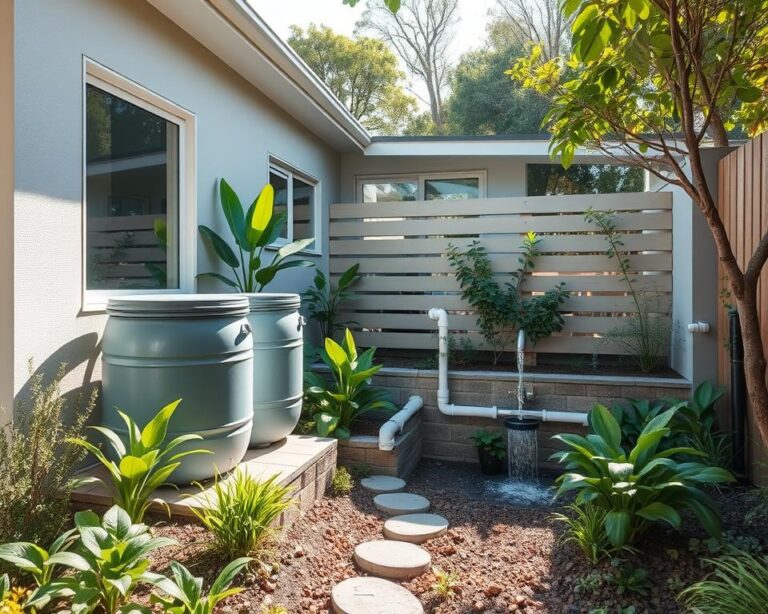
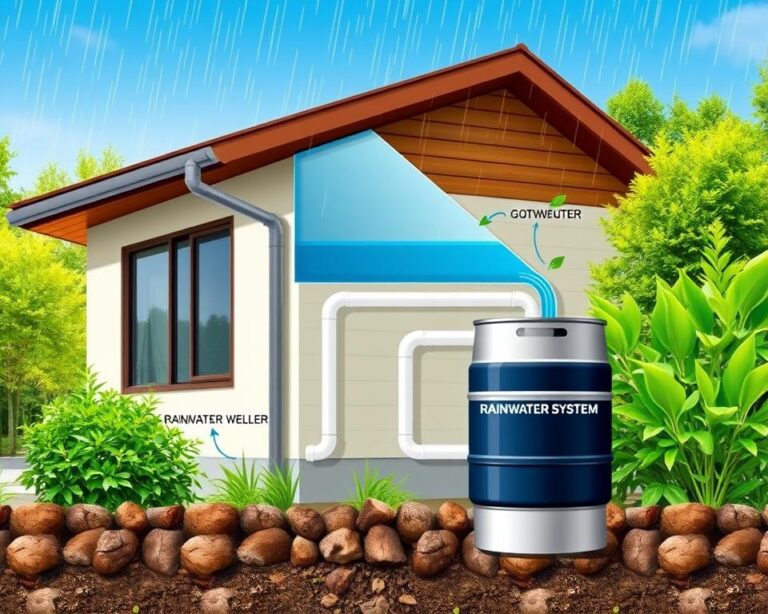
Rainwater harvesting is a smart way to water your garden. You collect rain from your roof and use it for watering. Here are some ways to do it:
- Install rain barrels to catch runoff.
- Build a rain garden to help absorb and filter water.
- Opt for permeable pavement to direct water to your plants.
These methods not only improve your drought-tolerant landscaping. They also help the environment by using less city water.
Soil Preparation and Amendments
For a thriving Xeriscape, it’s key to know about soil health. Healthy soil gives plants essential nutrients and a good place to grow. Without the right soil, it’s tough to have a successful garden. This section will help you understand soil health and tell you what to add to your soil to make plants do their best.
Importance of Soil Health
Soil health affects a lot, like how well soil holds water and nutrients. Good soil lets water drain well, so plant roots don’t rot during dry times. It also has helpful tiny life forms that help plants grow. By making your soil healthy, your garden can handle drought better. This makes a strong, sustainable spot for your plants.
Recommended Soil Amendments
To make soil healthier, you often need to add certain things. Here are some good organic materials for your garden:
- Compost: Puts nutrients into the soil and makes it better for plant roots. Compost holds water well, too.
- Mulch: Keeps soil moist and stops weeds. As it breaks down, it makes the soil richer.
- Perlite: Helps soil that has too much clay. It makes the soil lighter so roots can breathe and take in nutrients better.
- Peat Moss: Puts organic matter into the soil, helping it hold water and letting air move through it better.
Using these additives can make your soil richer and better for your Xeriscape. This leads to healthy soil over time. It also saves water and supports gardening that’s good for the planet.
| Soil Amendment | Benefits |
|---|---|
| Compost | Boosts nutrients and holds moisture |
| Mulch | Fights weeds and keeps soil wet |
| Perlite | Makes soil lighter and drains better |
| Peat Moss | Better soil structure and moisture |
Mulching Your Xeriscape
Mulching is a key part of low-water landscaping. By adding mulch, you help the soil stay healthy and enhance how your garden looks. This section talks about the benefits of mulching, different types you can use, and how to apply them well.
Benefits of Mulching
Mulching is great for your garden in many ways:
- Moisture Retention: Mulch keeps soil moist, cutting down on watering.
- Weed Suppression: A thick mulch layer blocks sunlight, stopping weeds from growing.
- Soil Temperature Regulation: Mulch keeps soil temperature even when the weather changes.
Types of Mulch to Consider
There are several mulch options for low-water gardens:
| Type of Mulch | Material | Benefits |
|---|---|---|
| Organic Mulch | Bark, wood chips, straw, grass clippings | Makes soil healthier as it breaks down |
| Inorganic Mulch | Rubber, gravel, landscape fabric | A sturdy, long-lasting choice |
| Living Mulch | Clover, creeping thyme | Covers ground and boosts biodiversity |
Mulch Application Techniques
For the best mulching results, follow these tips:
- Layer Thickness: Keep the mulch 2 to 4 inches deep for best moisture retention.
- Circular Placement: Spread mulch to the outer edge of plants for good coverage.
- Avoid Contact: Don’t let mulch touch plant stems to avoid rot and bugs.
Maintaining Your Xeriscape
To keep your xeriscape looking great and healthy, regular upkeep is key. This means doing certain tasks throughout the year to help your drought-resistant plants thrive. By following good maintenance, you can keep your garden’s beauty and stick to eco-friendly gardening practices.
Seasonal Maintenance Tasks
There are important tasks to do throughout the year:
- Pruning: Cut back dead or too bushy branches to help plants grow well.
- Fertilizing: Choose organic fertilizers to improve the soil while being good to the earth.
- Watering Adjustments: Change how much you water, based on the weather and what your plants need.
Pest Management in Xeriscaped Gardens
Dealing with pests in a xeriscape garden needs careful planning. It’s best to use methods that keep the use of harsh chemicals low. Here are some smart ways to handle pests:
- Natural Predators: Bring in good bugs like ladybugs and lacewings to control pests.
- Companion Planting: Grow certain plants together to naturally keep pests away and help diversity.
- Organic Solutions: Use organic pest control like neem oil or insecticidal soap for specific problems.

Xeriscaping in Different Regions
Xeriscaping needs vary by climate. In dry areas, it’s crucial to save water through smart gardening. But in wet areas, the focus shifts to handling excess moisture and choosing the right plants. This way, all gardens can be eco-friendly.
Xeriscaping Techniques for Arid Regions
In dry places, pick plants that don’t need much water and use hardscaping to keep evaporation low. Also, using a drip irrigation system helps save water by targeting the roots directly. Adding native plants that are used to the local climate will make your garden even more water-smart.
Xeriscaping Considerations for Humid Areas
For humid regions, it’s important to manage wetness wisely. Choose plants that love moisture but make sure they have room to breathe. Using mulch is great for preventing erosion and keeping the soil moist just right. By understanding your area’s unique needs, you can make your garden thrive.
Incorporating Xeriscaping into Existing Landscapes
Changing your garden to a Xeriscaped one might feel overwhelming at first. This change can make your outdoor area better while also being good for the planet. It uses less water and requires less upkeep by using Xeriscaping principles.
Transitioning Traditional Gardens to Xeriscape
Begin by looking at your garden as it is now. Find plants that do well in your area and fit a low-water plan. Slowly start using plants that need less water instead of those that need a lot. This way, your garden still feels familiar but becomes more eco-friendly.
Strategies for Blending with Existing Features
Here are ways to mix new Xeriscape ideas with your garden’s current look:
- Use hardscaping: Add paths and stones to tie different areas together.
- Group plants by water needs: Put plants with similar water needs close to each other. This makes watering them easier.
- Layer your plant selections: Use plants of different heights and textures. This adds interest and helps wildlife.
- Maintain visual cohesion: Pick colors and shapes that go well with your garden’s existing parts.

| Traditional Garden Features | Xeriscaping Features |
|---|---|
| High water-use plants | Drought-resistant species |
| Consistent lawn areas | Hardscaping and ground covers |
| Frequent irrigation | Water-efficient systems |
| Traditional mulch | Organic mulch and stones |
While making these changes, focus on gardening in a way that’s good for the earth. Moving to a garden that doesn’t need much water helps the planet. It also lets you create a beautiful space that shows your unique style.
Resources for Xeriscaping
Starting your xeriscaping journey is exciting. Having the right resources can make a big difference. You can find many books and online guides that teach about water-saving garden designs. These resources cover everything from the basics of xeriscaping to more complex planting ideas. They help you build a garden that saves water and matches your style.
Reading is helpful, but joining local groups adds value too. Your community might have workshops about xeriscaping. At these events, you can meet people who love gardening just like you. You’ll learn from experts and make friends who also want to garden in eco-friendly ways.
Sometimes, it’s good to get professional help. There are landscaping services that know a lot about xeriscaping. They can turn your ideas into reality, making sure it’s done right. With the best resources, help from your community, and guidance from experts, you can make a beautiful garden. It will need less water and be good for the planet too.
FAQ
What is Xeriscaping?
What are the benefits of Xeriscaping?
Can I use native plants in my Xeriscape?
How can I efficiently water my Xeriscaped garden?
What types of mulch are best for Xeriscaping?
How do I maintain my Xeriscape throughout the seasons?
Is Xeriscaping the same as desert landscaping?
Can Xeriscaping be incorporated into an existing garden?
Where can I find resources to learn more about Xeriscaping?
Field Scenario: High-Heat Week Water Strategy
In high-evaporation conditions, timing and flow rate matter more than total volume. Prioritize early-morning cycles, soil-moisture checks, and zone-based adjustments.
Implementation Checklist
- Measure baseline water usage for 7 days
- Adjust one variable at a time (timing, duration, frequency)
- Track plant stress signs before increasing volume
- Review results weekly and lock the best pattern
Common Errors
- Increasing water volume without checking runoff
- Ignoring soil type and absorption speed
- Using fixed schedules across weather changes
Quality Enhancement Update: 2026-03-05 — This article was refined with scenario-based guidance, implementation checklists, and measurable decision steps to increase practical value and reduce generic repetition.
Editorial Note: For policy and methodology, see Editorial Policy.
Article Trust & Methodology
Author: Rosalie Clark
Editorial Review Date: 2026-03-05
Purpose: Deliver practical, user-first guidance with clear limitations and realistic implementation steps.
How this article was prepared
- Topic intent mapping based on common reader problems
- Step-by-step structure with measurable checkpoints
- Risk notes and scenario-based adjustments
- Readability review for mobile and desktop
Who this article is for
This content is for everyday readers who need practical decisions they can apply safely and consistently, not theoretical advice only.
Sources and validation approach
Recommendations are organized around established best-practice principles (measurement, controlled testing, and periodic review). Readers should adapt guidance to local regulations, climate, infrastructure, and budget constraints.
For editorial standards and correction requests, see Editorial Policy and contact contact@everydaytechfinance.com.
Final Implementation Notes
For best outcomes, avoid changing multiple variables at once. Build a small decision log, review results weekly, and keep only changes that improve measurable outcomes over time. Consistency and clarity are more important than intensity.