
This guide offers practical steps for making your home more efficient. It includes easy behavior changes and upgrades. This way, you can lower your water bill and help save the planet without giving up comfort.
Using less water is good for your wallet and the Earth. You’ll see lower bills right away. Plus, you help your community and protect our water. Using less hot water also means you use less energy, which saves you even more money.
First, we show you how to understand your water use. Then, we explain how to fix leaks and pick better fixtures and systems for your yard. We also share tips on saving water every day, teaching your family, doing laundry smarter, investing in technology, and picking the best water providers and programs.
Fixing leaks can save you 10%–20% on your water bill. Low-flow showerheads and efficient toilets make a big difference indoors. How much you save depends on things like local water prices, how big your family is, and how much you water your garden.
In the U.S., things like tiered rates and fixed charges affect how much you can save. Watering your garden more in the summer can make your bill go up. But, there are many programs that help make water-saving upgrades cheaper. These help you save even more money.
Key Takeaways
- Practical efficiency steps help reduce your water bill and save money and water.
- Fixing leaks and upgrading fixtures are top ways to lower your water bill.
- Your savings are influenced by rates, how you’re billed, and your habits.
- Watering outdoors in summer and tiered pricing can make bills jump.
- In the U.S., discounts and programs can reduce costs of upgrades and increase savings.
Understand Your Water Usage
Before you can make changes, understand how much water your household uses. Check your water bill and do a quick audit. This shows where you can cut costs and save on water use.
Start by taking a close look at your water bill. Note the period it covers, how much water you used, and the costs involved. In the U.S., water use is often shown in CCF, where 1 CCF equals 748 gallons. Look online for your water usage history and see if there are any sudden increases.
Analyze Your Water Bill
Compare your water use from one month to the next and also from one year to the next. Look out for any big charges or sudden increases that could mean a leak.
Identify High-Usage Appliances
List your main water-using appliances and how much they use. For example, old toilets use a lot more water per flush than new ones. And the same goes for showers and dishwashers. Knowing this helps you understand where water is going.
Make a checklist for each room. Note the age and model of appliances and how much water they use. Pay special attention to very old toilets and washing machines as they’re likely using a lot of water.
Monitor Daily Habits
Ask everyone in your home to keep track of their water use for a week or two. This includes showers, sinks, and watering the garden. By keeping track of how much water you use, you can find easy ways to use less.
| Action | How to Measure | Typical Impact |
|---|---|---|
| Read billing units | Check CCF or gallons, convert as needed (1 CCF = 748 gallons) | Clarifies true consumption and cost drivers |
| Track usage trends | Compare monthly and yearly graphs in utility portal | Spot leaks, seasonal spikes, potential savings |
| Audit appliances | Room-by-room checklist of age and gallons per use | Identifies high-usage fixtures for upgrades |
| Log daily habits | Record showers, faucet time, and irrigation events for 1–2 weeks | Shows behavior changes that lower water usage |
| Use benchmarks | Consult WaterSense and ENERGY STAR for appliance standards | Sets targets for water consumption savings |
Fix Leaks Promptly
Even small leaks can waste lots of water, from hundreds to thousands of gallons each year. An average household leak could be wasting 10% or more of your indoor water use. Fixing leaks fast saves water, lowers your bills, and keeps your plumbing and garden healthy.
To spot leaks, check your toilets for random flushes, and look at faucet aerators and cartridge seals. Also check shower valves and pipes under sinks for dampness or rust. Don’t forget to inspect outdoor spots, like irrigation heads, valve boxes, hose bibs, and areas near water heaters.
Locate Common Leak Areas
Begin by testing your water meter. Make sure all water is turned off, then watch the meter. If it moves, you might have a leak you can’t see. Use food coloring in your toilet tank to find any leaks from the tank to the bowl. After watering, walk through your irrigation zones to spot any wet areas that might mean there is a broken head or valve.
Use Leak Detection Tools
Having the right tools can help. Things like faucet aerator wrenches, toilet tank repair kits, and pressure gauges can fix many problems. Leak detection kits are cheap and can find small leaks. For harder cases, tools like electronic leak detectors or acoustic devices find leaks in slabs or underground.
Do-it-yourself repairs can include tightening connections, changing old washers, replacing toilet flappers, and sealing leaks again. Remember: safety first. Turn off the water before you start taking anything apart. Use parts recommended by the maker and follow their instructions to avoid breaking anything.
Contact Professionals if Necessary
If leaks keep happening, are hard to find, or involves difficult areas like slabs and sewer lines, call a pro. Call for help if your water meter shows strange readings or your own fixes aren’t working. Some water companies check for leaks for free or offer rebates, which can lower your water bill.
Do regular checks, get your outdoor taps ready for winter, and change old parts before they break. These steps save water, avoid sudden repairs, cost less in the long run, and keep your home’s value high.
| Problem | Quick Diagnostic Step | DIY Fix | When to Call a Pro |
|---|---|---|---|
| Running toilet | Dye-test tank for color transfer | Replace flapper or adjust chain | Persistent run or leaking at base |
| Dripping faucet | Remove aerator and inspect | Replace washer or cartridge | Corroded valve seat or repeated leaks |
| Soggy lawn zone | Observe irrigation after cycle | Replace broken head or adjust nozzle | Underground line break or unclear source |
| Meter moves with no use | Confirm all fixtures off, watch meter | Check visible valves and fixtures | Hidden or slab leak suspected |
| Water heater leak | Inspect fittings and overflow pan | Tighten connections; replace valves if minor | Tank corrosion or large leaks |
Upgrade to Water-Efficient Fixtures
Switching to water-efficient fixtures can quickly lower your water use and bills. Today’s modern products save water without losing performance. By choosing certified fixtures, homeowners can see lower bills and even get rebates.
Start with easy, impactful upgrades like showerheads, toilets, and faucet aerators. These changes can lead to big savings and are easy to pair with other water-saving practices. Fixing leaks and running full laundry loads add to the savings.
Install low-flow showerheads
Using low-flow showerheads can make a big difference. They use much less water but still feel strong. Look for WaterSense labels for safety, as most can be easily screwed on and installed quickly. This change can save lots of water in every bathroom.
Choose high-efficiency toilets
Switching to a high-efficiency toilet saves a lot of water. They use much less water compared to older units. Plus, dual-flush models let you choose how much water to use. WaterSense-certified models can also get you rebates and save money over time.
Consider water-saving faucets
Faucet aerators are great for saving water. They cut down the flow but keep water pressure strong. Adding these to your faucets is quick, and it helps stop drips that waste water. This simple step can reduce your water bill.
Appliance upgrades that complement fixtures
Consider getting ENERGY STAR dishwashers and high-efficiency washers. These use less water and can fit your home perfectly. Making sure they’re installed right helps them work best and avoid extra costs.
Find rebates and trusted sources
Look for rebates on water and energy-saving products. Websites like DSIRE can help you find local deals. Brands like Kohler and Delta offer quality fixtures that can qualify for savings. Choosing the right models makes saving easier.
| Fixture | Typical Flow or Use | Expected Savings | Certifications / Notes |
|---|---|---|---|
| Low-flow showerhead | 1.8–2.0 gpm | Dozens–hundreds of gallons/month | WaterSense, screw-on fit |
| High-efficiency toilet (HET) | ≈1.28 gpf | Thousands of gallons/year per toilet | WaterSense, dual-flush options |
| Faucet aerator | 0.5–1.5 gpm | Significant small-leak and faucet savings | Easy install, kitchen and bath use |
| ENERGY STAR dishwasher | Varies by model; lower per-cycle use | Reduced water per wash cycle | ENERGY STAR labeled, brand choices |
| High-efficiency clothes washer | Lower gallons per cycle than older machines | Major household water reduction | Front-load or high-efficiency top-load |
Optimize Your Irrigation System
Outdoor watering uses a lot of water during warm months. If homeowners improve their irrigation systems, they save water. This means lower bills without harming plant health.

Inspect Sprinkler Systems
Check for broken heads, misaligned nozzles, and leaking valves. Also, look for clogged filters. Fixing these issues stops water wastage on sidewalks and driveways.
Do seasonal check-ups in spring and fall. This keeps your coverage even and makes parts last longer.
Time Your Watering
Water in the early morning or late evening to reduce evaporation. Instead of watering a little every day, water deeply but less often. This is better for the plants.
Add a rain sensor or soil-moisture controller. This stops unnecessary watering, saving water and money.
Use Native Plants for Landscaping
Choose plants that don’t need much water and group them by their water needs. This makes hydrozones. Turning lawns into areas with low-water plants and using drip irrigation saves a lot of water.
These steps significantly lower water use and save money over time.
- Schedule professional audits for complex controllers and zones.
- Consider smart controllers from Rain Bird or Hunter for automatic adjustments.
- Check local utility rebates for turf replacement and smart controller upgrades.
Implement Water Conservation Techniques
Small changes in behavior can lead to big savings on your water bill. We’re looking at easy, low or no-cost ways to save water and help the environment.
Shorten Showers
Try using a timer to keep showers under five minutes. Switching to low-flow showerheads from brands like Kohler or Moen can also help. This can save a lot of water each month.
Turning off the water while soaping up and catching cold start water for reuse can lower your bill. These steps are simple to follow and make a big difference.
Use a Broom Instead of a Hose
Sweeping your driveway or patio saves a lot of water. If you need to rinse, use a hose with a shut-off nozzle.
Opt for commercial car washes that reuse water if washing your car. Washing on a surface that absorbs water helps prevent runoff. These choices greatly reduce water use over time.
Collect Rainwater and Reuse Graywater
Using rain barrels can help with watering your garden. Place them under downspouts and consider using a first-flush diverter to keep out debris. Check your local regulations as some places offer rebates.
Gathering graywater in a bucket for outside use is another easy option. If setting up a larger system, always follow local guidelines. Using graywater is a smart way to save water and money.
| Action | Estimated Monthly Water Saved | Typical Cost | Notes |
|---|---|---|---|
| Shorten showers by 2–3 minutes | 100–300 gallons | Free | Use a timer; combine with low-flow showerhead for greater effect |
| Replace showerhead with low-flow model | 200–500 gallons | $20–$100 | Brands: Moen, Delta, Kohler offer efficient options |
| Sweep patios instead of hosing | 500–1,000 gallons | Free | Best for dry debris and routine cleaning |
| Install rain barrel (50–100 gallon) | 500–2,000 gallons (seasonal) | $50–$300 | Check local ordinances; consider first-flush diverter |
| Use graywater for garden (bucket or simple system) | 300–1,500 gallons | Free–$500 | Follow local codes; consult professionals for larger systems |
| Use commercial car wash that recycles water | 200–1,000 gallons per month (vs. home wash) | $5–$20 per wash | Recycling car washes greatly reduce household runoff |
| Lawn care: higher mowing, mulch, aeration | Variable — can reduce irrigation by 20–50% | $0–$100 (maintenance) | Mulch and higher grass blades cut evaporation and watering needs |
Educate Household Members

Teaching everyone in the home boosts results. When a family knows the importance of changes, small steps lead to big savings. This reduces water bills over time.
Share Water-Saving Goals
Set specific, easy-to-measure goals like cutting down water use. You could put these goals on the fridge or a shared app and check them monthly. Also, teach about things like water-saving showerheads or timers so everyone sees their value.
Create a Water Usage Chart
Keep track of water use for showers, laundry, and watering plants. Use a simple chart to spot patterns and know when to use less.
| Activity | Typical Use | Tracking Frequency |
|---|---|---|
| Shower (5 min) | ~75 liters | Daily |
| Toilet flush (standard) | ~6 liters per flush | Weekly tally |
| Dishwasher (energy-efficient) | Less than hand-wash | Per load |
| Laundry (cold wash) | Reduced energy for heating | Per load |
| Garden greywater reuse | Varies by system | Weekly |
Encourage Mindfulness About Water Use
Give family members specific roles like checking the water meter. Teach kids to take shorter showers and reuse towels. Offer small rewards to encourage saving water.
Look into community programs for more info. For tips on saving water and energy at home, check out this guide: practical water-saving measures.
Practice Smart Laundry Habits
Washing clothes uses a lot of indoor water. Making simple changes can really save water and lower your bills, without compromising on how clean your clothes get.
Wash Full Loads Only
Only run your washer when it’s full to use water more efficiently. Front-loading high-efficiency machines need less water than older models. If you can’t wait for a full load, adjust the machine’s setting to match the load size. This way, you won’t use more water than you need.
Choose Water-Saving Settings
Use cold water and shorter cycles to save on water and power. Go for cycles that use less water and treat stains before washing to avoid extra cycles. ENERGY STAR washers have high spin speeds which take out more water, meaning less drying time and more savings on water.
Maintain Your Washer
Keep your machine’s filters and dispensers clean. Check hoses for leaks and switch to stronger hoses every 5 to 7 years to avoid breaks. Make sure your washer is level to avoid extra strain on it.
Mix small loads when you can and try not to overload. Use your dryer’s sensors or air dry clothes to need less drying time. Look into utility programs for advice and rebates on efficient washers. Here’s a helpful guide for saving energy.
Using these smart laundry tips will decrease water use, promote efficient water habits, and save money on water bills over time.
Invest in Technology
Smart devices give homeowners insights and alerts fast when things go wrong. They find small issues before they turn into big costs. With the right tools, homes can be more efficient and lower water bills over time.
Use Smart Water Meters
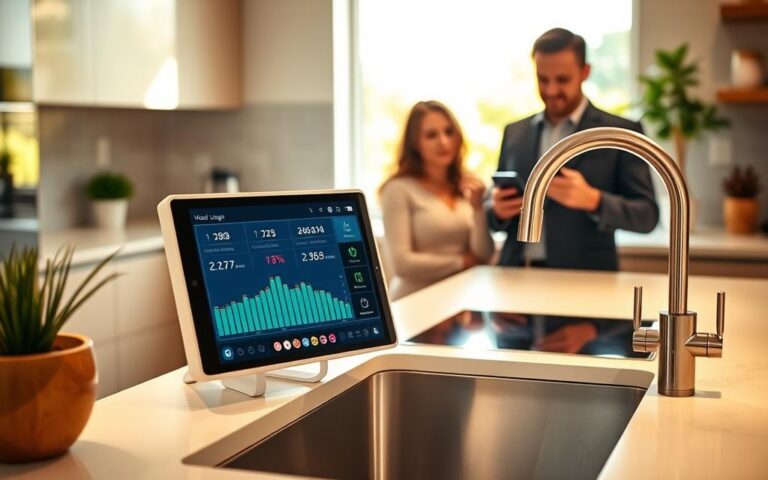
Smart water meters provide data and breakdowns of water use quickly. Brands like Flume, Phyn, and StreamLabs show use by appliance and warn about leaks. Advanced metering from utilities offers similar advantages, helping to spot spikes and monitor water-saving efforts.
Explore Home Automation Options
Platforms like Google Home or Amazon Alexa can control smart water devices. They can adjust sprinklers based on weather or soil moisture. This saves water and supports tech investments.
Consider Water Leak Sensors
Water leak sensors near water heaters, sinks, toilets, and washers warn early. Standalone sensors are easy to set up. Systems that connect can shut off water automatically, avoiding expensive damage.
When picking devices, go for trusted brands and check privacy policies. Make sure your network is safe. Always keep software updated, check sensors often, and change batteries when needed. A small initial cost can save money and protect your home, making leak sensors and smart meters smart choices for saving on water bills.
Review and Compare Water Providers
Before making any home changes, you should compare water providers. This helps find better rates and programs. The costs and conservation incentives differ a lot between municipal systems, private companies, and bulk suppliers. By comparing them, you might spot ways to cut water bills or get rebates to lower upgrade costs.
Investigate Alternative Providers
When looking for other options, check their service quality, reliability, and customer care. U.S. customers often have a choice between city utilities and private companies. Those living in multi-unit places should look into community or association contracts. Make sure to check water quality reports and contract details to avoid surprises later.
Understand Local Water Rates
Knowing local water rates and their structure is crucial. They could include flat fees, consumption tiers, seasonal pricing, or peak surcharges. Figure out the cost per 1,000 gallons and when costs go up. Also, see if sewer charges are billed separately or based on water use.
Take Advantage of Rewards Programs
Utility companies often have rebates and rewards for WaterSense fixtures, smart irrigation systems, and rain barrels. Look into programs from ENERGY STAR, state efficiency offices, or local utilities. These can cut down water costs by reducing initial expenses. Annual check-ups of available deals, like budget-billing and low-income help, can also lower water bills.