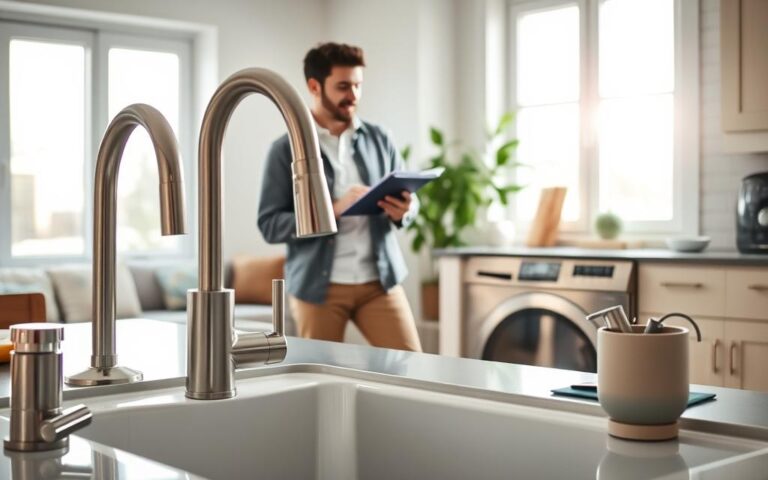

This guide shows modern plumbing maintains pressure while reducing water use. It targets U.S. homeowners, property managers, and companies. They want eco-friendly plumbing that cuts consumption and costs.
Low-flow fixtures cut water use with special designs. They use aerators, pressure valves, and effective spray patterns. The EPA WaterSense program and Department of Energy set standards. These help people pick products that save water and energy.
Here, readers will find easy, clear advice on fixture types, installation options, and upkeep. It covers DIY vs. professional installation, how they perform, and federal and state incentives. It focuses on the benefits of low-flow fixtures, like lower bills and saving water, for homes and businesses.
Key Takeaways
- Low-flow fixtures maintain usable pressure while cutting water use.
- EPA WaterSense and DOE guidance help identify high-performing products.
- Choosing the right fixture drives reduced utility bills and energy efficiency savings.
- Installation can be DIY for simple swaps, but professionals handle complex retrofits.
- Federal and state incentives make upgrades more affordable for homeowners and businesses.
Understanding Low-Flow Fixtures
Low-flow fixtures use smart design to reduce water use while keeping performance high. This overview explains what low-flow fixtures are. It shows why they’re great for homeowners, building managers, and plumbers looking for green plumbing options.
Definition of Low-Flow Fixtures
Low-flow fixtures use less water than standard ones but still provide good pressure and comfort. They include showerheads that use 2.0 gallons per minute or less, faucets that use about 1.5 gpm or less, and toilets that use 1.28 gallons per flush or less.
Products with the EPA WaterSense label meet strict efficiency and performance standards. Low-flow designs often have aerators, flow restrictors, and special cartridges for a good flow. For toilets, there are dual-flush options and high-efficiency designs that avoid the need for multiple flushes.
Types of Low-Flow Fixtures
Faucets might have aerators to mix air with water, keeping the pressure feeling strong while using less water. Some places, like commercial restrooms, use laminar-flow faucets for a smooth, straight water flow.
Showerheads use special tech to keep water pressure right, have pause features, and different spray choices to save water and keep showers comfortable. Brands like Kohler, Delta, and Moen make models that save water without letting down users.
Toilets come as high-efficiency ones using 1.28 gpf or less, dual-flush for different waste types, and models with pressure assist for less water use. Even urinals and other commercial fixtures have low-flow versions, from water-free urinals to faucets and flushers that use sensors to reduce waste in busy spots.
When picking these fixtures, think about how they fit with old plumbing and local building rules. Choosing the right type means you’ll get all the benefits of low-flow fixtures. It also means you’re using water more sustainably as part of eco-friendly plumbing.
Environmental Benefits of Low-Flow Fixtures
Low-flow plumbing helps save water and reduce strain on our water sources. This short overview highlights the benefits for families and communities. It explains the advantages of low flow fixtures, like saving water, energy, and promoting sustainable water practices.
Water Conservation
By switching to efficient toilets, a family can save thousands of gallons each year. Choosing lower-flow faucets and showerheads also cuts water use when bathing and washing hands.
This means less water is taken from lakes and underground. Cities experience less strain, especially in dry periods. This helps avoid water use restrictions.
With less wastewater, treatment plants operate more efficiently. This uses fewer chemicals and energy and keeps our rivers cleaner. When many homes make this switch, the positive impact grows.
Energy Savings
Using less hot water means using less energy for heating it. The Department of Energy shows how this can significantly reduce home energy bills.
Reducing shower water use by 20–40% cuts water heating costs. Combining efficient fixtures with modern heaters can lead to more savings and less pollution.
This also means less work for water and sewage systems. It reduces energy needs at a community level, helping to fight climate change.
Economic Advantages
Low-flow upgrades give clear money-saving benefits for homeowners and building managers. They use less water per minute and flush, cutting water and sewer bills. These savings grow when you consider home usage and local rates.
Let’s look at an example. If a family switches to a 1.5 gpm faucet from a 2.5 gpm one and uses it for 30 minutes daily, they can save thousands of gallons yearly. With the U.S. average water rate, this means obvious savings on utility bills. Water and sewer costs vary greatly by location, though.
Here’s a quick look at what you might save with some common upgrades:
| Fixture | Old Flow | New Flow | Estimated Annual Water Saved (gal) | Approx. Annual Savings (USD) |
|---|---|---|---|---|
| Kitchen faucet aerator | 2.5 gpm | 1.5 gpm | 6,000 | $30–$60 |
| Showerhead | 2.5 gpm | 1.8 gpm | 9,000 | $45–$90 |
| Toilet (older) | 3.5–6.0 gpf | 1.28 gpf | 20,000 | $100–$200 |
Different products and uses have different payback times. Aerators and faucet changes often show savings in months. Showerheads and toilets may take one to four years to pay off. Utility rebates can make payback faster and lower the initial cost.
There are long-term benefits too. Using less hot water means more energy efficiency savings. Over time, you save on water and energy, making total ownership costs lower.
Products with WaterSense labels, like those from Moen and Kohler, come with warranties and need less upkeep. This increases financial benefits and helps with marketing your property. Making energy- and water-saving updates can raise your property’s value and might even qualify it for LEED or ENERGY STAR credits.
Before deciding, consider the initial cost, local rates, household size, and how much you use your fixtures. Low-flow fixtures can lead to stable utility bill savings and energy efficiency gains over time.
Improving Water Efficiency
Homeowners and facility managers learn to make better choices through clear flow rate comparisons and strong performance standards. This section outlines usual flow rates, illustrates how design can maintain high pressure with less water, and clarifies how certification and codes are supported by testing.
Flow Rate Comparison
Old faucets could use between 2.2 to 3.0 gallons of water per minute (gpm). Now, modern low-flow faucets use between 0.5 and 1.5 gpm. They still maintain good water pressure thanks to special cartridges.
In the past, showerheads used about 2.5 to 5.5 gpm. But modern low-flow ones use only about 1.8 to 2.5 gpm. They achieve this by engineering the spray and mixing in air.
Old toilets needed 3.5 to 7 gallons for each flush (gpf). Now, high-efficiency toilets use only about 1.28 gpf. They still perform well because of better bowl design and flush valves.
Let’s look at how much a family of four could save. We’ll examine daily use and yearly savings for different fixtures.
| Fixture | Older Rate | Low-Flow Rate | Water Saved per Use | Annual Savings (4 people) |
|---|---|---|---|---|
| Bathroom faucet | 2.5 gpm | 1.0 gpm | 1.5 gallons per 5-minute use | Approx. 4,380 gallons/year |
| Shower | 3.5 gpm | 2.0 gpm | 1.5 gallons per 10-minute shower | Approx. 10,950 gallons/year |
| Toilet | 3.5 gpf | 1.28 gpf | 2.22 gallons per flush | Approx. 16,146 gallons/year (assumes 5 flushes/person/day) |
| Total estimated savings | Approx. 31,476 gallons/year |
Performance Standards
WaterSense certification from the EPA checks flow rate and user experience. Products need to pass specific criteria to get this label.
ANSI/ASME standards and plumbing codes like the UPC and IPC set the flow rates. Local areas use these codes to decide which fixtures are approved.
Manufacturers test for how well flushes work, performance, and durability. Tests look at flow rate, spray coverage, and cycle numbers for durability.
Choosing products that meet these standards means you get low-flow benefits and reliable fixtures. This choice helps the environment and saves you money on energy costs.
Installation Process of Low-Flow Fixtures
It’s pretty easy to install low-flow fixtures for small upgrades. But for full retrofits, it’s more complex. Your approach should reflect your project’s size, your area’s rules, and the fixtures you pick. The next steps guide you through balancing the benefits of low-flow fixtures with the time and money involved.
Professional vs. DIY Installation
Some tasks, like adding faucet aerators or replacing showerheads, are simple to do yourself. Most people can handle these with tools they have at home, taking 10–60 minutes for each fixture. These changes can lower your bills right away, and they also make you feel good about what you’ve done.
But, for big jobs like new toilets or pressure-assisted fixtures, you’ll need a licensed plumber. They make sure the work follows local rules and that everything is sealed and vents correctly. Since prices can vary, getting a few estimates for big jobs is a smart move.
Common Installation Challenges
In old houses, you might run into issues with non-standard parts or old valves. These can turn a quick fix into a longer, costlier job.
Also, if your home’s water pressure is low, your new low-flow fixtures might not work well. You might need special fixtures or ways to boost pressure to solve this.
When you’re replacing a toilet or doing big plumbing jobs, you might need permits or inspections. This is especially true for businesses, which have stricter rules. Getting help from a pro can make sure everything is done right.
Taking out old fixtures often leads to messes. You may find old pipes that need careful disposal. Doing this right protects your home and follows local laws.
Practical Tips
- Start with affordable DIY projects to see how you like the improved fixtures.
- Ask for detailed estimates from plumbers before doing big updates.
- Make sure to look into your local rules before starting to avoid any hold-ups.
- Think about using eco-friendly gear like special aerators and WaterSense items for lasting savings and better water use.
Maintenance of Low-Flow Fixtures
Regular care keeps low-flow fixtures working well and maintains their benefits. Simple checks help avoid big repair costs. This guidance covers routine checks and common troubleshooting.

Routine Checks and Services
Every 6 to 12 months, check faucet aerators and showerheads for mineral buildup. Remove screens and soak them in vinegar or another cleaning solution. Then rinse and put them back. This keeps the water flow smooth.
Look at toilets for leaks, worn flappers, and how the fill-valve works. A leaking flapper or worn seal can waste water. This goes against the water-saving point of low-flow toilets. Replace any worn parts quickly.
For businesses, keep a schedule for checking sensor faucets, flush valves, and systems that use pressure. Regular care means less downtime and stops waste. Always replace old batteries in automatic fixtures and check the sensors often.
Troubleshooting Common Issues
When people think water pressure is low, find out if it’s really the pressure or just the fixture. Check many fixtures to find the problem. If the whole system’s pressure is low, a pump might help or talking to a plumber about other fixture types might be best.
For less water flow, inspect inlet screens and the main valves. Cleaning can often fix these issues without needing new parts. If clogs keep happening, check the main water supply for dirt. You might need a filter for the whole house.
For toilets not flushing well, it could be the flush valve or how the fill valve is set. Adjust or change the flush valve. If that doesn’t work, a new high-efficiency toilet might be the answer.
Automatic fixtures might stop working if sensors are off, batteries are dead, or solenoids fail. Check the batteries, clean the sensors, and use the right instructions to replace any parts. For brands like Kohler, Sloan, or Moen, use their parts to keep warranties good and things working right.
| Issue | Likely Cause | Quick Fix | When to Call a Pro |
|---|---|---|---|
| Perceived low flow at a single sink | Clogged aerator or screen | Remove and clean screen with vinegar | If cleaning fails or thread damage occurs |
| System-wide low pressure | Main supply pressure or pressure-reducing valve | Test at multiple fixtures; check PRV | Install a booster pump or replace PRV |
| Toilet fails to clear solids | Worn flapper, weak flush valve, or low trap discharge | Replace flapper or adjust fill valve | Retrofit flush valve or replace HET model |
| Automatic faucet not activating | Dead batteries, sensor misalignment, faulty solenoid | Replace batteries; realign sensor | Replace solenoid or call certified technician |
| Frequent scaling | Hard water mineral buildup | Descale screens and showerheads periodically | Install water softener for long-term prevention |
Consistent care of low-flow fixtures makes them last longer and work better. These steps save water and energy across your property. They also cut down on costs.
Incentives for Low-Flow Fixture Adoption
Switching to efficient plumbing saves money right away and adds value over time. Homeowners and businesses can get federal and state rebates. These rebates, along with local conservation programs, help pay for these eco-friendly options. They make it easier to afford and show the perks of low-flow fixtures and lower bills.
The EPA’s WaterSense campaign promotes products that save water. To get many rebates, look for WaterSense and ENERGY STAR labels. Some federal rebates can also help you save on taxes if you buy these products.
Federal and State Rebates
Places like California and New York offer rebates for efficient toilets and appliances. You must buy labeled products and save your receipts. Sometimes, you might need to get an inspection first. Check online for details and how to apply.
Filling out an application is usually simple. You often need your receipt and the product’s model number. Instant discounts or mail-in claims can cut down costs. This way, you can save money upfront and benefit from owning low-flow fixtures.
Local Conservation Programs
Cities and water districts sometimes give instant rebates or help with installing eco-friendly products. These programs aim to use less water overall. They often offer help to renters and those with lower incomes.
Nonprofits and local groups also support these efforts. Groups like American Rivers work with water companies on special projects. Businesses can get help from utility programs to upgrade equipment and get better rebates.
Below is a simple guide to help you understand the incentives available.
| Incentive Type | Typical Eligible Products | How to Apply | Primary Benefit |
|---|---|---|---|
| Federal/Tax Credits | Energy-saving appliances and qualifying retrofits | Claim on federal tax return with receipts and product documentation | Reduced overall tax liability for qualifying upgrades |
| State Rebates | High-efficiency toilets, faucets, showerheads, washers | Apply via state portals or utility sites; submit receipts and model numbers | Lower upfront cost; emphasizes low flow fixtures benefits |
| Utility Instant Discounts | WaterSense-labeled fixtures sold at participating stores | Receive discount at point of sale or claim online with proof | Immediate savings and faster payoff through reduced utility bills |
| Mail-In Rebates | Wide range of certified fixtures and appliances | Mail forms and receipts to program address or submit online | Retroactive reimbursement that offsets purchase cost |
| Nonprofit/Community Programs | Basic low-flow fixtures and installation services | Sign up through community events or partner organizations | Access for low-income households and educational support |
| Commercial Incentives | Large-scale fixtures, meter upgrades, process water equipment | Work with utility account managers for technical review and rebates | Performance-based payments and engineering support |
Looking into both federal and state rebates, as well as local programs, offers the best savings. Using these incentives with smart product picks brings out the best in low-flow fixtures. It keeps bills low over the long run.
Low-Flow Fixtures in Commercial Settings
Businesses looking to cut costs and boost their eco-friendly image see big benefits in water-saving plumbing. This part talks about the practical perks and success stories. These show how low-flow fixtures help save money and work well in shops, hotels, offices, and public spaces.

Benefits for Businesses
Installing low-flow fixtures helps businesses save on water and energy bills. Using less water means lower water and sewer charges. And needing less hot water cuts down on electricity or gas needed for heating.
They also bring operational improvements. Sensor faucets and timed flush valves cut down on waste and reduce maintenance costs. Devices like pressure-compensated aerators keep things running smoothly in busy restrooms, boosting customer happiness and cutting down repair needs.
There’s also value in meeting local standards and promoting a business’s green efforts. Meeting codes and getting certifications like LEED can improve a business’s reputation. It might also lead to financial perks related to being eco-friendly.
Case Studies
A hotel chain swapped to eco-friendly showerheads and toilets and saw big water savings per room. The busy world of hospitality meant quick payback and continuous savings on water bills.
An office complex did a big water use check and then updated their old bathroom fixtures. The upgrades led to noticeable savings in utility costs and a drop in time spent on upkeep. This meant getting their money back in two to three years.
Several schools started using more low-flow fixtures and saw costs per unit go down because they bought in bulk. This made it easier to use them throughout the district. They saw benefits like less water used each month and less pollution from heating water.
To see if they’re successful, facility teams should watch key indicators: water saved, money saved on utilities, less pollution, and less time spent on maintenance. These numbers help teams see the real benefits of switching to low-flow fixtures.
Conclusion
The future of saving water is about smarter, low-flow options that save a lot without losing quality. Rules support using less water. And, things like smart faucets, detecting leaks through the internet, and better flow control are making these options even better.
They also help cities use less water and energy. This is good for our planet and helps fight climate change in the U.S.
For cheaper improvements, homeowners can add simple things like faucet aerators and showerheads that save water. They might also think about getting new toilets. Businesses can save more by checking how much water they use and getting help from utilities.
Those who provide services should talk about the benefits of saving water. They should show how it saves money and suggest good products like WaterSense. For details, check out this guide: low-flow fixtures guidance.
Putting in low-flow fixtures doesn’t cost much, cuts bills, and helps the planet a little. By choosing these smart options, homes and businesses not only save money but also support a sustainable water future.