
Practical permaculture layouts help homeowners and gardeners to grow more using less water. This guide shows U.S. readers how to organize a site and choose plants. It also helps add features that save water while increasing food production in shade-rich areas. The focus is on creating food and water-efficient gardens that handle heat and drought well.
It starts with learning about site analysis, zoning, and how to plan for soil health and rain collection. The guide tells about pairing plants and using vertical spaces to enhance a garden. It combines small and big design ideas from permaculture in the U.S. to increase yields and diversity. The advice is based on proven methods from experts in sustainable agriculture.
Readers will learn what to check in their garden and how to design it to need less water yet produce more food. The aim is to create gardens that suit any size of land in different U.S. weather conditions. This means less water use for suburban homes, community gardens, and larger homesteads.
Key Takeaways
- Learn basic site analysis to inform practical permaculture layouts.
- Use zoning and sectors to place food, water, and shade where they belong.
- Adopt water-efficient garden design tactics like rainwater capture and swales.
- Integrate shade-efficient gardening with trees and structures to lower water use.
- Apply permaculture for food and biodiversity in both urban and rural settings.
Introduction to Permaculture Principles
Permaculture combines ethics, ecology, and hands-on techniques for thriving landscapes. It aims for systems that renew themselves and fulfill human needs while healing nature. Its founders, Bill Mollison and David Holmgren, introduced this method around three key ethics—caring for the earth, caring for people, and sharing resources equally—and a set of tools for applying this thinking to various environments in the U.S.
What is Permaculture?
Permaculture goes beyond gardening. It’s a philosophy that uses nature’s patterns for human benefit. This approach ensures lasting resilience by meshing food growing, water management, and habitat creation. It applies to different settings, from city spaces to big rural lands, adapting its methods according to the place.
Core Principles of Permaculture
The main principles of permaculture help in making smart decisions onsite. One principle, observe and interact, involves watching closely before acting. Another, catch and store energy, includes setting up rainwater systems to supply water to swales and tanks.
Obtain a yield stresses producing resources like food or wood. Apply self-regulation and accept feedback means changing plant types in response to pests. Using renewable resources suggest preferring natural energy sources over non-renewable ones.
Produce no waste encourages recycling kitchen and garden waste. Design from patterns to details means planning with nature’s layout in mind. Integrate rather than segregate focuses on blending plant groups to help each other grow.
Use small and slow solutions suggests making gradual changes, like beginning with one garden bed. Use and value diversity helps in managing pests through different plant kinds. Use edges and value the marginal looks at making use of boundary areas. Creatively respond to change involves adjusting plans as environmental conditions change.
Benefits of Permaculture in Agriculture
Permaculture offers tangible and other important advantages for sustainable farming. It includes methods like diverse plantings that need less water and help soil health. It also boosts biodiversity, which can cut down pest problems and pesticide use.
It’s found that layered plant setups give more all-year-round production. This also helps in capturing more carbon in the soil. The perks of permaculture for the U.S. are many, including productive city lots, strong suburban gardens, and diversified country farms with reduced costs.
Using these sustainable methods supports food availability and safeguards water and soil. This strategy works from city gardens in Detroit to big family farms in the Midwest. It offers ways towards more stable landscapes and better harvests.
Designing a Permaculture Garden Layout
A smart permaculture garden layout starts with observing the site closely. This means looking at sunlight, wind, how noise travels, water flow, and plants already growing there. Watching these elements over different seasons shows us patterns. These patterns help us decide where to put food plants, shady spots, and water features.
When planning, it’s smart to arrange things in layers. Important stuff you use a lot should be near your house. This way, the design is handy but also good for the environment. Mapping everything out well helps you save time, get better harvests, and make upkeep easier.
Understanding Zones and Sectors
Zones help us organize the space based on how often we use different parts. Zone 0 is your home and the area right around it. Zone 1 has the kitchen garden for picking herbs and veggies daily. Zone 2 is for plants that come back every year, berry bushes, and small animals like chickens. Zone 3 grows the big food crops. Zone 4 can be a lightly managed forest or grazing area. Zone 5 stays wild to nurture different kinds of living things.
Sectors pay attention to outside forces like sunlight and wind. They help us see the best way to set up windbreaks and where to plant trees for shade. By understanding where water runs off, we can better plan for water storage. This helps prevent soil washing away and makes our garden more tough.
Key Elements of Garden Design
How we lay out paths and get to different parts of the garden can help avoid squishing the soil too much. Features like raised beds and water catching systems, including ponds and underground water lines, manage the land’s water.
It’s important to have a good spot for making compost and mulch close to where your plants grow. Wind barriers made of local bushes can protect delicate plants. Mixing different kinds of plants together lets us use our space wisely.
Using structures like trellises or frames lets us grow more stuff in a small area. Keeping animals, from chickens to bees, helps our plants and keeps pests down. It’s best to have your plants close by so it’s easy to keep an eye on them and pick the veggies.
Incorporating Microclimates
Different spots in your garden will have their own mini weather systems. Knowing where these spots are helps you pick the right plants. Keeping track of these areas at various times can show you where these microclimates are.
You can create special conditions with things like heavy walls that store heat. Using fences or planting shrubs can help protect against wind. Trees can offer shade, which is especially good for plants that don’t like too much heat.
Shiny surfaces reflect heat, which can be great for warming up chilly spots for plants that like it warm. Mulch helps keep the soil at a nice temperature and holds in moisture. In dry, hot places, focusing on shade and saving water is key. In cooler places, finding spots that catch a lot of sun can make the growing season longer.
| Design Element | Primary Purpose | Placement Tip |
|---|---|---|
| Zone Planning | Organize by use and maintenance | Put herbs and daily crops in Zone 1 near the house |
| Sector Analysis | Respond to sun, wind, fire, noise | Map sun paths and wind to orient beds and windbreaks |
| Water Storage | Harvest and distribute rainwater | Locate tanks where roof runoff and slope converge |
| Compost Station | Close-loop fertility | Place near high-use beds for easy nutrient cycling |
| Windbreaks | Reduce wind stress and moisture loss | Use native shrubs on windward sides of gardens |
| Stacked Polycultures | Maximize yield per area | Combine canopy, understory, and groundcover species |
| Thermal Mass | Moderate temperature swings | Place stones or walls on south-facing aspects |
Companion Planting in Permaculture
Companion planting leads to healthier gardens. It combines permaculture ideas with old garden knowledge. This boosts garden yields, fights pests, and uses space and soil well.
Benefits of companion planting
Companion planting pairs plants that help each other grow. It fights pests, attracts pollinators, and helps plants that add nutrients to the soil. These methods also stop weeds, cut down on chemicals, and make gardens stronger.
Common companion plant combinations
The Three Sisters—corn, beans, squash—combine support with nourishment. Basil near tomatoes fights insects and makes them taste better. Marigolds protect many vegetables from pests.
Borage near strawberries and tomatoes brings pollinators and helps the soil. Clover and vetch act like natural mulch. They add nitrogen for plants like kale and cabbage.
Techniques for effective planting
Intercropping combines fast and slow growers to save space. Strip planting keeps diseases away and makes harvesting easier. Fruit tree guilds use shrubs that add nitrogen, plants like comfrey, and flowers to attract pollinators.
Succession planting keeps gardens producing all season. Nurse crops shield young plants. Trap crops keep pests away. Proper plant spacing ensures plants help, not hinder, each other.
Water Management Techniques
Good water management connects design with real action. It keeps gardens growing, even through dry spells and heavy rain. It uses smart methods to capture, hold, and reuse water right where it’s needed, without wasting any.

Designing for rooftop capture
Start small with gutters leading to barrels, then move to bigger tanks if you have room. To pick the right tank size, look at how much rain your roof can catch. Use weather data and local rainfall records for this. First-flush devices make sure the water you collect is cleaner for watering plants.
Using gravity to water plants saves power and helps your garden stay green responsibly. If you can’t use gravity, think about solar or low-energy pumps. Check local laws to see if there are benefits or rules for collecting rain at home. Many places encourage it.
Planning swales and contour planting
Swales are shallow ditches that catch and absorb rainwater. Use simple tools to mark the land before you dig. Make sure your swales fit your land’s slope and soil type. Clay needs wide, flat swales, while sandy soils can have narrower ones.
Plant tough, deep-rooted plants on the sides of swales to keep the soil in place. Adding mulch helps stop erosion and lets water soak in better. In cities and towns, swales can slow down runoff, reducing stress on sewers.
Creating small ponds and linked water features
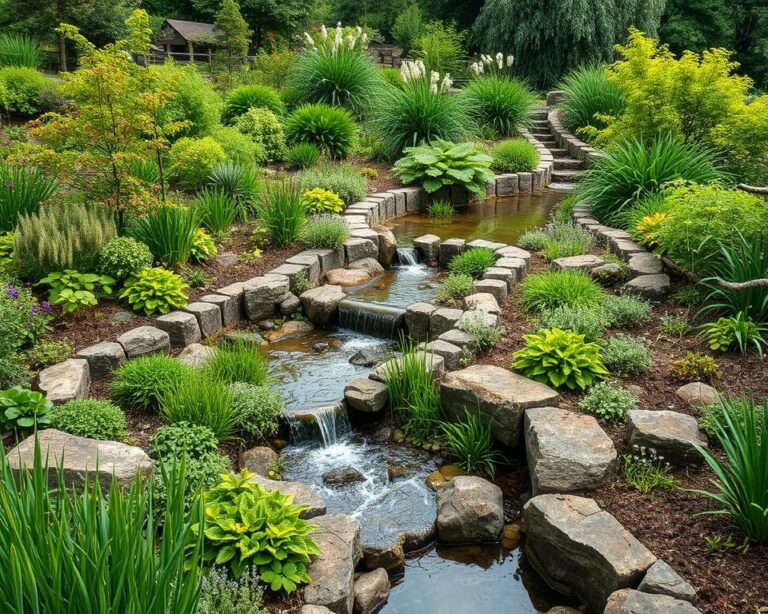
Ponds store water, support wildlife, and can cool nearby areas. Put them in the right spot, away from septic systems and natural runoff paths. Your budget and soil will guide whether you use clay or plastic to seal the pond. Make sure your pond can overflow safely into the ground during heavy rains.
Add plants in and around your pond to clean the water and control algae. Water lilies and edge plants also help block sunlight, keeping algae growth down. Always think about safety with ponds, especially if kids are around.
Maintenance and ecology
Regular care keeps water systems working well. Clear out gutters and first-flush systems with each season. Check swales for erosion after it rains and fix any bare spots. For ponds, clear out debris, keep an eye on water levels, and plant native species to attract bugs and frogs.
These strategies help create gardens that are strong against dry and wet times. They bring together smart water saving, swales, and pond strategies. This way, your garden not only survives but thrives, following principles of water-wise permaculture.
Maximizing Food Production
Permaculture gardens focus on getting the most yield from a small area. They build soil and increase biodiversity. By using smart structures and planning, they produce lots of food without needing a lot of outside resources. These techniques can be used in backyards, community gardens, and small farms all over the United States.
Vertical gardening increases the growing area by adding height. It uses trellises, espaliers, living walls, arbors, and stacked planters to get more food from each square foot. Plants like vining beans, cucumbers, tomatoes, peas, and some squashes do well when grown upwards. Use materials like recycled pallets, bamboo, and steel. For plants that bear heavy fruits, make sure supports are strong and fastened well. Drip irrigation or soaker hoses help save water.
It’s smart to build vertical structures keeping easy care in mind. Put tall trellises on the north side so they don’t block sunlight from shorter plants. Choose modular stacked planters to make rotating crops and harvesting simpler. Living walls can grow herbs, lettuces, and small fruit vines all year long.
Crop rotation stops pest buildup and keeps soil nutrients balanced. By rotating families of plants like Solanaceae, Brassicaceae, and others through your garden beds over a few years, you can avoid diseases and keep the soil healthy.
For small gardens, try a four-bed system: first year, grow tomatoes and similar plants in bed A, cabbages in B, root vegetables in C, and peas or beans in D. Then move each group one bed over each year. You can use bigger beds by dividing them into sections. Adding cover crops like rye or clover during the off-season can help fix nitrogen in the soil and stop pest cycles. This makes your garden stronger.
A guide for when to plant things can help get timing right. Plant cool-weather crops like lettuce and spinach in the spring and fall. Warm-weather plants, like tomatoes and beans, should be planted from late spring to summer. By staggering when you plant things, you can keep getting produce without any breaks.
Winter gardening lets you keep growing things in the cold months. Use hoop houses, cold frames, and mulch to protect your plants. If you live in warmer zones, you might need to adjust planting times and use shade cloth to keep cool-weather crops happy. A guide tailored to your local area can help pick the right times and types of plants.
| Technique | Best Uses | Key Materials | Benefit |
|---|---|---|---|
| Trellises and Arbors | Vining beans, cucumbers, peas, tomatoes | Bamboo, galvanized steel, twine | Increases vertical yield and airflow |
| Espalier | Dwarf fruit trees, espalier apples, pears | Wooden frames, strong ties, pruning tools | Fruit production with small footprint |
| Living Walls | Herbs, lettuces, small vining plants | Modular planters, felt pockets, irrigation tubing | High-density planting on vertical surfaces |
| Stacked Planters | Leafy greens, strawberries, herbs | Recycled containers, wooden frames | Compact rotation-friendly beds |
| Cover Crops | Off-season soil building | Seed: rye, clover, buckwheat | Fixes nitrogen, adds organic matter |
To create resilient, high-yield gardens, mix vertical gardening, crop rotation, and a smart planting guide. Strengthening supports, smart crop rotations, and timing your plantings can really boost your garden’s productivity.
Incorporating Shade into Permaculture Designs
Adding shade wisely can bring balance to a permaculture site. It keeps plants cool, reduces water loss, and cuts down on watering needs. The right kind of shade can create special areas where certain crops do well. It also provides a cozy spot for people and animals.

Benefits of Shade in Garden Design
Shade helps keep peak temperatures down during the day. This protects young plants from harsh sunlight. It also keeps the soil cooler, which makes water last longer.
Adding shade means more types of plants and animals can live in your garden. In sunny spots where only a few plants thrive, shade brings variety. It helps the soil stay healthy and plants grow better over time.
Selecting Shade Trees and Plants
Pick trees and plants that fit your area’s weather and work well together. For big spaces, consider fruit trees like apple or pear, and big shade trees like oaks. Some trees even help the soil by adding nitrogen, like black locust and honeylocust. But make sure they’re okay for your area.
For the understory, choose bushes like hazelnut and elderberry. Some veggies, like rhubarb and asparagus, are happy with less sun. Going with plants that naturally grow in your area is best. They help local wildlife, are easier to care for, and can handle the weather better.
Creating Shade Structures
If planting trees isn’t an option, man-made structures can provide shade too. Things like pergolas or arbors, made from eco-friendly materials like bamboo, offer a solution. They can support food-producing vines, adding beauty and function.
Place these structures so they give lots of shade in the summer. But make sure they let in sunlight during the winter. Changing how much shade they provide with the seasons can help. This way, your garden gets exactly what it needs for both shade and sun.
| Approach | Typical Species or Structure | Main Benefit | Regional Notes |
|---|---|---|---|
| Large shade trees | Native oaks, chestnut, apple, persimmon | Long-term canopy, fruit, wildlife habitat | Best for larger sites and restoration projects |
| Nitrogen-fixing trees | Black locust, honeylocust | Soil fertility, light dappled shade | Monitor for invasiveness; region-dependent |
| Understory guild | Hazelnut, elderberry, rhubarb, asparagus | Food layers under canopy, shade-tolerant crops | Works well in mixed orchards and food forests |
| Built structures | Pergolas, arbors, shade sails, espalier frames | Immediate shade, supports vines, movable | Great for urban plots and patios |
| Vine integration | Grape arbors, kiwi on trellises | Dual-purpose shade and harvestable crop | Choose cultivars suited to microclimate shade design |
Soil Health in Permaculture Systems
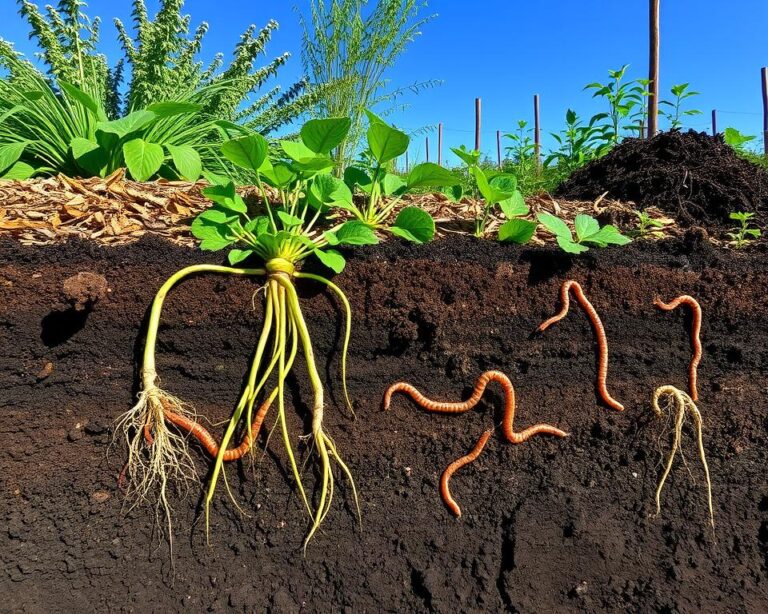
The soil under our gardens is alive. It helps plants grow, traps carbon, and manages water. In permaculture, soil is seen as a home for many tiny creatures. These include bacteria, fungi, and worms that help nutrients cycle and make the soil strong. Healthy soils mean plants get steady nutrients, fight off disease better, keep moisture, and help landscapes bounce back.
Importance of Soil Biodiversity
Soil biodiversity keeps the garden’s circle of life going. It moves nutrients from dead matter to living plant roots. Mycorrhizal fungi stretch root networks for better nutrient reach. Bacteria break down essential elements. Predators keep harmful populations in check. Together, they boost long-term health and reduce our need for artificial products.
This diversity also keeps water and fights diseases. Gardeners who focus on soil life see less pests and more robust plants. Soil tests can help track and improve these efforts, with guidance from services like State Cooperative Extension.
Techniques for Soil Improvement
To keep soil healthy, limit how much you dig. This protects the home of important fungus and keeps soil together. Cover crops, like crimson clover or hairy vetch, stop erosion and feed soil life. They also add nitrogen, a key nutrient.
Add things like compost to increase helpful organic matter. If your soil needs it, use rock dust for minerals, and gypsum with care. Gypsum helps in some cases, but check first as it can change how fungus live in your soil.
Letting animals graze, then rest, boosts field health. Test soil to see what it needs. For help, check with places like Tierra Permaculture.
Composting and Mulching
Composting can be fast or slow. Fast composting gets hot, killing weeds and bad germs. Slow composting needs less work but takes longer. It lets earth’s tiny creatures do the job.
For good compost, keep a balance of green and brown materials. Stir it based on how big and hot it is. This keeps air flowing. Avoid putting in sick plants or weeds that can survive the pile.
Mulching keeps soil moist, stops weeds, and feeds the soil slowly. Use things like straw or leaf mold. But don’t let it touch tree bases directly. This can prevent rot. It also helps soil life move into your garden beds.
| Practice | Primary Benefit | How to Apply |
|---|---|---|
| Reduced Tillage | Protects fungal networks and soil structure | Use broadforks, no-till planters, and targeted digging only |
| Cover Crops | Soil protection, nitrogen fixation, organic matter | Plant crimson clover, winter rye, or hairy vetch between main crops |
| Organic Amendments | Improves texture and feeds soil life | Apply matured compost, compost tea, or aged manure at planting |
| Biochar & Rock Dust | Long-term carbon stability and trace minerals | Mix small rates into planting holes or incorporate with compost |
| Composting (Hot) | Rapid decomposition, pathogen control | Maintain C:N ~25–30:1, turn regularly, monitor temps |
| Mulching | Moisture retention and weed suppression | Apply 2–4 inch layer; keep away from tree collars |
Using these soil methods makes gardens in permaculture systems stronger. Things like composting, smart mulching, and caring for soil life make a big difference. Over time, these actions lead to gardens that don’t need many outside resources. They support both plant and human communities well.
Attracting Beneficial Wildlife
A permaculture plot comes alive when wildlife joins in. Planting wisely and creating structures attract helpful birds, insects, and pollinators. This mix of plants, habitats, and gentle care boosts both diversity and resilience.
Designing for Pollinators
Keep flowers blooming all season. Mix native perennials, herbs like lavender and rosemary, and various wildflowers. This way, there’s always nectar and pollen from spring to fall.
Set up homes for bees with patches of bare soil and hollow stem bundles. Little water spots with stones offer sips for insects and butterflies.
Put in milkweed if you can to help monarchs. Focus on local plants and skip harsh bug sprays to keep pollinators safe.
Encouraging Predatory Insects
Grow strips of blooming plants for ladybugs and other helpful insects. Mixing plant types offers food to many beneficial bugs.
Use less pesticide and prefer natural solutions if you must. Hedgerows and special beetle areas offer winter homes and let good bugs travel easily.
Adding different plant layers and leaves on the ground keeps good bug numbers up. This helps keep pests down without much work.
Building Birdhouses and Habitats
Set up birdhouses right for kinds like wrens and bluebirds. Place them safely and facing away from harsh winds to draw birds in.
Make varied living spaces with bushes, trees, and piles of branches. This provides homes, hiding spots, and hunting areas. Berry bushes feed birds all year, and high spots help them hunt bugs.
Birds help with seeds and bug control and show if an area is healthy. Smart birdhouse placement and safety measures aid nesting and help every living thing around.
| Feature | Primary Benefit | Example Plants or Structures | Maintenance Tip |
|---|---|---|---|
| Continuous Bloom | Steady nectar and pollen supply | Lavender, coneflower, native asters, milkweed | Plant in groups, deadhead spent blooms to encourage more flowers |
| Nesting Habitat | Shelter for bees and cavity nesters | Bare soil patches, bamboo tubes, hollow stem bundles | Reserve undisturbed ground and replace tubes each few years |
| Insectary Strips | Food and habitat for predatory insects | Fennel, dill, yarrow, cosmos | Sow in alternating beds for seasonal continuity |
| Hedgerows & Beetle Banks | Overwintering sites and movement corridors | Northern spicebush, native grasses, mixed shrubs | Trim selectively in late winter to preserve cover |
| Birdhouses for Gardens | Nesting sites for insectivorous and cavity birds | Species-sized nest boxes, predator guards, perches | Clean boxes annually and monitor for pests |
Community Involvement and Education
Permaculture grows when neighbors come together to share space, tools, and knowledge. They can transform empty lots and schoolyards into places that show how to grow food. This helps local food networks.
Engaging Your Local Community
Begin by joining forces with community gardens, libraries, and parks for volunteer days and seed-sharing events. Get Cooperative Extension offices and Master Gardener programs involved in planning.
Plan neighborhood meetings to find out what’s needed and what can be offered. Working together lowers costs, teaches skills, and makes food more accessible. It also helps strengthen community bonds.
Creating Workshops and Demonstrations
Host short, practical sessions on topics like composting and rainwater collection. Combine these hands-on activities with short talks and online follow-ups for better learning.
Sort out important details early on, like waivers and tool lists. Promote your workshops with the help of extension services or nonprofits. These workshops combine hands-on demonstrations with useful resources to help skills stick.
Resources for Continued Learning
For reliable information, U.S. practitioners can turn to sources like the Permaculture Research Institute. They can also read works by David Holmgren, materials by P.A. Yeomans, and guides from USDA NRCS.
Community leaders should encourage joining local groups and online forums to improve skills. They can also use toolkits to help gain municipal support. Check out this helpful toolkit for local governments.
- Tip: Connect garden workshops with local eateries, food banks, and markets to improve local food networks.
- Tip: After events, use quick surveys to fine-tune topics and track community involvement.
Case Studies of Successful Permaculture Projects
This section looks at real-life successes of permaculture in action. We’ll see how these projects transform designs into landscapes that are both productive and able to endure. They provide concrete results and methods that can be copied. These examples cover everything from busy city areas to expansive countryside settings, offering a comprehensive look at permaculture in practice.
In cities like Portland, Seattle, and New York, small permaculture projects have made a big impact. Community gardens and green roofs have decreased the distance food travels, increased food production per area, and used less water for irrigation. Projects that added rain gardens to city blocks significantly reduced runoff, showing clear benefits as reported by city programs. These urban permaculture achievements offer methods that can inspire other cities.
In the countryside, projects often combine collecting rainwater with various business activities. Farms using swales and agroforestry have seen their soil’s organic matter improve. By integrating animals into these systems, farms have enhanced soil fertility and reduced costs for animal feed. Intentional living communities have reported earning extra money through plant sales and by hosting visitors, which shows that it’s possible to be both green and profitable in rural areas.
These projects teach valuable lessons about starting small and growing based on what works. Engaging the community and organizing hands-on activities ensured local people supported these shared spaces. Evaluating each site carefully and implementing projects step by step helped manage risks and costs.
Keeping detailed records was crucial for every project. By monitoring their progress—tracking how much water, yield, and soil health improved—they could make faster improvements and convince officials. Collaborating with local services and other project leaders made it easier to deal with rules and permits. These insights from permaculture teach us the importance of good documentation and working together to encourage wider adoption.
Whether it’s for a city or a rural setting, adapting these strategies to fit the situation is key. Urban permaculture projects need to be designed for small spaces and supported by policy. In contrast, success in rural permaculture depends on combining different farming activities and having a reliable water system. Together, these case studies offer a guide for anyone looking to use proven permaculture methods in their own projects.
Future Trends in Permaculture Design
Permaculture is growing as it mixes old wisdom with new tools. We’re seeing a rise in tech like low-energy sensors for checking soil moisture and microclimate. There are also solar-powered pumps for water systems, and smarter ways to manage rainwater. Plus, we have open-source GIS mapping and design software that lets us share and tweak our plans. Even with these tools, we still focus on learning directly from the environment.
Advances in Sustainable Technology
Nowadays, tools help us observe our surroundings without losing touch with our local area. Companies like Vegetronix provide soil sensors, and LoRaWAN networks offer low-power data collecting. This helps improve when we water plants and what we grow. Solar pumps work with storage systems to move water without using much fossil fuel. These technologies show how permaculture can work alongside tech to better our ecological planning.
Climate Resilience Strategies
Current designs focus on farming that can withstand climate changes. We do this through growing a variety of crops and using species that can survive droughts or floods. We also adjust when we plant things, based on climate forecasts. Methods like using biochar, mulching, and cover crops help our soil hold more carbon and water. Our landscapes serve multiple purposes, helping protect against harsh weather. Planners in the U.S. are even using climate predictions for long-term planning.
The Role of Permaculture in Food Security
Permaculture is making our food systems stronger by spreading out where food grows. This gives us food all year round, even in small areas. It also cuts down on the need for long delivery routes. Plus, it takes better care of the soil and water we need to keep growing food. Changing policies to include permaculture in city layouts, schools, and in grants can help it play a bigger role in making sure we all have enough to eat.