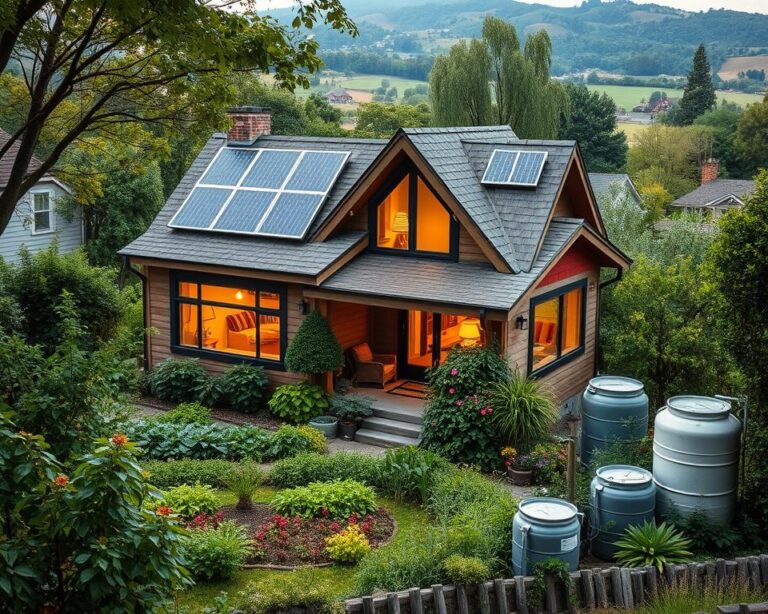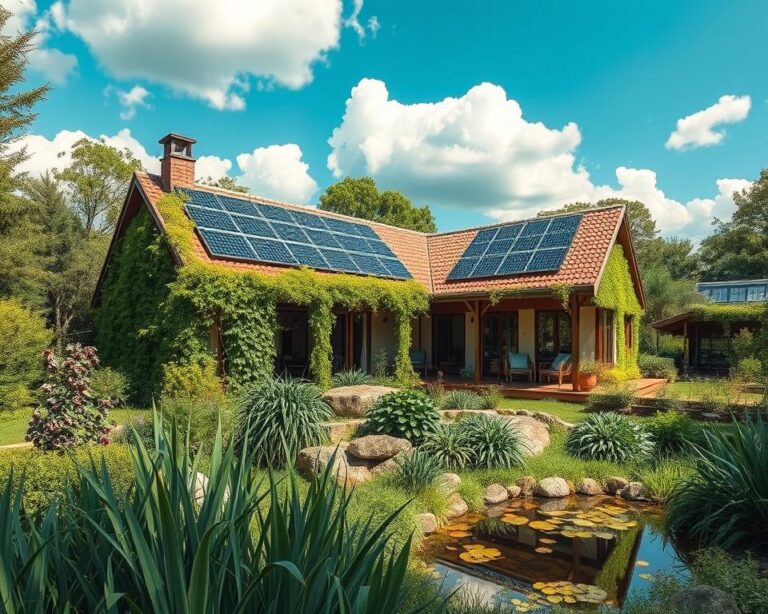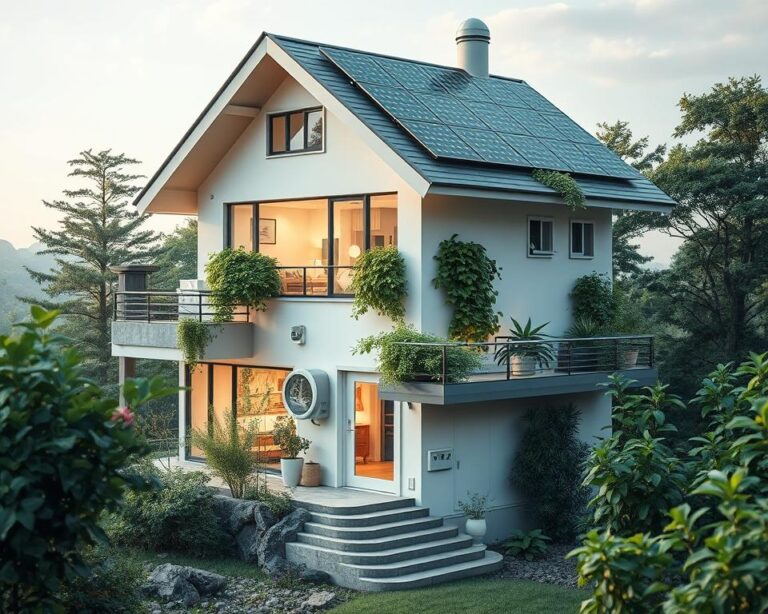

Energy-efficient home designs help make homes comfy, cheap to run, and better for the planet. This beginning shows how to make buildings that are good for the earth and save money. It’s for homeowners, architects, builders, and designers in the U.S. looking for sustainable ways.
Why is green building getting popular in the U.S.? Rising energy costs, federal tax breaks, and local laws all play a part. These reasons encourage buildings that save energy. They affect both new and renovated homes.
Here’s what readers will learn: how to cut energy bills, make homes eco-friendlier, boost comfort, and up home values. It’s about building new or upgrading with smart, cost-effective steps. The aim is nearly zero energy houses.
Next, we’ll dive into the essentials: eco materials, super windows and doors, and smart heating. Plus, ways to keep homes well-insulated, use renewable energy, save water, and plan for the future. You’ll get tips to make these ideas work in real life.
Key Takeaways
- Energy-efficient home design ideas deliver savings, comfort, and lower emissions.
- Sustainable architecture is driven by incentives, codes, and rising energy prices.
- Eco-friendly house plans work for both new builds and renovations.
- Green building design improves indoor air quality and long-term resale value.
- This guide outlines principles, materials, systems, and planning for net-zero goals.
Importance of Energy Efficiency in Home Design
Energy efficiency makes homes healthier, lowers costs, and helps cut emissions. Planning well leads to green building design for both new and updated homes. Homeowners can reduce waste, ease grid pressure, and protect resources with efficient design.
Using smarter building strategies decreases fossil fuel use. Upgraded insulation, high-quality windows, and better HVAC systems lower heating and cooling needs. This also cuts greenhouse gases from homes, aiding state and federal clean-building goals.
Using less energy reduces utility grid stress during high demand times. Energy-efficient features in homes mean utilities use fewer fossil-fuel plants in hot periods. This action improves air quality and reduces outage risks from overloaded systems.
Environmental Benefits of Energy Efficiency
Using less fuel means less drilling for coal, oil, and gas. It saves habitats and reduces land harm from fuel getting. Widespread green building slows climate change and saves water areas.
Enhanced building shells and efficient devices shrink carbon footprints. Applying energy-saving ideas widely lowers town emissions and boosts community toughness.
Economic Advantages for Homeowners
Immediate perks include lower utility bills. ENERGY STAR appliances, improved windows, and insulation trim costs. Payback from these updates often comes within years through savings.
Homes with proven efficiency appeal more to buyers. They have lower costs, more comfort, and often sell for more, quicker than other houses.
Tax breaks, rebates, and incentives reduce initial costs. Heat pump, efficient HVAC, and solar incentives help homeowners afford green designs.
Contribution to Energy Independence
Local power sources, like rooftop solar with batteries, lessen the need for far-off plants and foreign fuels. This boosts local independence and self-reliance.
Efficient homes put less strain on power lines and cope better with storms and outages. Energy-smart communities avoid big price jumps from global fuel market changes.
| Benefit | Typical Actions | Immediate Impact |
|---|---|---|
| Lower bills | Insulation upgrades, ENERGY STAR appliances, smart thermostats | Reduced monthly energy costs |
| Reduced emissions | High-performance windows, efficient HVAC, LED lighting | Lower household carbon footprint |
| Grid relief | Demand response, passive cooling, solar PV with storage | Less peak-load stress and fewer outages |
| Increased value | Certified green renovations, documented energy savings | Higher resale value and marketability |
| Incentives | Federal tax credits, state rebates, utility programs | Lower upfront costs for upgrades |
Key Principles of Energy-Efficient Home Design
A smart, energy efficient home design focuses on climate, comfort, and building science basics. It aims to lower energy needs using a strategic layout and materials. Passive solar design and daylight tactics are crucial to cut energy use and boost well-being.
Passive Solar Features
Passive solar design uses sunlight to warm and cool homes without needing active systems. It includes south-facing windows in the Northern Hemisphere, materials like concrete for heat storage, and shades to keep out summer heat.
The choice of windows is key, using low-e coatings and multiple panes. But, balancing thermal mass and insulation is also vital. Too much mass can lose heat without insulation, and too much insulation stops heat storage.
Home Orientation and Siting
The direction a home faces is crucial for saving energy. Living areas and big windows face south to catch winter sunlight. Meanwhile, garages and service rooms are placed north to act as a shield.
The local climate dictates certain choices. In hot areas, less east and west windows reduce heat. In cold areas, facing the sun and blocking winter winds helps. Wind patterns and the surrounding landscape also help cool and heat naturally.
Daylighting and Natural Light Use
Daylighting lowers the need for electric lights and is good for health. Features like clerestory windows, light shelves, and skylights help. Open layouts and internal windows spread light into every corner of a room.
But, managing glare and heat is a must. External shades, internal blinds, and the right windows keep rooms comfortable while letting in light. Natural light is not only linked to better sleep and work but it’s key for green home design.
Sustainable Materials for Construction
The materials we choose affect a home’s function and how long it lasts. By using sustainable materials, builders and homeowners can cut down on carbon and waste. These materials are tough and safe, while keeping within budgets and eco-friendly goals.
Using reclaimed and recycled goods lowers the need for new resources and adds uniqueness. It’s smart to check their eco-claims with a trusted third-party certification.
Recycled Building Materials
Recycled materials include wood that’s been reused, steel that’s been recycled, and gypsum with recycled content. Adding fly ash or slag to concrete lowers its carbon footprint and makes it stronger. Reused architectural pieces and recycled finishes add a special touch to a space.
Search for engineered wood from certified mills and steel that’s been recycled with proof. Certifications like Cradle to Cradle and the Forest Stewardship Council back up their eco-friendliness and ethical sourcing.
Eco-friendly Insulation Options
Insulation is key for comfort, health, and saving energy. Green choices include cellulose from old newspapers, mineral wool, and natural fibers such as sheep’s wool and cotton. There are also high-efficiency foam options for demanding projects.
Pick insulation based on its insulation value, water resistance, safety in fire, and emissions. Cellulose is great for filling existing walls, mineral wool excels at soundproofing and heat resistance, and foam boards work for reducing heat loss.
Durable Building Products
Choosing lasting materials means less repair and a smaller environmental footprint. Durable options, like fiber-cement siding, metal roofs, certified sustainable wood floors, and porcelain tiles, make buildings last longer and cost less over time.
Consider warranties, upkeep, environmental impact, and recycling at their life’s end. Durable products support the aim of greener, stronger buildings.
Energy-Efficient Windows and Doors
The right windows and doors improve comfort and lower energy costs. Homeowners enjoy consistent indoor temperatures, less drafts, and reduced heating and cooling bills with energy-efficient options. This section sheds light on important factors, door advantages, and how to install for maximum savings.
Selecting high-performance windows begins with understanding key ratings. The U-factor measures how well a window prevents heat from escaping. The SHGC, or solar heat gain coefficient, indicates how much sun heat gets in. Then there’s Visible Transmittance (VT), which is all about daylight coming through. And, Air infiltration ratings show how likely windows are to leak air. Always check for NFRC labels and ENERGY STAR ratings for your climate zone in the U.S.
Choosing the right glazing depends on your location’s climate. In colder areas, go for windows with a low U-factor and a higher SHGC to use the sun’s warmth. In warmer places, selecting windows with a lower SHGC helps keep things cool. Options like double or triple glazing, low-e coatings, and gas fills improve window performance. When it comes to frames, consider fiberglass, vinyl, or thermally broken aluminum for their strength and insulation qualities.
Benefits of energy-efficient doors are notable too. They reduce heat loss and unwanted drafts. Options like steel or fiberglass doors with insulated cores offer better insulation. Adding good weatherstripping, thresholds, and insulated glass parts helps with controlling temperature and saving on energy. Energy-efficient doors also boost your home’s security and can keep noise out if you choose fire-rated or sound-rated types based on your location.
Proper installation techniques are key to getting the full benefit of these products. Installing continuous flashing and an air barrier keeps water and drafts out. Thermal breaks are also important to stop heat from passing through the door or window frames. Using specific sealants and membrane flashing ensures everything is well protected.
Don’t forget about the importance of professional installation. Choose certified pros who stick to the guidelines. Testing the installation with tools like blower-doors and infrared cameras checks for drafts and cold spots. A job well done means your energy-saving windows and doors will last longer and work better.
| Item | Key Metric | Why It Matters | Best Choice by Climate |
|---|---|---|---|
| Window Glazing | U-factor, SHGC, VT | Controls heat loss, solar gain, and daylight | Low U & higher SHGC for cold; low SHGC for hot |
| Frame Material | Thermal break, conductivity | Affects durability and thermal bridging | Fiberglass or thermally broken aluminum for longevity |
| Gas Fill & Coatings | Argon/krypton, low-e | Improves insulation and reduces radiant heat transfer | Triple glaze + krypton in very cold climates |
| Doors | Core insulation, weatherstripping | Limits air leakage and heat flow at entries | Foam-core steel or insulated fiberglass with threshold seals |
| Installation | Flashing, air barrier, testing | Ensures product performs as rated and resists water | Certified installers; blower-door and IR verification |
Innovative Heating and Cooling Solutions
Modern homes enjoy better heating and cooling that saves energy and increases comfort. By focusing on efficient tech, we support energy-saving home designs. These pair nicely with low-energy appliances to reduce bills and environmental impact.
Geothermal Heat Pumps
Ground-source heat pumps work with the earth’s stable underground temperatures. They use loops or boreholes to move heat efficiently. This method works well both for heating and cooling.
They offer low running costs, long life, and great performance in cold places. Some homeowners might get tax breaks or rebates for geothermal systems.
The site’s specifics play a big role. Costs, land size, and ground type are key factors. Always work with experts to check the ground and size the system right.
Ductless Multi-Zone Systems
Ductless mini-splits have an outside compressor and indoor handlers. This lets you control temperatures in different rooms easily, without duct losses.
These systems are efficient, great for new spaces or additions. Proper setup ensures even air flow and quiet running.
Keep them clean and get them checked to stay efficient and extend their life.
Smart Controls for HVAC
Smart thermostats learn your habits to save energy. They work with various systems and even fit into wide home automation systems.
Leading brands offer units that might get rebates. They let you set schedules, control them remotely, and even respond to utility needs to lower use.
They show your usage and suggest ways to save. Using them with geothermal or ductless systems boosts savings.
Effective Insulation Techniques

To start insulating right, you need a clear plan. This should consider the climate, your budget, and how your home is laid out. We’ll cover strategies and materials that help save energy and make your home more comfortable. Also, we’ll discuss the importance of air sealing and how to best insulate roofs and attics.
Types of insulation materials
There are several types of insulation to choose from. Options include fiberglass batts, blown-in cellulose, and various spray foams. There’s also mineral wool, rigid foam board, and natural choices like cotton or sheep’s wool. Each type has its strengths, like how well it withstands moisture and how it settles over time.
Fiberglass batts are a budget-friendly choice for filling cavities, but fitting them right is key to avoid air gaps. Blown-in cellulose is better for odd spaces because it settles less and keeps heat well.
Spray foam insulation does two jobs at once: it blocks air flow and insulates. Closed-cell foam is great for resisting moisture and has a high insulation value. Mineral wool is fire and moisture-resistant and keeps its shape. Rigid foam boards cut down on heat escaping through walls when placed outside. For those who care about the environment, natural fibers are a good pick, though they might need extra care in damp places.
Choosing materials by application
When filling wall cavities, fiberglass batts or mineral wool can work great if they’re not squished. For rim joists, spray foam or rigid boards are good for sealing cracks and stopping heat loss. Exterior insulation with rigid foam or mineral wool helps avoid heat bridges and ups the R-value of the whole wall. In basements, use rigid foam or mineral wool with a plan to handle moisture.
Importance of air sealing
Most home heat loss and gain comes from air leaks. To fight this, you can use caulk or weatherstripping around windows and doors. Spray foam works well for sealing gaps where pipes and wires come in. Making sure your home’s shell is tight means less heat lost and better performance from your insulation.
Tools like blower-door tests find leaks, and infrared cameras show where insulation isn’t working. Once your home is sealed, using devices like ERVs or HRVs ensures the air inside stays fresh and controls moisture.
Insulating roofs and attics
The right way to insulate your attic depends on where you live and your roof’s design. The U.S. Department of Energy has guidelines on how much insulation you need according to your climate. A classic vented attic uses insulation on the floor and vents to keep moisture down. An unvented attic puts insulation along the roof, creating a space that’s part of your home’s climate control, especially if your air system is up there.
Different roof setups can include a vented cold roof or adding insulation above the rafters for more energy savings. Sealing parts like eaves and attic hatches is key to stopping air leaks. Putting weatherstripping around attic entrances and insulated covers on hatches also helps keep your home tight.
| Material | Typical R-value per inch | Moisture Tolerance | Best Applications | Notes |
|---|---|---|---|---|
| Fiberglass batts | 3.1–3.4 | Moderate; loses value when wet | Wall cavities, attics | Affordable; requires precise installation |
| Blown-in cellulose | 3.2–3.8 | Good when treated; can settle if not dense-packed | Irregular cavities, attic floors | High recycled content; good air flow resistance |
| Open-cell spray foam | 3.6–3.8 | Lower moisture resistance | Interior cavities, rim joists | Provides air seal but is vapor permeable |
| Closed-cell spray foam | 6.0–7.0 | High; acts as vapor barrier | Rim joists, exterior continuous layers | High R-value; more expensive |
| Mineral wool | 3.0–3.3 | High; resists moisture and fire | Walls, roofs, basement walls | Noncombustible; holds shape without settling |
| Rigid foam board | 3.8–7.0 (varies by type) | Good; closed-cell types resist moisture | Continuous exterior insulation, foundation walls | Reduces thermal bridging when applied continuously |
| Natural fiber insulation | 2.5–3.5 | Variable; some require treatment | Eco-focused builds, interior walls | Attractive for low-toxicity projects |
Renewable Energy Sources for Homes
Renewables change the way homes use energy, helping us aim for net-zero energy homes. It all starts with using energy smarter through better home design. Then, we add in ways to make and store energy. Homeowners weigh costs and benefits to pick the best systems for their home.
To help design these systems, the U.S. Department of Energy offers advice at efficient home design. This site connects upgrades to solar or other energy types. It makes homes both more economical and comfortable.
Solar Panel Installations
Solar panels are a top choice for homeowners. You can choose from roof or ground setups. How these are placed can greatly affect energy production. Things like shadows and the type of inverters used also play a big role.
The size should fit your energy use and future needs, like charging an electric car. Rules about using solar energy vary by place. But combining solar with other smart energy use can save money and speed up investment returns.
Wind Energy Options
If you live where the wind is strong, small wind turbines could work well. A wind check can tell you if it’s a good idea before spending money.
In places with less constant winds, using wind and solar together is smart. But you have to think about local rules and how turbines look. Choosing approved wind systems and talking to local authorities can avoid problems later.
Benefits of Energy Storage Systems
Batteries can store solar energy to use anytime, which is great for self-use or during blackouts. Lithium-ion is popular for short-term storage, while flow batteries last longer for certain needs.
The size of storage you need depends on your essential energy use and solar power. Calculating costs, how long batteries last, and rebates can help. Using both solar panels and smart storage helps lower peak energy costs and join utility saving programs.
Mixing renewable energy, storage, and smart design leads to homes that are tough and cost less to run. This blend makes homes comfy and helps us get closer to net-zero energy without losing convenience.
Water Conservation in Home Design
Thoughtful planning is key to using water wisely in new homes and updates. Fixtures, catchment systems, and landscaping choices can reduce bills and help save water. These steps also boost how well buildings perform and make living in them more comfortable.

Low-flow plumbing fixtures
Low-flow fixtures reduce water use without losing comfort. They include toilets that use 1.28 gallons per flush, efficient showerheads, faucet aerators, and smart irrigation systems. Most of these are EPA WaterSense labeled, helping save a lot of water yearly.
Adding a hot-water recirculation loop or immediate water heaters also cuts wastage. It’s wise to know the plumbing rules in your area and check if these fixtures work well at your home.
Rainwater harvesting systems
Rainwater systems collect water from roofs for use in gardens, toilets, and washing machines. They have gutters, filters, storage tanks, and systems to distribute the water efficiently.
These systems are designed based on local rainfall and how much water a household uses. Filters ensure the water is clean for use, and some areas might require permits. It’s important to protect them from freezing in cold weather.
Xeriscaping for landscaping
Xeriscaping saves water outdoors by using drought-tolerant plants and improving the soil. Drip irrigation and special paving let rainwater reach the ground, helping plants grow.
Choosing local plants over regular grass greatly reduces water use and helps the local wildlife. This approach matches the sustainable ideas used inside the house, creating a complete water-saving design.
| Strategy | Typical Water Savings | Key Considerations |
|---|---|---|
| Low-flow toilets & faucets | 30–60% indoors | Check WaterSense ratings; pair with recirculation systems |
| Efficient showerheads | 20–50% per shower | Balance flow and pressure for comfort |
| Rainwater harvesting | Variable; up to 50–80% of irrigation | Tank sizing, filtration, local codes |
| Xeriscaping | 60–90% outdoor reduction | Use native plants, mulch, drip irrigation |
Designing for Future Sustainability
Designing with the future in mind starts with smart choices. These choices help buildings stay useful and efficient for many years. By using what’s already there, we cut down on waste, keep the area’s vibe, and save money compared to starting from scratch. We can upgrade buildings by adding better insulation and windows, swapping old heating and cooling units for efficient ones, and putting solar panels on roofs.
Smart tech plays a big part in making homes greener. It lets the whole house save energy. Things like smart thermostats, sensors that know when people are there, smart appliances, and electric vehicle chargers that work with the sun’s energy and use batteries wisely are key. Picking tech that works well together helps it stay useful longer, and keeping an eye on privacy is important.
Getting ready for future climate changes and upkeep is also crucial. We can do things like raise important equipment in places that might flood, make the outside of buildings stronger against storms, and design homes to stay cozy even if the power goes out. Planning for the whole life of a building, by checking systems, choosing strong materials, and making spaces that can change, helps keep homes in top shape without redoing everything later.
Knowing the rules and planning for the future finish the picture. Keeping up with laws, energy trends, and new energy-sharing technologies makes sure projects don’t get outdated. By mixing the reuse of buildings, adding smart tech, and planning ahead, we can make homes that last, save energy, and meet today’s green standards.