
The United States is under pressure due to droughts, old water systems, and high utility costs. This guide shows how to use less water at home by changing habits and making upgrades.
It offers clear, doable steps for everyone. This includes homeowners, renters, and those interested in living more sustainably. You’ll find tips on quick fixes and bigger projects, like choosing drought-friendly plants.
Using water wisely has many benefits. Expect to see lower bills, and help the environment at the same time. You might also get money back through rebates, face fewer water-use limits, and increase your home’s value.
The advice is easy to follow. Start with understanding the basics, then learn how to check your water use. There are ideas for saving water inside and outside your home, using smart technology, and more. The guide also talks about laws, keeping things running smoothly, helping your community, and new water-saving methods.
Key Takeaways
- Home water efficiency delivers real savings on bills and reduces environmental impact.
- Simple water-saving tips and small upgrades can significantly reduce water consumption.
- Use EPA WaterSense and USGS data alongside local utility guidance for accurate planning.
- Both behavioral changes and technology investments support sustainable living.
- This guide covers assessment, indoor and outdoor strategies, maintenance, and future trends.
Understanding Home Water Efficiency
Home water efficiency means doing the same with less water. It’s about smarter use of fixtures, appliances, and habits. This method differs from general water conservation. Efficiency means being effective with less, and conservation often means using less overall.
Definition of Water Efficiency
Water efficiency looks at how much water we need for tasks. It measures things like gallons per minute for showers, or gallons per wash for machines. Keeping track of these helps us pick appliances that use less water without losing convenience.
Importance of Water Conservation
Conserve water to protect our freshwater places like rivers and lakes. Using less water means less stress on our natural resources. It also cuts down on energy for treating and moving water, which lowers pollution from energy use.
There are money perks too. Using less water can mean lower bills and savings for towns on water systems. Installing efficient appliances can even earn rebates, making your home more eco-friendly and valuable.
Saving water is a mix of smart habits and updated tech. Taking shorter showers and only washing full loads are easy starts. Add in efficient showerheads and heaters for bigger savings. Together, these steps lead to a greener and thriftier home.
The Impact of Water Waste
Water waste goes beyond just dripping taps. It messes with nature, overburdens towns, and makes bills go up for everyone. Just by using less water, we can save some cash and help our rivers and underground water stay healthy.
Environmental Consequences
Using too much water leaves less for streams, hurting fish and wetlands. Places like California and the Colorado River area are seeing rivers dry up and biodiversity drop. This also lessens nature’s ability to control floods.
Getting water ready for our homes takes a lot of energy. And if we waste it, especially hot water, we’re also adding to the planet’s warming. By using water wisely, we can reduce the harm we do to the environment.
When we use a ton of water, it creates more runoff. This can put too much strain on storm systems and pollute our waters. But, by saving water at home, we can keep our rivers and lakes cleaner.
Economic Implications
On average, a U.S. home uses about 300 gallons of water daily. A lot of it goes down the drain because of things like leaks. By fixing these issues or upgrading our appliances, we can lower our water use and save money.
The need for more water means cities have to update their systems. This costs a lot, and it’s often the people living there who end up paying more. By making our homes more water-efficient, we can avoid these costs in the future.
Farmers and businesses need lots of water, too. If there’s not enough, food can get more expensive, and companies might struggle. Saving water helps everyone be better prepared for tough times, like droughts.
| Impact Area | Typical Effect | Practical Response |
|---|---|---|
| Streams and Wetlands | Reduced flow; habitat loss; lower biodiversity | Fix leaks, install low-flow fixtures, follow water-saving tips |
| Energy and Emissions | Higher household and municipal carbon footprint | Use efficient water heaters, reduce hot water use, reduce water consumption |
| Stormwater and Pollution | Increased runoff; higher pollutant loads | Capture rainwater, practice green home improvements in landscaping |
| Household Budgets | Higher monthly bills from leaks and old fixtures | Repair leaks, upgrade to EPA WaterSense fixtures, monitor usage |
| Regional Economy | Crop losses, business disruption, higher food prices | Adopt community conservation plans and support water-efficient policies |
Assessing Your Water Usage
Before you change anything, it’s smart to know how much water you’re using. You can figure this out by looking at your water meter, checking your bills, and testing your appliances. Doing these simple things regularly helps you find the best ways to use less water at home.
Meter Readings and Historical Data
First, find your water meter. It might be near the edge of your property, in the garage, or in the basement. If it has a dial, write down all the numbers to the left of the decimal. If it’s digital, write down the entire number. Keep track of the numbers daily or weekly to understand your regular water use.
Next, look at your old water bills. This can show you how your use changes with the seasons or if there are any sudden increases in use. By comparing how much water you use each month and how much it costs over the years, you can see patterns, like using more water in the summer.
To check for leaks, turn off all water inside and watch your meter for an hour. If it moves, water might be leaking somewhere. Sign up for online tools from your water company if you can. They show your water use by the hour and compare it to others nearby.
Identifying High-Usage Appliances
Toilets use a lot of water, especially older ones that use over 3.5 gallons for each flush. Newer, efficient toilets use only about 1.28 gallons. Showers are next, with old showerheads using up to 2.5 gallons per minute. But newer ones use less, about 1.8 gallons per minute.
How much water clothes washers and dishwashers use depends on their model and age. Choosing ENERGY STAR or water-efficient models can save water. Don’t forget water heaters; they lose water while heating it and keeping it warm.
In the summer, outdoor watering and pools can really increase your water bill. Check how often and how long you’re watering. Try to water early in the day to reduce evaporation. This makes use better.
To test how much water faucets and showers use, try a simple test with a bucket and a stopwatch. Look up how many gallons per cycle your appliances should be using. A professional audit from your water company or an expert can also help figure out where you can save water.
Start with changes that save the most water. Switching out old toilets, getting an ENERGY STAR washer, and installing a smart controller for sprinklers can make a big difference quickly.
Tips for Efficient Indoor Water Use
Small changes at home can save lots of water each day. We’ll share simple water-saving tips for your bathroom, kitchen, and laundry room. These tips help save water and make your home more eco-friendly.
Bathroom Water-Saving Strategies
Switch older toilets for WaterSense models using 1.28 gallons per flush or dual-flush units. Check toilets for leaks with detection tablets and fix them to save water.
Get low-flow showerheads that use between 1.8 to 2.0 gpm. Short showers and efficient shower systems can cut water use and energy costs.
Add aerators to sinks to limit flow and fix any leaks. Wrap hot water pipes to get hot water faster, avoiding wasting water.
Kitchen Efficiency Techniques
Only run the dishwasher when it’s full. New ENERGY STAR models are more water-efficient. Avoid pre-rinsing dishes under running water and opt for eco-friendly settings.
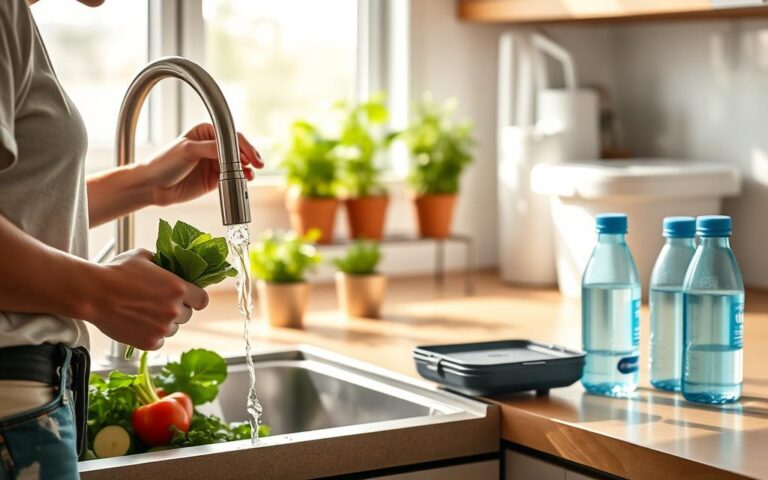
Use aerators on faucets and consider getting touchless faucets to save water. Rinse fruits in basins and save the extra water for your plants.
Laundry Best Practices
Choose high-efficiency washers that save water per load. Always run full loads and set the water level to match your laundry’s size.
Washing in cold water saves on heating. Check your washer’s hoses for leaks and think about replacing old models with water-efficient ones.
Outdoor Water Efficiency Practices
Outdoor water efficiency begins with good planning. By choosing the right plants and irrigation methods, big savings are possible. Homeowners can cut down on water use while maintaining beautiful, healthy landscapes.
Landscaping choices play a key role in saving water. Opt for drought-tolerant plants like the California poppy in dry areas. Group plants with similar water needs together. Instead of thirsty lawns, try using groundcovers, permeable paths, or gravel.
Healthy soil keeps plants strong and holds water better. Improve soil by adding compost or organic matter. Cover with 2-3 inches of mulch to keep moisture in and weeds out. For advice on plants, check with local Cooperative Extension offices.
Efficient irrigation saves water and helps plants thrive. Use drip irrigation for plant beds and young trees. High-efficiency nozzles are great for large grassy areas, even in wind. Make sure to group plants with similar watering needs in the same irrigation zone.
Using smart controllers can cut down on unnecessary watering. Choose controllers that adjust to the weather or check soil moisture. Water early in the morning to reduce evaporation. Always look for leaks or issues monthly.
Collecting rainwater offers free water for your garden. Start with a simple rain barrel or a larger cistern for bigger needs. These systems can also be used for car washing. Use a first-flush diverter to keep the storage clean.
To figure out the best system size, consider your roof size and local rainfall. Remember to check your area’s rules on rainwater collection. Some places offer incentives or have specific laws about it.
| Practice | Benefits | Typical Actions |
|---|---|---|
| Xeriscaping and native plants | Lower watering needs, resilient landscapes | Select native species, hydrozone planting, replace turf |
| Soil and mulch management | Improved retention, less evaporation | Add compost, apply 2–3″ mulch, reduce weeding |
| Drip irrigation and high-efficiency nozzles | Targeted watering, reduced runoff | Install drip lines, use rotary nozzles, zone by plant type |
| Smart controllers and sensors | Adaptive scheduling, water savings | Use weather-based controllers, set morning watering, monitor soil moisture |
| Rainwater harvesting | Supplemental supply, lower potable use | Install barrels or cisterns, use first-flush, size to roof and rainfall |
Water-Saving Technologies
New gadgets and systems help homeowners use less water without giving up comfort. Picking the right mix of products helps with smart water use. It fits with eco-friendly house upgrades. Here are good options for most budgets and home updates.

Low-Flow Fixtures
Low-flow toilets, showerheads, and faucets save water but still work well. Older showerheads used 2.5 gallons per minute. WaterSense showerheads use about 1.8 gallons, saving a lot of water over time.
It’s easy to switch to these fixtures. Brands like Kohler and Moen offer WaterSense models. Installing them usually takes less than an hour. They help reduce water use, especially with other efficient appliances.
Smart Water Meters
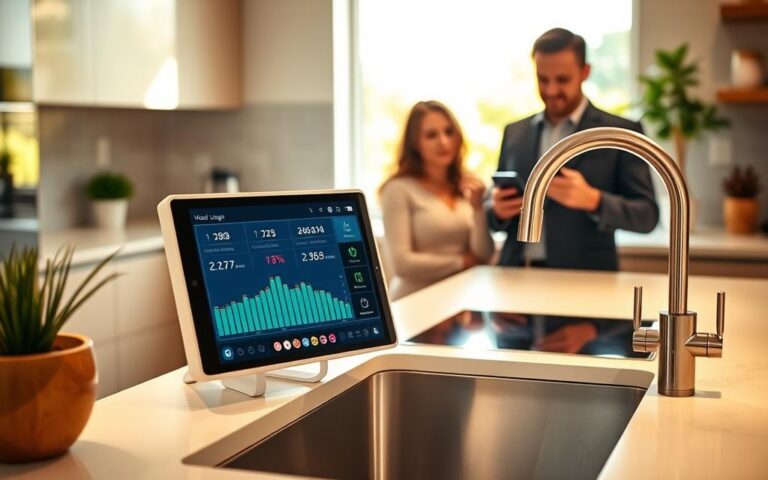
Devices like Flume and Phyn give real-time water use data. They find leaks, send alerts, and spot unusual water use.
They work with home systems and show clear usage reports. This encourages saving water. Sometimes, utilities help pay for these, which saves money and prevents damage.
Graywater Recycling Systems
Graywater systems vary from simple to advanced. They reuse water for toilets and gardens. A basic system uses washing water for plants.
Following local rules and safety guidelines is important. These systems need regular checks to be safe. Graywater can’t be drunk, so it must be treated and checked.
With good care, graywater systems reduce outdoor water use. They work best when combined with efficient appliances and smart water habits. This leads to more savings.
Behavioral Changes for Conservation
Making small changes in our daily routines can greatly reduce household water use. A family can save on monthly bills and use water more efficiently by adopting simple habits.
Developing Daily Routines
Shut off the water when brushing your teeth and take shorter showers. Always wait for the dishwasher and washing machine to be full before running them. Sweeping instead of hosing down sidewalks can save a lot of water each season.
Just by cutting two minutes off your shower time, you can save gallons of water every month. This amount increases with the number of people in your home.
Practical Nudges to Sustain Change
Adding faucet aerators and low-flow showerheads helps save water. Use a kitchen timer or stickers by the sink as reminders. Keep track of water use with a shower timer or a chart on the fridge to remind everyone to be water-wise.
Engaging the Household
Have quick family meetings to set water use goals and track them with charts. Show how much water you’re saving with smart meter reports or apps. Let kids help by giving them tasks like setting up watering schedules or doing mini water audits.
Shared Living and Community Tips
In shared living spaces, talk openly about saving water. Focus on how much money you can save and how it helps the planet. Small rewards for reaching goals can motivate everyone to save more water.
Neighborhood Momentum
Organize block-wide contests to encourage everyone to use water wisely. Working together makes it easier to stick to good habits and make a bigger impact over time.
Understanding Local Regulations
Homes are part of a big network of rules. These rules help us save and use water better at home. Knowing your local rules and utility programs is key. They ensure your upgrades are legal and you save money.

Water Use Regulations
Towns have rules like watering on certain days, bans, and drought limits. They also set flow rates for fixtures and toilets.
The penalties for breaking these rules can include fines or mandatory water-saving steps. States like California, Texas, and Florida often put tougher rules in place during droughts.
To learn about rules for your area, visit city or county water sites and state and local government offices. For tips on appliances and meeting efficiency standards, check out this link: federal energy efficiency regulations.
Rebates and Incentives for Efficiency
There are many rebates for updating to efficient toilets, washers, and irrigation systems. Local water agencies help lower the initial costs.
Groups like WaterSense and ENERGY STAR can connect you to state offers and tax breaks for water and energy upgrades. Sometimes, nonprofits also help with free checks, low-cost items, or project money.
Before you buy, make sure to check the rules for rebates, keep your receipts, and follow application instructions. This way, you get your money back and make your home more water-efficient.
Monitoring and Maintenance
Keeping a home running smoothly involves regular checks and upkeep. Each month, checking pipes, hoses, and water heaters helps catch problems early. Writing down what you find makes it easy to see if issues are getting worse or to help with warranties.
Regular Inspection of Pipes and Appliances
Things like washing machines and dishwashers need routine inspections. It’s smart to get new rubber hoses every five to seven years to avoid breaks. Also, flushing water heaters yearly gets rid of sediment that can make them work harder and shorten their lifespan.
Homeowners should keep an eye on their water meter for unexpected use. Tools that monitor water use can alert you to leaks quickly. For tips on what to check and how to track it, check out this water efficiency guide.
Timely Repairs to Prevent Leaks
Even small leaks can waste a lot of water and hide bigger problems. Fixing them quickly saves water, protects your home, and can reduce your bills. Little things like changing faucet washers and tightening connections can make a big difference.
For big issues like leaks under the house, it’s best to call an expert. They have special tools to find leaks that are hard to spot. Leak detection devices offer extra safety by finding leaks early and can even shut off the water automatically.
| Item | Action | Benefit |
|---|---|---|
| Visible pipes and hose bibs | Monthly visual inspections | Early detection of drips, corrosion and moisture |
| Washing machine | Replace hoses every 5–7 years; check connections | Reduces risk of catastrophic leaks and water loss |
| Water heater | Annual flush of tank-style units | Restores efficiency and prevents sediment damage |
| Showers and faucets | Measure flow; install aerators or low-flow fixtures | Improves home water efficiency and saves water |
| Leak detection | Install acoustic detectors or smart shutoff valves | Rapid alerts and automatic shutoff to prevent major loss |
| Records | Maintain repair log with dates and contacts | Simplifies future maintenance and warranty claims |
Checking for toilet leaks with food coloring is a simple water-saving tip. Also, measure how much water your faucets and showers use. These steps are easy and cheap ways to keep your home’s water system running well.
The Role of Community in Water Conservation
Communities amplify the impact of individual choices. They make conserving water at home part of a larger movement towards sustainable living. Together, small actions can lead to significant savings for both utilities and ecosystems.
Collective Efforts and Group Initiatives
Neighborhoods can start block-level water challenges with rewards for using less water. They can also run turf removal campaigns to reduce outdoor water needs. Buying things like rain barrels or low-flow fixtures in bulk makes them cheaper and encourages their use.
Working together improves access to expert advice. Groups such as homeowner associations and local water utilities can offer workshops and audits. With their help, saving water becomes easier with technical support and financial incentives.
When a drought hits, communities can protect those in need. They can make plans and set up support networks to manage water use better. This way, everyone can help keep the water supply stable and avoid fines.
Sharing Resources and Best Practices
Sharing knowledge helps spread effective solutions quickly. Workshops, social media, and newsletters can highlight success stories and tips. Seeing real examples can motivate others to take practical steps.
Tool libraries and co-ops reduce the costs of essential equipment. By sharing resources, more homes can check and update their water systems affordably. This promotes wider participation in water conservation activities.
Recording successful water-saving efforts provides a guide for others. These case studies can help secure funding and recognition. They make it easier for other groups to follow and achieve similar results in conservation.
| Community Action | What It Delivers | How It Helps Residents |
|---|---|---|
| Block-Level Water Challenges | Short-term measurable reductions | Motivates neighbors, reveals quick wins to conserve water at home |
| Bulk Purchases (rain barrels, controllers) | Lower unit cost, faster adoption | Makes green home improvements affordable for many |
| Partnership Workshops | Technical training and audits | Provides guidance to support sustainable living changes |
| Tool Libraries / Co-ops | Shared access to specialized tools | Reduces barriers to diagnosing and fixing leaks |
| Drought Response Plans | Coordinated water use during shortages | Protects vulnerable households and evens out demand |
| Local Case Studies | Replicable models backed by data | Helps secure funding and spreads best practices for community water conservation |
Future Trends in Water Efficiency
Home water efficiency is quickly changing due to advancements in technology and new policies. Modern devices and systems allow us to easily monitor, understand, and cut down on water use at home. This section will discuss the major tech innovations and sustainable actions homeowners can take to prepare for the future.
Innovations in Water Technology
Smart home water monitors now provide instant updates on how much water is being used and AI to spot leaks early. They can predict how much water a household will use and suggest changes to save water. New filters and systems at home are also making it cleaner and safer to reuse water for things like watering plants and flushing toilets.
Sustainable Practices for Homeowners
Adding water-saving features to home improvement projects brings huge benefits over time. Using water-saving appliances, better insulation, and efficient water heaters helps reduce water and energy use. Homeowners should also think about using plants that need less water, setting up smart irrigation, and updating appliances to save money and water in the long run.
Changes in policies and the market will help more people use water-saving technologies. Stricter building rules, more rebates, and changes in water pricing encourage these upgrades. Homeowners should keep up with reliable sources like EPA WaterSense, ENERGY STAR, and the American Water Works Association for tips on saving water and information on new products and incentives.