
This guide is for U.S. homeowners who want lush lawns and gardens without wasting water. It gives easy steps for choosing systems, setting schedules, and using sensors. You’ll also learn how to integrate weather data, maintain systems, fix problems, and use water-saving strategies.
By following these tips, you can lower your water bill and keep plants thriving. This guide shows how smart watering helps you follow local water rules easily. Plus, it reduces your impact on the environment.
Homeowners in suburbs and cities, along with home gardeners and landscape pros, will find these smart irrigation tips useful. Using these practices, they can use water wisely and make plants stronger.
Key Takeaways
- Smart irrigation tips help cut water use while keeping plants healthy.
- Efficient watering strategies include proper system choice, sensors, and weather-based schedules.
- Following manufacturer manuals from Rachio, Rain Bird, Hunter, and Netro improves system performance.
- Consult EPA WaterSense and local cooperative extension services for trusted guidance.
- Implementing these methods makes it easier to comply with local watering rules and reduce bills.
Understanding Smart Irrigation Systems
Smart irrigation systems combine sensors, controllers, valves, and online tools to water gardens more smartly. They check the soil and weather before watering, adjusting automatically. This way, plants get just what they need, saving water and growing healthier.
What Are Smart Irrigation Systems?
A smart irrigation system starts with a smart controller, which can either replace old timers or connect to them. It includes sensors for soil moisture, flow sensors, zone valves, and a link for Wi-Fi or mobile networks. Some also use networks of sensors and online platforms, so you can manage everything from your phone.
These systems range from simple smart controllers to complex setups with many sensors and online tracking. The goal is to avoid watering when it’s not needed, like when it’s raining or cool.
Benefits of Smart Irrigation for Homeowners
By using smart irrigation, homeowners can significantly save on water. The EPA says smart systems can cut water use by 20–50%. Plus, watering less often but more deeply strengthens plants, making them tougher in droughts.
With tools from Rachio, Hunter Hydrawise, and Rain Bird Smart Controller, you get weather updates, can manage different zones, detect leaks, and receive mobile alerts. This means less water waste, staying within local water rules, and saving time thanks to automation.
When thinking about smart irrigation, consider the cost, whether it fits with your current system, and if you can install it. Some people do it themselves, but you might need a pro for some parts. For eco-friendly watering, mix smart tips like planting similar water-need plants together and using sensors. Smart systems make your yard water-wise with a bit of planning.
Choosing the Right Smart Irrigation Technology
Picking the right technology can greatly impact water usage and plant health. This guide helps gardeners look at their choices, think about costs, and find features that fit their garden’s needs. It mixes advice on smart irrigation controllers with automated watering tips and ideas for making irrigation systems work better.
Types of Controllers
Weather-based controllers get weather info online or from local weather sensors. They save water by not watering when it’s going to rain. They’re easy to set up if they connect to the cloud. How well they work depends on the weather forecast’s accuracy.
Soil-moisture controllers check the soil to see if it’s dry before watering. This stops plants from getting too much water and is great for gardens with different types of plants. Setting them up can be tricky because the sensors need to be placed at the right depth in the soil.
Hybrid controllers use both weather data and soil moisture levels to water more accurately. They adjust quickly to changes in the weather. Hybrids are pricier and might need professional help to set them up correctly.
Zoned controllers manage different parts of a garden, like lawns and flower beds, separately. They let you choose how long each area gets watered. The more areas you have, the more complex and expensive the setup becomes.
Sensors and Their Importance
Soil moisture sensors help measure how much water is in the soil. Put them where your plants’ roots are and near plants that are common in your garden. Make sure they’re working right by checking them with a soil probe or another method.
Rain sensors stop the system from watering your garden when it’s raining. They should be placed where they can get rain without blockage. Keep them away from anything that could drip on them or cover them.
Flow meters and pressure sensors help find leaks or broken sprinkler heads. Put flow meters where your water comes in and pressure sensors near where the water gets pumped out. They alert you to any unusual water use so you can fix problems fast.
Checking your sensors regularly and adjusting them for the seasons helps keep data accurate. Good sensors help save water, stop diseases from overwatering, and find problems early. These tips are key for a well-run automated irrigation system.
Wi‑Fi and App Connectivity
Wi‑Fi enabled controllers let you schedule watering and check water use with your phone. Brands like Rachio, Rain Bird, Hunter, Netafim, and Toro have apps for phones. See if the controller works with cloud services or can be controlled locally.
These apps update your system, make changes based on the weather, and connect to devices like Amazon Alexa and Google Home. They keep track of your watering history to help you improve your system over time.
Security is important. Use strong passwords for your Wi‑Fi, turn on two-factor authentication if you can, and update your system when needed. Make sure you know what the app can do and if the company shares your info with others.
| Controller Type | Precision | Installation Complexity | Typical Price Range | Best Use |
|---|---|---|---|---|
| Weather-based (online) | Medium to High | Low | $100–$300 | Home lawns with reliable Wi‑Fi |
| Soil-moisture | High | Medium to High | $200–$500 | Mixed beds and drought-tolerant plantings |
| Hybrid | Very High | High | $300–$700 | Large or varied landscapes |
| Zoned systems | Variable by setup | High | $150–$1,200+ | Complex properties with multiple plant types |
| Smart brands (example) | Varies by model | Varies | See individual brand ranges | Choose by ecosystem and sensor support |
When picking a system, think about what brands work well together and who supports third-party sensors. Balance the cost of saving water in the long run with the upfront price. Use the tips we talked about to make a smart irrigation system that fits your local area and is efficient.
Assessing Your Garden’s Water Needs
Understanding your garden’s water needs starts by looking at soil and plants closely. Checking soil texture, how much moisture it can hold, and how deep the roots go is key. This helps set the right water amounts for your garden and pick the best watering techniques. It’s also important to think about local weather, the land’s slope, how much sun it gets, and the wind when adjusting water use.
Analyzing Soil Type and Moisture Levels
Soil can be sandy, silty, clay, or loamy. Sand lets water through quickly but doesn’t keep much. Clay can hold a lot of water but lets it drain away slowly. Silt is in the middle. Loam mixes these types and is often best for watering plants.
To know your soil’s kind, try separating it in a jar or see how fast water soaks in with a test. Putting in sensors that measure water in the soil can give you real numbers to use. Place these sensors where plant roots grow. The depth varies with the type of plant.
Reading sensor data, you should know if it shows water content by volume or by tension. The ideal level depends on what plants you have and your soil type. Set your water system based on these levels, not just on a schedule.
Plant Watering Requirements by Season
In summer, plants usually need more water because of evaporation and their growth. They might need water more often or for longer times when it’s really hot. In cooler times, most plants do well with less water. Grass might even stop needing water in winter in some places.
New trees and bushes need water more often at first. But slowly, they should get water less often but more deeply. This helps their roots grow strong. Full-grown plants do best with deep watering in dry times.
Change water amounts based on the plant’s growth stage and weather challenges like hot spells or dry periods. If you use mulch, you might need to water less often. Keep an eye on moisture levels and don’t rush to water more without checking.
To water your plants just right, look for advice from local experts and check out water need guides for your area. Mixing this advice with what your sensors tell you gets you a water-saving, plant-friendly watering system.
Implementing Smart Watering Schedules
A good watering plan makes gardens grow well and saves water. Start by dividing your garden into zones based on plant types, soil, and climate. Water in the early morning to prevent water loss and disease. Weather-aware irrigation systems adjust themselves according to rain, temperature, and humidity. This keeps your garden well-watered without needing to change settings all the time.

Establishing a routine based on weather patterns
Organize your garden into zones like one for lawns, another for flowers, and one more for trees. Begin with short watering times that are often. This helps new plants grow roots. Later, switch to longer, less frequent watering to help roots grow deep. Spread out when zones start watering to keep water pressure steady and avoid strain on the water supply.
Brands like Rachio and Hunter make weather-based controllers. These adjust your watering before it rains or during cold, wet conditions. Follow these tips to water smartly and cut down on having to adjust your system.
Sample scheduling approach (starting points)
| Zone | Initial Phase (2–4 weeks) | Established Phase | Notes |
|---|---|---|---|
| Lawn | 4 cycles × 6 minutes, early morning | 2 cycles × 20 minutes, early morning | Start with short cycles for the surface; then go longer to reach roots |
| Flower beds | 3 cycles × 5 minutes, early morning | 2 cycles × 12 minutes, early morning | Change based on mulch; bulbs need less water |
| Trees and shrubs | 2 cycles × 15 minutes, early morning | 1 cycle × 40 minutes, deep soak | Deep soaking helps roots grow strong |
Adjusting for seasonal changes
Use your controller to change water times with the seasons. For example, cut back in fall and winter, and increase in spring and summer. Reduce by 50% in fall and up 30–50% in summer, relying on the weather. Keep track of changes to review later.
Manually adjust for extreme weather like heatwaves, freezes, or heavy rain. Set your system on vacation or rain delay modes during long wet periods. Add flow monitors to spot leaks or high water use early to prevent waste.
Check your watering schedules every month during growing season. Use sensor data and evapotranspiration (ET) info alongside these tips for efficient watering. Keeping up with adjustments and record-keeping will make your system work better and save water over time.
Utilizing Weather Data for Irrigation
Smart controllers use weather data to fine-tune watering and reduce waste. They use forecast integration and evapotranspiration (ET) to set better run times. This leads to practical water-saving techniques for smart irrigation systems.
Integrating Local Weather Forecasts
Smart controllers get data from local weather stations, NOAA feeds, or proprietary networks. They predict rainfall, temperature shifts, and freeze events. Accurate forecasts help the system pause irrigation before a storm or cut back after unexpected rain. This prevents unnecessary watering and teaches homeowners to save water smartly.
On-site weather stations give better local accuracy in certain areas. Internet-based forecasts are good for broad, flat areas. If your yard is affected by terrain, shade, or winds, adding a local sensor is a smart tip.
Understanding Evapotranspiration Rates
Evapotranspiration (ET) is about water evaporating from soil and plants sweating water. It’s crucial for figuring out how much water plants need. Smart systems adjust watering times based on ET, not fixed schedules.
ET changes with the weather. Hot, windy days increase ET, needing more water. Cloudy, calm periods decrease it, lessening the need for watering. Controllers turn ET into watering minutes for each garden zone, factoring in the plants and beds involved.
ET data can come from university services or built into many smart controllers. Make sure your controller’s ET source fits your yard’s conditions. This boosts its reliability and helps save water efficiently.
Practical Use and Reliability Tips
Controllers use a formula to figure out watering time: reference ET times crop coefficient times soil and slope adjustment. Then, they adjust for rain or freeze alerts. This method conserves water while keeping plants thriving.
To ensure accuracy, check the forecast source, compare controller ET with local data, and add a local sensor if needed. These steps help your smart irrigation system work better and give you more confidence in it.
| Feature | Benefit | When to Use |
|---|---|---|
| NOAA/Regional Forecasts | Broad coverage, low maintenance | Urban and flat suburban areas with consistent weather |
| On-site Weather Station | High local accuracy for microclimates | Hills, coastal lots, heavy shade, or variable wind exposure |
| ET-based Runtime Conversion | Watering tied to real plant needs | Lawns, mixed planting zones, regions with seasonal swings |
| Local Rain Sensor | Immediate rain shutdown to prevent waste | Areas with fast-moving storms or summer showers |
| University Extension ET Data | Region-specific research and reliable coefficients | Homeowners seeking validated regional ET figures |
Maintaining Your Smart Irrigation System
A well-kept irrigation system lasts longer and saves water. Giving it regular care ensures all parts work right, stops leaks, and keeps it efficient. Take note of seasonal checks, winter ready steps, and smart changes for better system performance.

Regular Inspection and Maintenance Tips
Check your system visually every month when it’s in use. Walk through each area, watching how the sprinklers work. Look out for blockages, damaged nozzles, or heads that are out of place.
Use a seasonal checklist: look for clogs and check how well sprinklers cover areas, test valves for leaks, make sure backflow preventers follow local rules, check controller settings, and clean filters.
Do a full system check in spring and before winter. Write down how long zones run and any pressure troubles. Keeping a map, zone info, and a log helps with fast fixes and updates.
Winterization and Freeze Protection
In cold places, use a blow-out method or turn off and empty valves to stop freeze damage. If you’re not sure how to safely use compressed air, get a professional with a license.
If your area’s winters are mild, still check your system through the year. Drain any low spots and make sure pressure valves are okay. Change old backflow parts before it gets cold to prevent problems.
Upgrading Components for Efficiency
Changing to rotary nozzles or more efficient rotors helps reduce runoff and waters evenly. Put in pressure-regulating valves if water pressure is uneven.
Adding flow sensors and smart leak detectors finds leaks quickly. Switching garden and tree areas to drip systems saves water and reduces watering time.
Pick products with a WaterSense label and check the warranties when making upgrades. For big electrical jobs or complicated changes, hire licensed pros who know about irrigation.
Recordkeeping and Professional Support
Make a detailed map of your system showing valves, zones, and controls. Note how long zones run, sensor setups, and software versions. Keeping a clear log makes fixing and upgrading easier later on.
Check out tips from makers and experts often. For hard problems, hire certified techs from trusted companies to keep warranties and meet codes.
Troubleshooting Common Irrigation Issues
When your irrigation system doesn’t work well, it’s crucial to take specific steps. These steps help fix the problem and keep your garden healthy. Our guide talks about common issues, such as schedule mistakes, and how to check sensors. We also share tips for those who want to fix it themselves and for those hiring pros. Plus, we give advice on using smart and automated systems to find and fix issues faster.
Identifying Problems with Watering Schedules
Look for puddles or mold? That might mean too much water. Seeing plants wilt or the ground too dry? That’s not enough water. And if your yard looks unevenly dry, your system might be missing spots.
Try running one area at a time for 10-15 minutes and see how it goes. Make sure the sprinklers cover everywhere they should. Check if anything is blocking the water, like dirt in the sprinklers. You can also use containers to see if water spreads evenly. It’s also good to check the water pressure and look at your system’s records for any odd patterns or zones that won’t turn off.
Solutions and Fixes
- Clean or replace clogged nozzles and drip emitters to restore proper spray patterns.
- Adjust arc and radius on spray heads, or replace worn seals to stop leaks and misting.
- Re-level or re-position heads that spray into sidewalks or miss planting areas.
- Use pressure regulators to rebalance a zone that shows misting or short throws.
- Reprogram schedules based on real sensor data to reduce overwatering or add cycles for dry spots.
- For chronic uneven coverage, consider converting small spray zones to rotors or drip irrigation for better uniformity and efficiency.
Solutions for Sensor Malfunctions
Check that soil moisture sensors are at the right depth. Clean them and look for any wire damage. It’s smart to also do a manual check to make sure the sensors are working right. Replace any sensor that still doesn’t work right after you clean it.
For rain sensors, make sure they’re placed right and clear of any blockage. Change batteries if you need to. You can also do a test by wetting the sensor to see if it turns the system off. This helps make sure it works.
Having trouble with Wi-Fi? Try restarting your router and the irrigation controller. Look for any software updates. Make sure the controller’s Wi-Fi login is correct. If it keeps disconnecting, you might need a Wi-Fi extender.
When to Call a Professional
If you keep having electrical problems or leaks that are hard to reach, get a professional. Always turn off electricity and water before trying big fixes. For the tough stuff, especially with electricity or deep fixes, find a licensed pro. They know how to do it safely.
Water Conservation Techniques Beyond Smart Irrigation
Smart irrigation systems help save water. But blending tech with smart landscaping helps even more. Simple tasks like improving soil, picking the right plants, and capturing rainwater make a big difference. These ideas show how to use harvested water and mulch effectively. They also give daily tips for smart watering.
Mulching and Its Benefits
Organic mulches, like wood chips and compost, keep water in the soil and cool it down. They also stop weeds from stealing water and help make the soil better. But, keep mulch away from tree bases to avoid rot and pests.
In dry areas, inorganic mulches like crushed rock help soil stay moist with less upkeep. A 2–4 inch layer of mulch is ideal for most gardens. Mulching around plants helps them need less water, which saves more.
Implementing Rainwater Harvesting Systems
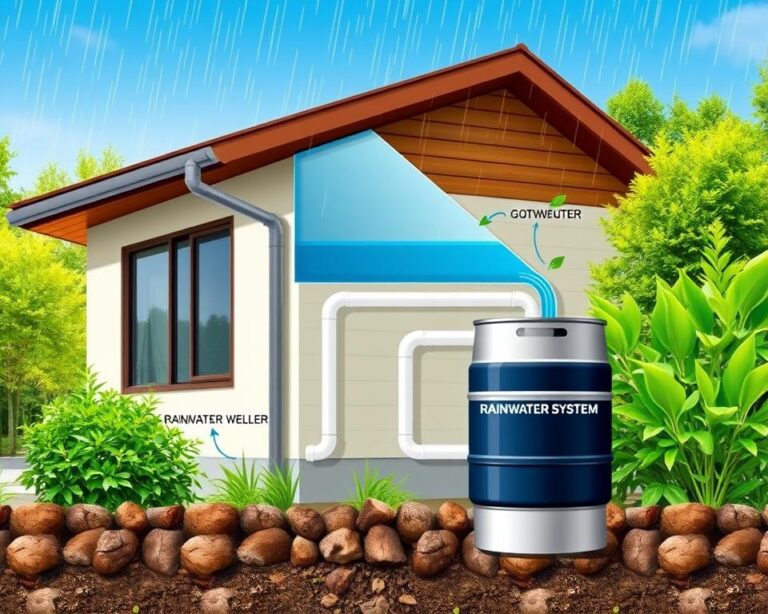
Starting with a single rain barrel can save rain for your garden. Bigger tanks save more water for watering plants. A special diverter also keeps the first dirty rainwater away from your saved water.
Use gravity to water small plants or get a pump for bigger needs. Mix this with smart systems for a great saving. It’s a smart move that also lowers your water bill.
But, check your local rules on capturing rainwater. Some places have laws about it. Always double-check with local authorities first.
Other Practical Conservation Practices
Pick plants that don’t need much water and enrich your soil. This helps plants use less water. Planting in zones based on water needs stops unnecessary watering.
Try to use less grass and switch to water-smart yards. Also, look out for products that save water and rebates from your city. This will save you money and make your yard efficient.
Think about the costs of big changes before you make them. Simple actions like taking quicker showers help too. Combining these with your yard care can make a big difference in how much water you use.
The Future of Smart Irrigation Technologies
Smart irrigation is getting better as new tech helps us use water more wisely. People who take care of lawns and gardens are moving from simple timers to smarter systems. These systems understand what plants need and the weather around them. This makes watering more sustainable and easier to manage.
Innovations in Irrigation Systems
AI-powered controllers are learning from garden layouts and adjusting based on weather. They use machine learning for better predictions about water loss due to weather. Networks like LoRaWAN connect sensors over wide areas, making it easy for big properties to keep tabs on water use.
Now, we have sensors that do a lot of cool stuff. They can check soil moisture, see if plants are stressed, and find leaks. These tools help predict when maintenance is needed.
The Impact of Smart Irrigation on Sustainable Gardening
When more people use smart systems, we save water and energy. These systems make sure water goes only where and when it’s needed. This is great for the environment. Plus, as they become cheaper and rebates increase, more people can use them. It also gets easier to control water use through smart devices.
Before buying, look for systems that are easy to update and supported by reliable brands. Products that meet WaterSense and ENERGY STAR standards are best. Starting small with one zone lets you see savings and then apply it to more areas.