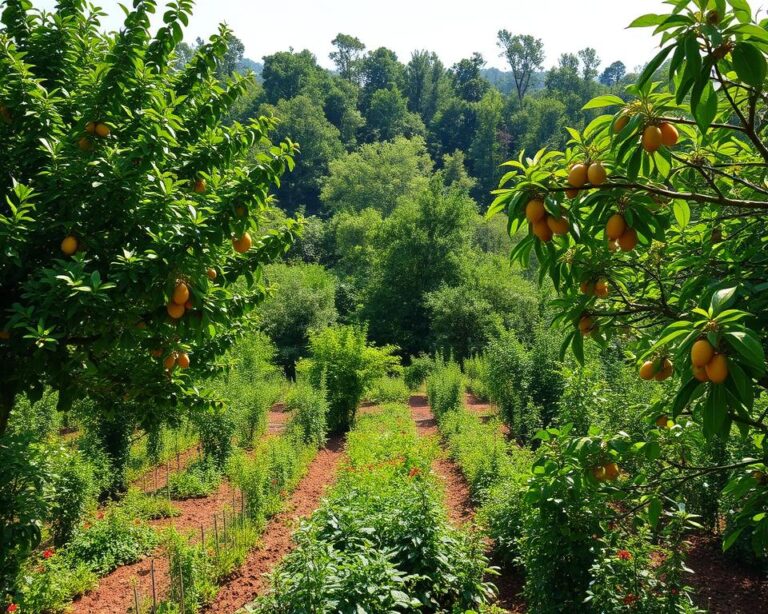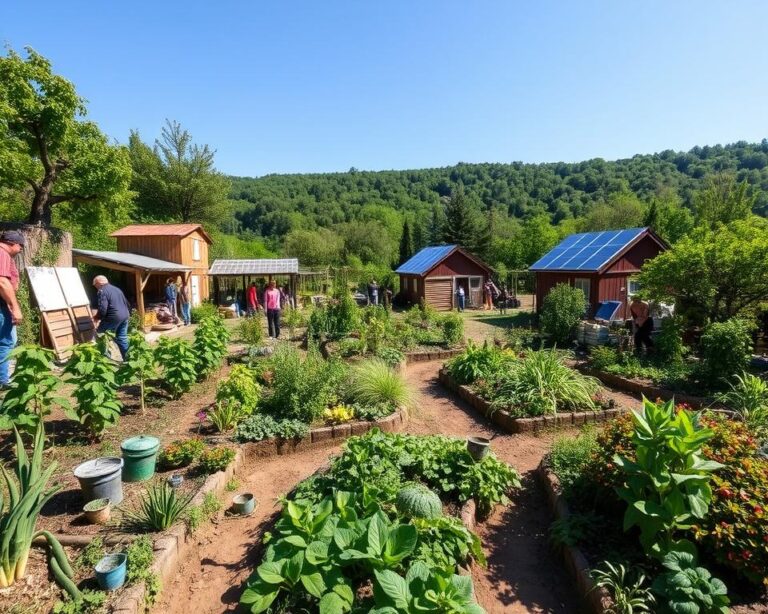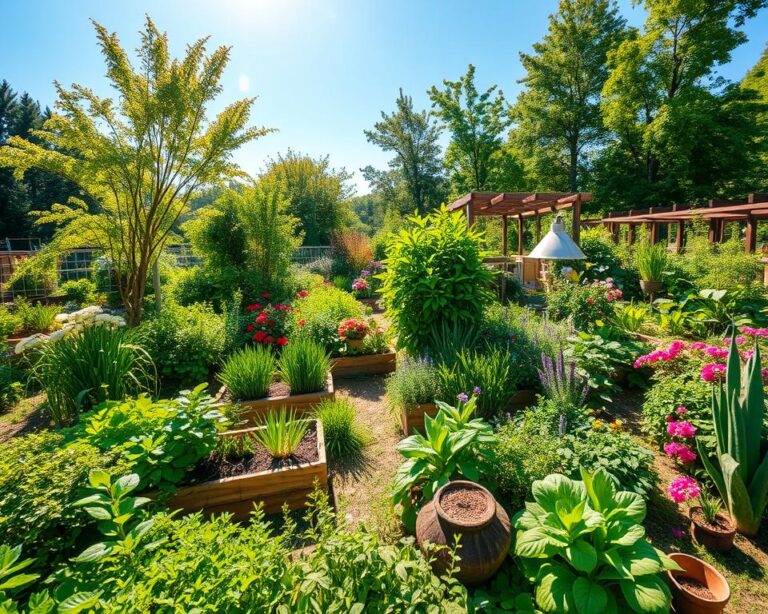

This guide helps Americans create permanent, productive outdoor areas. It shows how to begin a permaculture garden by making systems that copy nature. These systems produce food, fiber, and places for wildlife with minimal outside help. This method supports eco-friendly and sustainable gardening practices. It works in various spaces like yards, raised beds, containers, and community plots.
This article is your roadmap to permaculture. It covers basic ideas and how to design your garden, choose a location, improve soil, select plants, manage water, promote biodiversity, do regular upkeep, get the community involved, and increase your garden’s output. You’ll get helpful advice and tasks for quick weekend projects or bigger plans that take months to start.
Setting up your garden could take a weekend or a few months, based on size. Typically, you’ll see better crops, healthier soil, and more animals within one to three seasons. How well you do depends on your local weather, the space you have, your budget, and your dedication to caring for the garden regularly.
For more in-depth learning, check out works by Bill Mollison and Toby Hemenway, the Permaculture Research Institute, and your local Cooperative Extension office. These sources add to this guide. They help turn permaculture steps into practices you can trust.
Key Takeaways
- Permaculture creates low-input systems that mimic natural ecosystems to produce food and habitat.
- This permaculture garden guide offers practical, step-by-step permaculture instructions for varied spaces.
- Expect initial setup from a weekend to several months; measurable gains in 1–3 seasons.
- Consider climate, space, budget, and time when planning sustainable gardening USA projects.
- Recommended resources: Permaculture: A Designer’s Manual, Toby Hemenway’s work, Permaculture Research Institute, and Cooperative Extension services.
Understanding the Principles of Permaculture
Permaculture combines design, ethics, and practical steps for landscapes that work with nature. It shows how to arrange gardens, pick plants, and care for them using these ideas. By understanding permaculture, people learn to make gardens that are strong and need little input, much like natural ecosystems.
Definition of Permaculture
Permaculture is about designing landscapes and our way of life with nature in mind. It is built on three main ethics: caring for the earth, caring for people, and sharing fairly. It includes ideas like watching natural patterns, making the most of small spaces, doing multiple things in one area, and loving variety. This way of seeing gardens as connected systems changes how we garden.
The Importance of Sustainability
Sustainability in gardens means using less stuff from outside, like chemicals, and being smart with what we have. Using composting and cycling nutrients on-site helps keep things in use. These practices make gardens stronger, cheaper to keep up, and better for the soil.
This approach leads to better soil, more water saved, and more carbon stored. Focusing on sustainability helps gardens do well, even when the weather changes, and keeps them giving a lot.
Ecosystem Support in Gardening
Permaculture gardens help the bigger web of life. They offer homes for bees, helpful bugs, and birds. Adding native plants and plants that help each other out makes the food web stronger and helps the soil life.
Plan for many kinds of plants—perennials, bushes, ground covers, and yearly plants—to keep yields steady and pests few. These steps are part of regenerative farming, which helps the soil, adds more types of life, and captures carbon.
Start with watching the small weather and water patterns in your garden. Mix in lasting plants with yearly ones, aim for variety, and reuse things like compost. Using permaculture ideas in these ways guides your garden to being truly eco-friendly and strong for the long run.
Designing Your Permaculture Space
Starting good permaculture design needs careful watching and smart planning. This clear process can transform a chaotic yard into a productive, easy-care landscape. Follow these steps to pick the best spots for gardens, make accurate maps, and apply permaculture zones and sector analysis for long-term planning.
Site Selection Factors
Look at how the sun shines and moves seasonally to find the best places for plants. Consider the wind, slope, and how water drains to avoid erosion and too much water. Check the soil’s type and health to know what it needs.
Think about water access, how close things are to buildings and utilities, and what plants are already growing when you decide where to put beds and paths. Also, know the local laws, rules from homeowner associations, and water-use limits before making big landscape changes.
Mapping Your Garden Layout
Begin mapping your garden by measuring and sketching a basic map of your space. Include permanent things like buildings, big trees, and fences. Watch how sun, shade, wind, and water move in your yard over time.
Get more precise with tools like Google Earth, apps on your phone, measuring tapes, and markers. Make detailed drawings that show where plants will go and where to put things like water systems, paths, and spots for composting.
Incorporating Zones and Sectors
Put the plants and areas that need the most care closest to where your day-to-day activities happen. Use the Zone 0 to Zone 5 approach, placing kitchen herbs and greens near your home and wilder areas further away. Design paths for easy and safe upkeep.
Use sector analysis to plan for things you can’t change, like where the sun goes, wind, fire danger, and animal paths. Set up barriers, shade trees, and water storage smartly to protect delicate plants and improve the small climate areas.
Group things together in useful, multi-use designs like an herb spiral or a veggie garden near your back door. Grow fruit trees that provide shade, homes for animals, and food. Start with small, expandable patches to let your garden grow with your skills and resources.
Soil Preparation Techniques
Good soil is key for a strong and fruitful garden. This guide will help you do simple tests and take steps to create vibrant, rich soil. It favors consistent effort rather than quick solutions, and teaches you to check the soil first before changing it.
Assessing Soil Health
Begin by doing a jar test to figure out your soil’s mix of sand, silt, and clay. Use a pocket pH meter or a simple kit to find out if your soil is acidic or alkaline. A lab test from a local Cooperative Extension can tell you about your soil’s N-P-K (nitrogen, phosphorus, potassium) and micronutrient levels.
Then, look for signs of life. Count how many earthworms there are in one square foot, see if the soil has a crumbly texture, and look for tiny fungus threads on plant roots. These signs will let you know if your soil is healthy and can support plants well.
Methods of Soil Enrichment
Boost the organic material in your soil slowly by adding compost and aged manure. Plant cover crops such as clover, vetch, or buckwheat. They fix nitrogen in the soil and provide biomass that can be turned back into the soil. Adding biochar helps soil keep water and capture carbon for a long time.
Add mineral amendments only if your tests show they’re needed. Lime can increase the pH level, rock phosphate offers phosphorus, and gypsum can help with heavy clay soil. Choose solutions that enhance the soil life instead of quick chemical fixes.
Composting and Mulching Strategies
Pick a composting method that suits your availability and space. Hot composting eliminates harmful organisms and weed seeds in just weeks if turned often. Cold composting is easier but takes longer. Vermicomposting produces strong, nutrient-rich compost that’s great for young plants and potting mix.
For good compost, balance carbon and nitrogen, keep it as moist as a damp sponge, and watch the temperature. Stir the pile when it cools down to let air in.
Mulches keep soil healthy and feed it. Straw, wood chips, and leaf mold reduce water loss and prevent weeds. Living mulches and cover crops protect the soil, cool the roots, and improve the soil as they break down. Layer mulch and add more when needed.
To keep your soil healthy for years, build it up over time and avoid too much digging to keep root and fungus networks intact. Use methods like no-dig beds, hugelkultur, or lasagna gardening where possible. These strategies help your garden become self-maintaining faster.
| Task | Quick Benefit | When to Use | Notes |
|---|---|---|---|
| Jar texture test | Clarifies sand/silt/clay mix | Initial assessment | Easy at-home method; informs drainage and amendment choices |
| Cooperative Extension soil test | Accurate pH and nutrient profile | Before major amendments | Recommends lime or fertilizers based on results |
| Hot composting | Fast, pathogen reduction | When rapid turnover is needed | Requires turning and monitoring temperature |
| Vermicomposting | High-quality worm castings | Small spaces, seedlings | Best for nutrient-rich, concentrated amendments |
| Biochar addition | Long-term carbon and moisture retention | When improving structure and storage | Works well combined with compost to charge pores |
| Mulching with wood chips | Weed suppression, moisture conservation | Around perennials and paths | Apply thick layer; avoid piling directly against stems |
| Cover crops (clover, vetch) | Fix nitrogen, build biomass | Off-season or fallow beds | Terminate before full seed set to prevent invasion |
Choosing the Right Plants
Picking the right plants is crucial for a fruitful permaculture garden. The right selections mean less work, more produce, and support for the environment. This guide helps you pick permaculture plants that grow well in your area, complement each other, and make your harvest last longer.

Native Plant Benefits
Native plants are a perfect match for your area’s soil and weather. They don’t need much water or special care and are tough against local pests and diseases. They help local wildlife, make the soil better, and keep things balanced through the seasons.
In the U.S., think about adding elderberry, serviceberry, black-eyed Susan, goldenrod, and local fruit bushes and trees. State extension services can tell you which plants are best for your area’s climate.
Companion Planting Practices
Companion planting is all about how plants help each other stay healthy and produce more. Plant peas and beans with corn or squash to add nitrogen to the soil. Nasturtiums can catch aphids, and marigolds near your root veggies can keep nematodes away.
Herbs like basil and dill are great next to tomatoes because they improve taste and fight off pests. In tree guilds, set up plants for support, nutrition, pest control, and ground cover. This makes sure each plant has its own job.
Seasonal Planting Considerations
Planting at the right time is key to avoid losing crops and to keep harvesting all year. Check frost dates and learn about your area’s weather with USDA maps and local calendars. Planning back-to-back crops can give you food in every season.
With cold frames and row covers, you can grow plants for longer periods. Mixing perennials like asparagus and rhubarb with annuals balances instant and long-term harvests. Perennials need less work each year.
Choose types of plants that don’t get sick easily and do well in your region. A variety of fruit bushes, trees, herbs, and annuals will make your garden strong and productive.
Water Management in Permaculture
Effective water planning helps gardens thrive, even in dry or wet conditions. It focuses on three main areas: collecting, storing, and using water wisely where it’s needed most. This guide covers essential methods for smart irrigation, capturing rain, and designing the land with water-saving features.
Efficient Irrigation Techniques
Direct watering methods like drip systems, soaker hoses, and micro-sprinklers aim water right at plant roots. These techniques prevent water loss better than traditional sprinklers.
To minimize evaporation, water your garden early in the day. Applying mulch keeps the soil’s moisture level consistent and reduces surface evaporation. To know when it’s time to water, you can simply check the soil with your finger or use a small device.
Rainwater Harvesting Methods
Gathering water from your roof into barrels or large tanks provides a supply for dry times. The size of your collection system will depend on your area’s rainfall and your roof’s size. Just one inch of rain on a 1,000-square-foot roof can capture about 600 gallons of water.
To keep this water clean, use first-flush diverters and filters. Look for safe storage solutions, like RainHarvest Systems or food-grade barrels. Remember, laws on collecting rainwater can differ from one place to another. So, it’s smart to check your local regulations first.
Creating Swales and Other Contours
Swales are shallow, level ditches that capture rainwater on sloped land. They help the water soak into the ground slowly, benefiting plants downhill. The location of a swale depends on the land’s slope, soil type, and how water moves in the area.
Building a swale starts with marking a level line, then digging a trench along it. The dug-out soil is used to form a barrier on the downhill side. In places with more slope or erosion, you might use other methods like keyline plowing, terraces, or rock structures.
Over time, swales can enhance groundwater supplies and improve plant growth by keeping the soil moist. They also help prevent erosion and create friendly environments for new plants. Integrating these techniques with mulch, soil improvement, and rain catchment prepares your garden for less reliance on manual watering. This approach conserves water and is good for your garden in the long run.
Creating Biodiversity
A permaculture plot needs many living things to maintain biodiversity and help with food production. Small changes in how we plant and the features we add can greatly help creatures like pollinators and soil animals. We can use different strategies to choose plants, create habitats, and ethically bring animals into our gardens for a healthy, productive environment.

Plant diversity and pest control
By mixing up plant species and their layout, we can avoid pests taking over. Intercropping and having different layers of plants stop pests from spreading and attract their natural enemies. This makes our gardens healthier.
Hedges and flowers that bloom at different times bring in insects that eat pests. By planting flowers near our crops, we attract helpful bugs that get rid of harmful ones. This keeps our gardens strong.
Recommended tactics:
- Plant legumes with brassicas to boost soil nitrogen and stop pests from finding their target.
- Use native plants like asters, goldenrod, and monarda at garden edges to feed both pollinators and predators.
- Plan your planting so that something is always blooming, giving food to helpful insects all season.
Habitat creation for wildlife
To help birds, bats, and helpful insects, we need to give them food, shelter, and water. Creating wildflower strips, brush piles, and hedgerows help these creatures move and find refuge.
Adding birdhouses, bat boxes, and ponds invites species that assist in pollination and keeping pests under control. Leave some areas untouched for ground-nesting bees and small animals.
When attracting wildlife, follow local rules and pick plants that are native. This helps your garden be resilient over time. You can see how to create a wildlife-friendly garden that also teaches others at sustaining local biodiversity through permaculture.
Integrating animals into your garden
Having chickens, ducks, bees, or small farm animals helps your garden by providing manure, reducing pests, and aiding pollination. Bees help grow more fruit, while poultry clean up old crops and small animals can manage larger plants under careful watch.
Core welfare and management points:
- Make sure animals have safe living spaces and are protected from predators, while following local laws.
- Move animals around using grazing rotations or chicken tractors to keep the land healthy.
- Maintain animal health with vaccines where needed, regular checks for parasites, and clean water to avoid diseases.
Choose animals that fit the size of your garden and your goals. By carefully integrating animals into your permaculture design, they help recycle nutrients and control pests, keeping the soil and plants healthy.
Monitoring biodiversity
By doing simple surveys, you can watch how your ecosystem changes. Keep track of how many pollinators visit, which birds are around, and monitor soil-dwelling insects. This helps you make the right changes.
Write down what you see and change plant choices, habitats, and where you place animals based on these observations. Checking on your garden regularly helps you know when to add helpful features or adjust your methods for better pest control and biodiversity.
| Practice | Benefits | Implementation Tips |
|---|---|---|
| Intercropping and polycultures | Lessens pest issues, enhances nutrient use | Mix legumes with vegetables; plan varied planting times |
| Hedgerows and wildflower strips | Attracts predator and pollinator species | Opt for natives; ensure flowering times vary |
| Water features and brush piles | Helps amphibians, birds, and beneficial bugs | Add shallow edges; leave some spaces wild |
| Managed livestock and poultry | Provides manure, pest control, cuts down weeds | Implement rotational grazing; provide good shelter and health care |
| Monitoring and citizen science | Keeps track of garden health, suggests refinements | Conduct simple counts, keep a garden diary, adjust each year |
Maintenance Practices for Productivity
Keeping your garden productive is all about reliable upkeep. Plan your work for each season to stay organized. For big projects, don’t shy away from asking friends or volunteers for a hand.
To keep bugs in check, start with healthy soil and pest-resistant plants. Clean your garden regularly. Each week, check your plants closely to know which bugs are friends and which are foes.
Organic pest management
Mix up your plants and use trap crops to manage pests. Put in flowers to attract good bugs like ladybugs. If pests become a problem, use safe treatments like neem oil or insecticidal soap sparingly.
Crop rotation
Changing what you plant each year stops pest and disease build-up. A simple rotation for small gardens is: legumes, then brassicas, followed by root crops, and finally nightshades. Grow cover crops between to add nitrogen and improve the soil.
Track what you plant and where with a garden journal or spreadsheet. Good records help you avoid planting the same family in the same spot too soon.
Garden monitoring
Set a schedule to check on your plants, soil, and garden structures regularly. Take pictures and keep short checklists to note what you observe.
| Task | Frequency | Simple Metric |
|---|---|---|
| Scouting for pests and beneficials | Weekly | Number of pest hotspots |
| Soil moisture check | 2–3 times weekly in dry months | Soil probe depth moisture |
| Record yields | At harvest | Weight or count per bed |
Review your notes to improve your garden plan. Use checklists to keep up with garden care and avoid emergencies.
Plan your work to keep things doable. Break tasks into daily, weekly, and monthly bits. For tougher or fun tasks, get the community involved. It keeps the garden going and teaches everyone.
Community Involvement in Permaculture
When people come together for permaculture, their individual work has more impact. Local networks provide help, feedback on designs, and a sense of belonging. This makes projects keep going through the different seasons.
Being part of local permaculture groups helps you meet mentors, access tool libraries, and participate in seed swaps. Community gardens and Master Gardener programs are great for learners and experienced gardeners alike. Cooperative Extension offices share info on meetups and volunteer chances for ongoing collaboration.
Educational workshops and events offer focused learning on skills. Courses for a Permaculture Design Certificate, farm tours, and university sessions teach important stuff like composting and beekeeping. Seasonal workshops keep gardening methods up-to-date and grow practical skills.
Sharing what we have makes our neighborhoods stronger. Things like seed libraries, tool-sharing groups, and swapping veggies cut down on costs and waste. Working together on projects, like school gardens or food forests, turns solo projects into community benefits.
Support can come from grants, online funding campaigns, and city projects aimed at more green spaces. Grants and local government efforts often focus on improving food access, education, and getting people involved.
To get involved, try visiting local community gardens, joining meetup lists for permaculture groups, and signing up for workshops in your area. These steps help you learn faster, share more knowledge, and spread sustainable gardening wider in your community.
Expanding Your Permaculture Garden
Start expanding your garden carefully and step by step. This keeps everything running smoothly. First, look at how much water, work, and time you have. Then, decide where to put new garden beds. Use techniques like sheet mulching or no-dig to turn grass into garden. Also, use trellises and espaliers to grow more in less space.
Techniques for Garden Expansion
Add more garden beds a little at a time. Around the edges, plant fruit shrubs and trees that fix nitrogen. This helps your garden stay fertile over time. Try using raised keyhole beds or hügelkultur for better water use and less work. These methods help your garden grow without harming the soil or wildlife.
Scaling Up Food Production
Make your main gardening area denser with different planting times, mixing plants, and close spacing. This means you can harvest food all the time. Add plants like berry bushes and small fruit trees. Use greenhouses or tunnels to grow for longer seasons. Also, plan how to keep your harvest longer through canning, freezing, and drying. This way, you won’t waste any food.
Incorporating New Technologies
Using the right permaculture tools can make things more efficient without hurting the environment. Think about using solar pumps and designs for greenhouses that save energy. You can also use tools that check the soil moisture and collect rainwater automatically. It’s best to start simple, then try software that helps with planning your garden. This tech can help you keep track of everything to grow more food.
It’s important to think ahead: draw up plans, start an orchard, and work with the community. For more help and ideas, check out Verge Permaculture. Keep an eye on how things are going, adjust as needed, and grow your garden in manageable steps. This approach will help your garden thrive and grow in a good way.