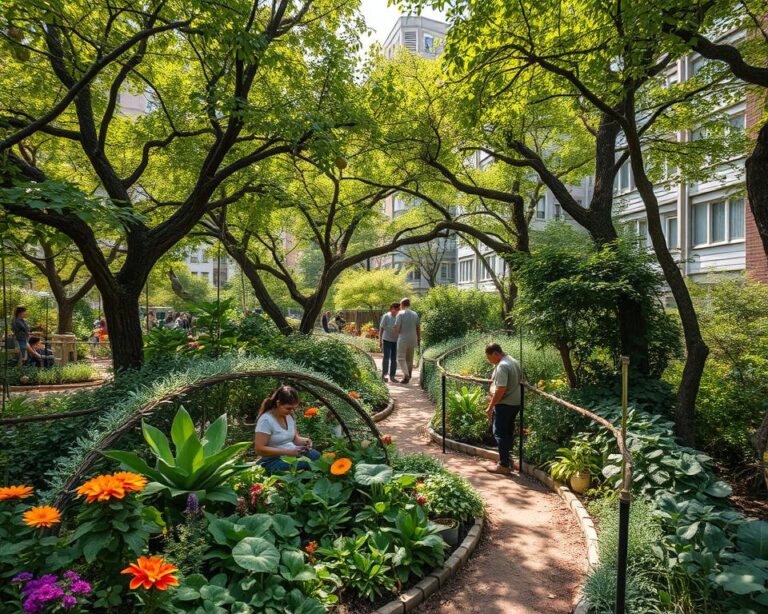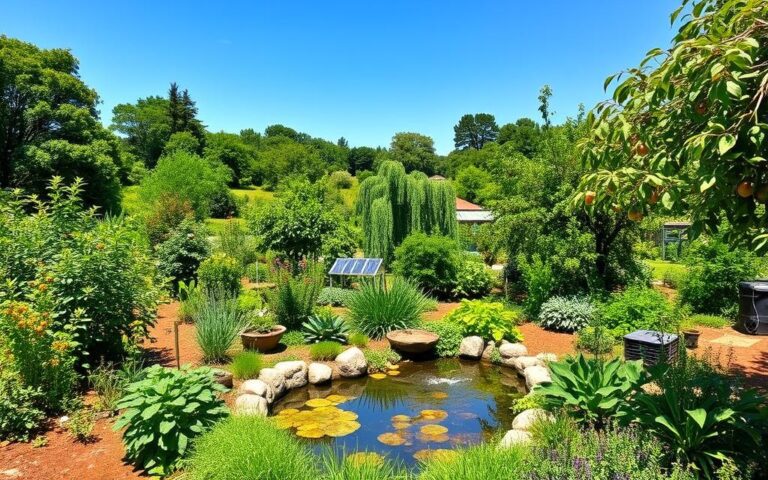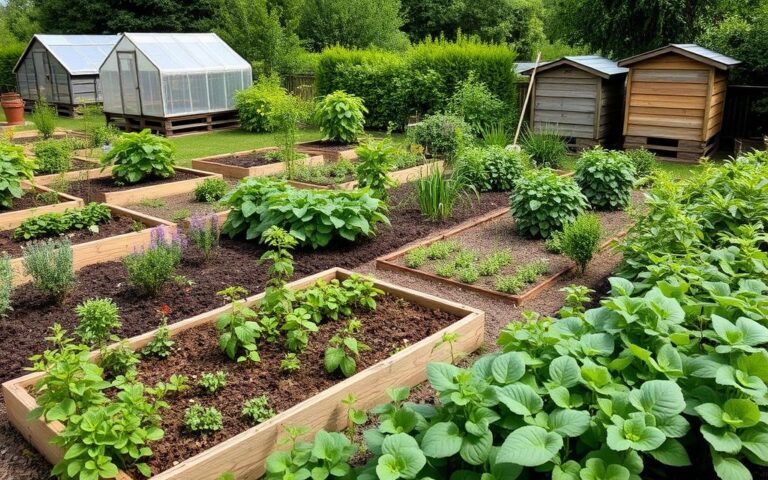

Permaculture is a smart way to design our outdoor spaces. It combines landscape, plants, animals, and water with people’s needs. This helps create gardens that last and keep producing. This guide is for anyone in the U.S. who wants to understand how to design with permaculture. It helps save water, enrich the soil, and welcome more wildlife.
This guide shares useful goals, like improving soil, needing less water, attracting pollinators, and getting food all year from a small space. It assumes you can use simple tools and find plants at places like Home Depot. You also have access to free advice from university extension services and online courses from schools like Oregon State.
The article starts with basic permaculture ideas and then talks about checking your space, planning, choosing plants, and organic methods. It covers saving water, helping wildlife, staying resilient, everyday care, using community resources, and expanding your garden. It suggests beginning small, seeing what works, and adjusting your garden to your area’s rules and environment.
In the U.S., there are often rules from HOAs, cities, and water use limitations. The guide offers smart fixes like using raised garden beds, pots, local plants, and rain barrels, if allowed. The goal is a garden that fits in real neighborhoods and lives by being sustainable and easy to care for.
Key Takeaways
- Permaculture for beginners focuses on designing resilient backyard systems that integrate living elements and resources.
- Goals include reduced water use, healthier soil, more biodiversity, and reliable yields across seasons.
- Practical steps assume access to local resources and start with small, testable changes.
- Expect constraints from HOAs and local codes; raised beds and native plants offer easy workarounds.
- This guide outlines a step-by-step process from assessment to maintenance for sustainable garden design.
Understanding Permaculture Principles
Permaculture combines observing nature with practical design to create resilient, productive areas. It breaks down the permaculture definition, covers its main ethics, and explains the importance of sustainability for backyard systems in the United States.
Definition of Permaculture
In the 1970s, Bill Mollison and David Holmgren introduced permaculture as an ecological design system. It uses patterns from nature for things like gardens, water management, food systems, and community planning. Key principles are observing first, one element fulfilling multiple functions, and focusing on energy and nutrient flows.
Core Ethics of Permaculture
The three core ethics of permaculture direct our actions. Earth Care emphasizes protecting ecosystems and biodiversity with native plants and soil care. People Care promotes well-being and healthy communities through food gardens and safe paths. Fair Share encourages us to live simply, save seeds, compost, and share extra food with others.
Importance of Sustainability
Sustainability in permaculture is about lasting health and local strength. It aims to minimize outside needs like chemicals and heavy machinery, recycles through composting and water saving, and boosts natural processes like pollination and pest control. Growing food locally also lessens our reliance on distant supplies and helps manage rainwater.
In the U.S., the benefits of permaculture are clear. It can lower water use, reduce lawn care costs, and improve conditions in droughts. More biodiversity invites helpful insects, making gardens thrive without pesticides.
Assessing Your Space
A solid site assessment is key for any permaculture design. It involves checking the soil, understanding microclimates, and sketching out your yard. This guide helps you start with a clear picture.
Evaluating Soil Quality
Start with easy soil tests. The ribbon test tells you about soil texture. pH kits show if it’s acidic. And N-P-K strips indicate nutrient levels. For detailed info, consider sending samples to a lab.
Look for signs of healthy soil. Count worms, check how the soil holds together, and see how fast water drains. Bad smells are a warning. If the top goes hard, the soil lacks organic matter.
Fixing soil is not too hard. Add compost to make it better. Grow cover crops to add nitrogen. Biochar keeps carbon in soil for a long time. And try no-dig methods to avoid disturbing the ground too much.
Identifying Microclimates
Microclimates are small areas with their own weather. They are created by things like houses, trees, or hills. Knowing these areas helps your plants do better and saves water.
Watch how weather changes in your yard. Log sunlight hours with an app. See where it’s colder or windier. This helps you know where plants will thrive.
Use what you learn for smarter planting. A sunny wall is great for veggies that love heat. Frost might gather in low spots. Choosing the right spot for plants means they are more likely to grow well.
Mapping Your Landscape
Before changing your yard, make a simple map. Include houses, trees, and other fixed things. You can use graph paper or an app to help draw it.
Then, add details to your map. Show where the sun shines, how water flows, and what plants are already there. Also mark things like gas lines to avoid problems later. This helps turn what you see into useful info.
With this info, plan where things should go. Mark where the sun hits, where the wind comes from, and nice views. This planning helps you decide the best spots for plants and paths. It makes designing your yard much easier.
Designing Your Layout
Starting with a smart permaculture plan means looking at how we use our space every day. It considers what we need throughout the year and plans for the future. This way, your garden works well with both people and the environment. Planning zones and where to put things like beds and paths helps everything run smoothly.
Creating Zones for Efficiency
Zones make managing space easier, from the home at Zone 0 to the wild at Zone 5. Zone 0 is your home and the place you can quickly get to the kitchen. Zone 1 is for plants like herbs and salads that need care every day. Zone 2 is good for bigger plants that you check on once a week.
Zone 3 is where you might grow orchards or big crops that don’t need much looking after. Zone 4 could be for collecting wood or foraging. Zone 5 is left natural for animals and to explore. In smaller yards, keep herbs and veggies you pick often near the kitchen. Put compost and water storage in Zone 1 or 2 for easy access.
Make paths where people walk the most. This keeps the ground healthy by not squishing it too much. Put places for working and storing stuff where they’re protected and dry.
Incorporating Water Management
Smart water design catches, holds, and slows down rainwater. Use designs like contour swales and rain gardens to help water sink into the ground. French drains can move extra water away. Rain barrels and large water tanks save water where it’s allowed.
If your water storage is higher up, gravity can do the work of watering your plants. In places where collecting rainwater is restricted, think about using greywater systems. Plan your land to gently slope to keep water moving slowly and avoid washing soil away.
For big areas, a method called keyline design spreads water evenly down slopes. Choosing plants carefully, like those for wet or dry spots, helps your water system stay strong.
Understanding Plant Guilds
Plant guilds are little teams that help a main plant, like a fruit tree, thrive. A good team might have a big tree, bushes that add nutrients, plants like comfrey, flowers for bees, and low plants like clover.
You’ll need different kinds of plants: tall canopy trees, helper plants (like lupines), plants for mulch, herbs to keep pests away, and groundcovers. Putting them at the right distance helps avoid crowding and lets all plants get sunlight.
Think ahead about how trees and plants grow together. You might need to move plants around as trees get bigger. Planning this way makes your soil better, attracts helpful bugs, and means less work later on.
Selecting Plants for Your System
The right plants make a permaculture garden strong. Choosing plants thoughtfully helps balance nature, function, and harvests year-round. This part talks about picking native or non-native plants, planting them together wisely, and a guide for planting in different seasons to suit your goals and location.

Native Plants vs. Non-Native Plants
Native plants grew up in your region’s ecosystem. They usually need less water and fertilizer, help local animals like bees, and make the soil better over time. Picking natives that fit with your area’s climate can lower your work and help more types of life thrive.
Non-native plants can be good for certain products or to quickly cover the ground. Choose non-invasive ones that fit your soil and weather. Stay away from bad plants like Japanese knotweed that push out native species. Use reliable sources like the Lady Bird Johnson Wildflower Center for advice.
Companion Planting Strategies
Companion planting helps with pests, sharing nutrients, and supporting each other. Famous pairs include corn, beans, and squash, known as Three Sisters. Basil with tomatoes deters pests; marigolds fight root nematodes; clover as living mulch adds nitrogen.
Using different plants together and planting over time means less empty soil and more harvests. But, remember, not all companionship tales are true. Watch your garden and look for science-backed pairings that suit your weather and soil.
Seasonal Planting Considerations
A guide for planting through the seasons looks at frost dates and local weather. Note when the last and first frosts happen to plan your planting. Rotating crops and planting in sequences keeps the soil good and harvests coming.
Use tools like cold frames to keep harvesting longer and protect small plants. In cooler months, grow cover crops to enrich the soil, prune and cover woody plants, and plant perennials to attract pollinators in early spring.
Implementing Organic Practices
Adopting organic gardening permaculture strengthens our backyards. It makes systems simple yet productive. Small changes in what plants we choose, how we care for the soil, and manage pests can make our gardens and local ecosystems thrive.
Benefits of Organic Gardening
Organic gardening boosts the soil’s living community, aiding plant growth and yields. It reduces harmful runoff, keeps pollinators and kids safe, and enhances soil fertility, whether in small gardens or bigger areas.
Over time, garden costs drop as you use recycled materials and what’s available on-site. Services like natural pest control and pollination become stronger. This also helps those selling produce to meet organic standards for local markets.
Organic Pest Management Techniques
An effective pest control strategy starts with prevention. Picking disease-resistant plants, cleaning garden beds, and rotating crops lowers pest risks. Checking plants regularly with sticky traps or inspections helps catch issues early.
To reduce pests without harming helpful insects, use smart methods. Try intercropping, protective covers, removing pests by hand, or setting up barriers against deer and rabbits. Plant flowers that attract predatory insects and set up insect homes.
For biological control, bring in or support friendly bugs like lady beetles or beneficial nematodes. Use organic options like neem oil and soaps or Bacillus thuringiensis with care to protect the good insects. This careful approach helps keep the garden’s ecosystem balanced.
Building Healthy Soil with Compost
Composting is a key soil-building method in permaculture. Hot composting kills off bad seeds and pathogens. Cold composting and bokashi are great for small spaces and keeping odors down.
Vermicomposting with red wigglers is ideal for kitchen leftovers and smaller gardens. Keep the right balance of materials, moisture, and air in your compost. Checking temperature helps ensure it breaks down properly.
Spread finished compost on top, mix into new planting spots, or use in making new garden beds. Apply aerated compost tea to leaves carefully. These methods enhance the soil, helping plants access nutrients and water better over time.
Water Conservation Techniques
Smart water design makes gardens thrive, even without much rain. It cuts the need for city water. By using smart systems, gardeners save both time and money. They also help the soil and plants stay healthy. There are many ways to do this, from easy DIY projects to bigger plans for your home.

Rainwater harvesting systems
People can collect water from their roofs using rain barrels. These are good for small spaces. For more water, they can use bigger tanks underground or above. These systems work by gravity and don’t need pumps, saving energy. It’s smart to add filters to keep the water clean and stop mosquitoes. Always check local rules before setting up. Some places even give you money back for setting up these systems.
First, figure out how much water your roof can catch. Then, think about how much rain you get. Use the stored water for important things like veggies and young trees. The right size tank will help during dry times and not overflow when it rains a lot.
Drip irrigation versus sprinklers
Drip irrigation puts water right where plants need it, saving water. Sprinklers can waste water and make leaves too wet. Drip systems are usually the best choice. They keep plants healthy and save water.
Some tips include using filters and pressure regulators. Group plants by how much water they need. Timers or smart systems can also help water plants just the right amount. Even simple DIY methods can work well for small areas or new plants.
Mulching for moisture retention
Mulch helps keep soil moist, cool, and weed-free. You can use organic materials like wood chips or straw. They help improve the soil. Inorganic mulch is good for paths but doesn’t improve soil.
Put 2–4 inches of mulch around plants, but not too close to tree trunks. Refresh it each year. Pick the right mulch for veggies to avoid weeds. Good mulching is key for keeping soil healthy and saving water.
Attracting Beneficial Wildlife
A lively backyard full of nature begins with careful choices. Plant thoughtfully and add small features that attract pollinators. This boosts fruit growth, controls pests, and brings life to a yard all year.
The Role of Pollinators
Pollinators like honeybees, bumblebees, mason bees, and monarch butterflies are key for fruits and vegetables. They move pollen between flowers, increasing harvests of apples, tomatoes, squash, and more.
Plant native flowers, herbs, and plants that bloom from spring to fall to feed them. Choose plants like coneflower, goldenrod, and lavender to keep flowers blooming all season.
Avoid using many pesticides and stay away from harmful ones like neonicotinoids. Even small changes can greatly help pollinators and gardens grow better.
Creating Habitats for Birds and Beneficial Insects
Start making habitats with the right structure. Use native shrubs and trees for bird shelter and nesting. Piles of brush and rocks protect ground insects. A water feature attracts bugs that birds eat.
Plant berry shrubs like serviceberry for migratory songbirds. Milkweed feeds monarch caterpillars. Native grasses provide hiding spots for small animals.
Put up birdhouses and bee houses for mason bees. Keep dead trees if they’re safe, and lower outdoor lights for night pollinators. If neighbors plant native species too, it helps insects and birds flourish even more.
Building Resilience in Your System
Resilience in backyard permaculture grows through smart choices, lowering risk and improving recovery. A resilient garden balances immediate and future needs. It readies soil, plants, and people for seasonal changes and surprises.
Having various plants reduces the risk of losing everything to pests or weather. Mixing types of plants, like annuals, perennials, and trees, helps. This mix lowers disease and spreads out risk.
Using different kinds of tomatoes and beans, and planting drought-tolerant plants like yarrow work well. Also, growing water-loving plants in wet areas helps. Saving seeds from plants that do well locally keeps your garden strong.
Adapting to Climate Change
Start with the soil to garden with the climate in mind. More organic matter in the soil means it holds water better and stays cooler. Pick plants that can handle heat and dryness, but keep some that like wetter conditions too.
Using mulch and shade can keep your garden cooler and moist. Gardener can find out the best times to plant and water from local weather info. In cities, trees and green roofs help cool the area and manage rainwater.
Permaculture During Extreme Weather
Being ready can lessen damage from bad weather. Save water for emergencies and use protective covers for plants when needed. Hedges or screens can keep wind from harming plants.
Designing your garden to handle rain well can help store water and avoid runoff. Rotating crops and having a good mix of plants means you’ll always have something to harvest. Communities can help each other with shared seeds and tools, especially when weather gets tough.
| Focus Area | Practical Steps | Benefits |
|---|---|---|
| Plant Diversity | Mix annuals/perennials; stagger varieties; save local seed | Reduces pest/disease risk; improves yield stability |
| Soil and Water | Add compost; mulch heavily; build swales and basins | Increases water retention; lowers irrigation needs |
| Heat and Shade | Plant canopy trees; install shade cloth; use reflective mulches | Lowers soil and air temperatures; protects sensitive plants |
| Wind and Storm Protection | Create windbreaks; use structural stakes; secure greenhouses | Prevents crop loss; reduces soil erosion |
| Community Resilience | Organize seed banks; share tools; develop neighborhood plans | Boosts recovery speed; pools knowledge and resources |
Maintaining Your Permaculture Garden
To keep a permaculture garden running smoothly, do small, frequent tasks. Doing a little bit each week and each month prevents big problems. This guide shows simple ways to care for your garden throughout the year.
Regular Maintenance Routines
Just a few minutes every week makes a difference. You should pick ripe veggies, pull weeds, check on water, and look out for bugs or sick plants. Walking through your garden often is a key step.
Monthly, you’ll need to do a bit more. This includes turning over compost, freshening up mulch, checking tree ties, cleaning your tools, and looking at how well water is stored. Use a simple notebook to track when you plant, what you harvest, and any pest troubles.
To make gardening easier, use mulch to reduce weeds and save water. Put plants that don’t need much care farther away. Design your garden to handle water on its own with features like swales.
Seasonal Adjustments and Observations
Springtime is for getting your soil ready, planting early crops, trimming fruit trees, and setting up for bees and butterflies. In summer, focus on keeping plants watered, watching for pests, and planting more crops to keep your garden going.
During fall, it’s time to gather crops that keep well, plant cover crops, and add new mulch. Winter is for fixing things, taking care of your tools, choosing seeds, and making plans for the coming year. Watching your garden through the seasons helps you know the best time for each job.
Note the weather changes, bug trends, and how well plants do. Look over your garden layout and plant zones every few years. Your garden changes as it grows. Keeping track of these changes helps you make smart choices later on.
| Task | Frequency | Benefit |
|---|---|---|
| Quick bed walk (harvest, pests, weeds) | Weekly | Prevents outbreaks and maintains yield |
| Turn compost and top up mulch | Monthly | Builds soil, conserves moisture, cuts weeds |
| Inspect trees, supports, irrigation | Monthly | Reduces structural failures and water waste |
| Seasonal planting and pruning | Per season | Aligns production with climate and pests |
| Site map and zone reassessment | Every 1–3 years | Adapts design to maturing elements and needs |
For more ideas and principles for easy and smart garden care, check out permaculture advice at smilinggardener.com. Regular care and observing your garden help you make it strong all year round.
Community Involvement and Resources
When you join a permaculture community, your project gets stronger and helps the local area. Neighbors swap plants, lend tools, and work together on volunteer days. They also start projects for the whole community. Your local County Cooperative Extension office provides helpful info like soil testing and connects you to university programs.
Joining Local Permaculture Groups
Being part of local permaculture groups means you get to share knowledge and get hands-on help. These groups have seed swaps, share tools, and organize events to build gardens and food forests quicker. Big organizations like the Permaculture Institute and the American Community Gardening Association have local branches for even bigger efforts.
To find these groups, look on Meetup, Facebook, visit farmers markets, or check bulletin boards at community gardens. Reach out to your county’s Cooperative Extension office for more on soil testing and workshops. You can also volunteer at community gardens to learn more and meet people who can guide you.
Accessing Online Courses and Workshops
Online courses are a great addition to hands-on learning. They offer structured lessons. For instance, Permaculture Design Certificate (PDC) programs focus on systems thinking and design. Webinars from places like Oregon State University Extension give advice based on research.
Nonprofits run excellent permaculture workshops and apprenticeships. You can also find free lessons and tools on YouTube, podcasts about regenerative gardening, and guides from USDA NRCS and local groups.
When picking a course, check if the teachers and the lessons include practical experience or local mentors. It’s best to mix online learning with actual experience. Try apprenticeships, volunteering, and events from the Cooperative Extension to grow your skills.
Expanding Beyond Your Backyard
Permaculture can grow in dense areas if the design fits smaller spaces. It uses containers, rooftop gardens, and vertical setups. Teams work with cities and groups to turn empty spaces into places where food grows.
Introducing Permaculture in Urban Areas
To fit permaculture into city life, use planters that move and pick plants that are allowed. Also, set up rainwater systems that follow local rules. Combining these with well-planned maintenance can help get support and money for these green areas.
Permaculture Practices Suitable for Schools and Community Gardens
Adding permaculture to schools and community gardens helps both learning and community bonds. Schools can include it in science and nature lessons. There can be composting sessions and discussions on how plants live and grow.
Community gardens offer knowledge about food and improve mental health. They allow people of various ages to work together. Starting local projects and teaching about them can help spread permaculture. Sharing results and working with others can bring more support and resources for growth.