
The kitchen is often filled with activity and uses lots of water. Using water wisely in the kitchen means we do things that help us use less water. This includes when we’re washing dishes, preparing food, and cleaning up. We can do this without giving up cleanliness or making things harder.
When we focus on the kitchen, we get lots of benefits. We save money on our water bills and help the environment. We also put less strain on city water systems. And, we help our communities deal with drought better. This guide gives easy tips for saving water that anyone can use, whether you own a home or rent.
This guide gives tips on how to watch how much water you’re using. It talks about easy ways to change habits and upgrade kitchen tools, like getting a better dishwasher or a faucet that uses less water. It also covers ways to cook and clean that save water, and how to keep our kitchens running smoothly. The goal is to teach you easy and affordable ways to use less water every day.
Key Takeaways
- Efficient kitchen water use reduces bills and environmental impact.
- Small behavior changes and basic tools yield meaningful savings.
- Upgrading fixtures and appliances multiplies water-saving results.
- Tracking use and regular maintenance prevent wasted water.
- These water-saving tips suit homeowners, renters, and caretakers alike.
Understanding Water Usage in the Kitchen
Kitchen water use is focused on common tasks. These include washing dishes by hand, using the dishwasher, rinsing fruits and veggies, cooking, making drinks, and connecting appliances like ice makers. Knowing these activities helps in reducing water use. Once you know your habits, you can find easy ways to use less water.
The Importance of Tracking Water Use
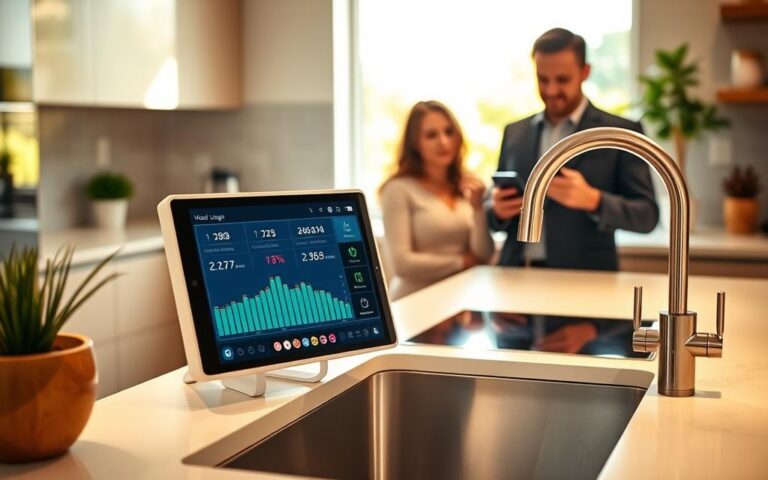
Starting with measuring your water use is key to managing it better. Looking at your water bills helps you see your monthly use. A flow meter can give exact numbers. To estimate quickly, time the tap, then multiply by its flow rate.
We compare our numbers to common standards to understand them better. Old taps can use up to 2.2 gallons per minute, while new ones use less. ENERGY STAR dishwashers need only 3 to 4 gallons per wash. By keeping track of how often and how much we use our taps and appliances for a week, we can spot when we use water the most.
Common Kitchen Water Wastage Sources
Letting the tap run while washing dishes or preparing food can waste a lot of water. Pre-rinsing dishes also wastes water if your dishwasher is efficient.
Leaks in faucets and appliances slowly but surely waste water. Old dishwashers and ice makers also use more water than newer ones. Using too much water for cooking or thawing food under running water are other ways water gets wasted. Even using paper towels too much can increase water use.
Keeping track of how you use water can show easy ways to save. Making small changes in habits and upgrading some items can make a big difference. This can lower your water use without changing your life too much.
| Activity | Typical Water Use | Smart Change |
|---|---|---|
| Handwashing dishes | 2–6 gallons per sink session | Use a basin or plug sink; limit faucet flow |
| Dishwasher per cycle | 3–10 gallons (modern vs. older models) | Run full loads; choose ENERGY STAR models |
| Faucet flow | 0.5–2.2 gpm depending on fixture | Install low-flow aerator; time usage |
| Refrigerator ice maker | Variable; can be continuous fill cycles | Upgrade to efficient models; check connections |
| Thawing food | 0–2 gallons per item if using running water | Thaw in fridge or microwave to avoid running water |
Simple Tips for Reducing Kitchen Water Usage
Small actions and choosing the right appliances can save a lot of water. Making a few changes can really decrease how much water a household uses, without needing to remodel. These steps make a kitchen use water more efficiently in everyday tasks.
Optimize Your Dishwashing Technique
Instead of rinsing dishes before loading, just scrape them off and stack them. ENERGY STAR dishwashers can clean most food leftovers. For hand-washing, let dirty pans soak briefly instead of running water over them. Fill one sink for washing and another for rinsing to use less water each time.
Keep the faucet off while scrubbing. A spray nozzle with a trigger helps control water during rinses. Don’t repeat rinse cycles; modern dishwashers know when dishes are clean, helping save water over time.
Use a Basin Instead of Running Water
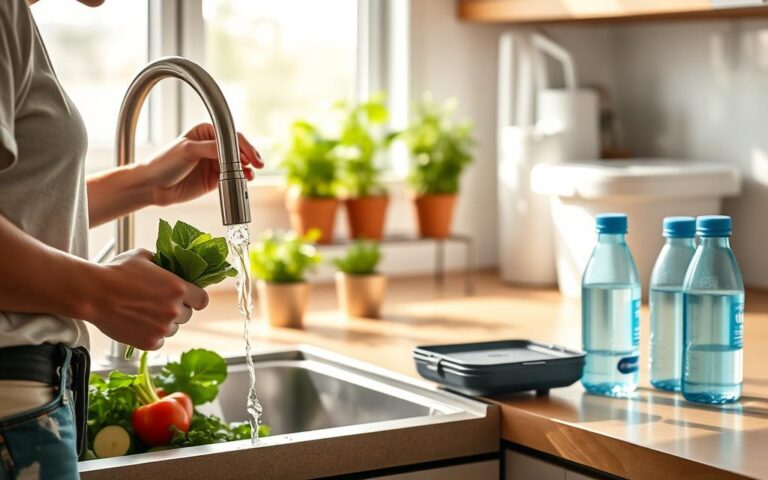
For rinsing fruits and veggies, use a bowl or fill one sink side. This uses much less water than keeping the tap on. Thaw food in a covered bowl of cold water, refreshing it as needed.
Switching from running water to a basin for 5–10 minutes can save gallons each time. This is important for efficient kitchen water use.
Implement Water-Saving Appliances
When you can, switch to ENERGY STAR dishwashers and water-saving fridges. Modern dishwashers use less water and avoid unnecessary cycles. Also, consider replacing an old clothes washer near your kitchen for more savings.
Look for rebates or discounts from U.S. utilities for buying efficient appliances. Mixing these deals with smarter water use makes a big difference in having a water-smart kitchen.
| Action | Typical Water Savings per Use | Why It Helps |
|---|---|---|
| Use sink basins for rinsing | 3–20 gallons | Replaces continuous faucet flow when rinsing multiple items |
| Hand-wash with filled sink and rinse basin | 5–15 gallons | Limits running water while soaping and rinsing dishes |
| ENERGY STAR dishwasher | Up to 10+ gallons per cycle vs. older models | Lower gallons per cycle and soil sensors reduce repeat cycles |
| Trigger spray nozzle | 1–5 gallons per task | Controls flow for quick rinses and avoids full faucet flow |
| Thaw in refrigerator or covered bowl | Several gallons per thaw | Avoids running water for extended thawing |
Efficient Food Preparation Practices
Water-wise habits in food prep make kitchens more sustainable. Small changes in handling fruits, meats, and vegetables reduce waste. These habits are easy to include in daily cooking. They save water without needing more time or money.
Rinse Fruits and Vegetables Wisely
Use a bowl to rinse produce, it saves more water than a running tap. For leafy greens, soak them briefly then lift out. This approach removes dirt quickly.
Use a brush for firm produce to get rid of soil. This method saves water. Rinse water without soap can water plants or soak pots.
Thaw Food in the Refrigerator
Thaw food in the refrigerator or microwave defrost cycle to save water. These methods also keep food safe while thawing.
Plan meals ahead for fridge thawing. Use microwave defrost for urgent needs. Both ways make sustainable kitchen habits easier.
Minimize Water for Cooking
Only use the water needed for boiling or steaming. Cover pots to keep heat in, cook faster, and stop water from evaporating. Pressure cookers save water and energy because they cook quicker.
Recycle cooking water if possible. Use pasta water in soups or for blanching veggies. Steaming vegetables saves water. One-pot meals mean fewer pots to clean, which saves water and makes cleaning up easier.
Plumbing Fixtures That Promote Water Efficiency
Switching to new plumbing fixtures can majorly save water in kitchens. You’ll save money with new faucets, toilets, and smart devices by cutting down indoor water waste. These changes usually pay for themselves through lower water bills and less need for fixes.

Low-Flow Faucets and Aerators
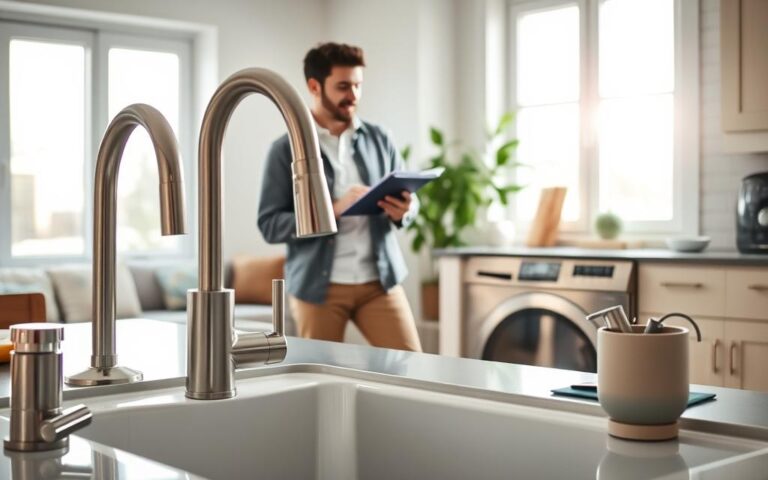
Aerators cut down faucet flow to just 0.5–1.5 gallons every minute. They mix air into the water, keeping the pressure but using less. Brands like Delta and Moen offer many models that are easy to install.
Water-saving pull-down faucets have special modes that reduce water use but don’t slow you down. Installing aerators and changing cartridges is simple and doesn’t always need a professional. These small changes help the planet every single day.
Installing a Dual-Flush Toilet
Getting a dual-flush toilet instead of a single-flush one cuts down your house’s water use. These toilets use less water for liquid waste and more for solids. Adding them to a water-smart kitchen design helps save even more water overall.
Dual-flush toilets come in many prices and styles. Lots of kits let you update your current toilet. How much water and money you save will depend on your habits and the old toilet’s design.
Benefits of Smart Water Technology
Smart water tech includes gadgets like leak detectors and faucet sensors from companies like Flume and Moen Smart Water. They watch your water use, catch unusual patterns, and warn you about leaks you can’t see.
These smart devices give you reports on water use and can connect with your home systems. Knowing exactly how much water you’re using can encourage you to use less. Sometimes, local utilities give rebates for these products because they help prevent big leaks.
| Fixture or Device | Typical Flow or Feature | Installation Ease | Primary Benefit | Estimated Payback |
|---|---|---|---|---|
| Faucet Aerator (0.5–1.5 gpm) | 0.5–1.5 gpm | DIY, under 10 minutes | Reduces faucet water use while preserving pressure | Months to 2 years |
| Pull-Down Faucet with Eco Spray | Variable flow, eco spray mode | Moderate, may need wrench | Lower flow for rinsing tasks | 1–3 years |
| Dual-Flush Toilet | Half flush / Full flush | Moderate to professional for retrofit | Cuts toilet-related indoor water use | 2–6 years |
| Leak Detector / Smart Meter | Real-time monitoring, alerts | Easy to moderate, some require app setup | Identifies hidden leaks and abnormal use | Less than 1 to 4 years |
| Whole-home Water Monitor | Household flow analytics | Professional installation recommended | Comprehensive usage insight for conservation | 2–5 years |
The Role of a Dishwasher in Water Conservation
A modern dishwasher can help save a lot of kitchen water if used right. They use special cycles and sensors to clean with less water than washing by hand. This makes dishwashers a key tool for saving water at home.
Benefits of Using the Dishwasher
ENERGY STAR dishwashers use about 3–4 gallons per cycle, which is less than washing dishes by hand. They also have a sanitizing cycle that uses less water by removing the need for pre-rinsing. With smart soil sensors and better filters, they keep the water clean throughout the wash. This saves both water and energy.
Using an eco or quick wash can further reduce how much detergent and hot water you use. This makes you use less water overall.
How to Load a Dishwasher Efficiently
Always run your dishwasher with a full load to be more efficient. You should scrape off food but skip pre-rinsing since new machines can handle the residue. Make sure dishes are placed so that all areas can be reached by water.
For lightly dirty dishes, choose short or eco cycles. This helps use less water and energy.
Choosing Water-Efficient Dishwashers
When buying a dishwasher, look for one with an ENERGY STAR label. Also, check its gallons-per-cycle. Dishwashers with soil sensors and good filters can save more water and energy. Getting a new efficient model to replace an old one can save a lot of water each year.
For help picking a model, check out the ENERGY STAR certified dishwashers list.
- Run full loads to maximize efficiency.
- Skip pre-rinsing to conserve water.
- Choose models with soil sensors and low gallons per cycle.
Tips for Saving Water While Cleaning Up
When cleaning up after eating, there’s a big chance to use less water at home. Simple changes in how we clean can make a family’s water use better for the planet. Here are steps to make cleaning efficient and water-smart.
Use cloths instead of paper towels.
Choose to reuse cloths made of microfiber or cotton for cleaning spills and surfaces. They work well, last longer, and get rid of food without needing the water on. Use a small water basin to wash cloths instead of running the tap to save more water.
Wash these cloths only with full loads and in cold water to cut down on water and energy use. Tide and Seventh Generation have detergents meant for less water use but still clean well.
Techniques for efficient cleanup.
Before rinsing, scrape plates and remove food into compost or trash. If food sticks, a damp cloth is faster than using water. For washing dishes by hand, use one basin for soapy water and another small one for rinsing.
For greasy areas, use strong cleaning sprays to reduce rinsing. Wipe counters and stovetops with a wet cloth, then dry them to avoid extra water use. This helps save water every day.
Soaking pots and pans.
To clean cookware with hard-to-remove food, soak it in hot, soapy water. This makes it easier to clean without much rinsing. One soak and small rinses in a basin can save lots of water compared to keeping the water running.
For very tough stains, use baking soda and a bit of dish soap in your soak. Let it sit, then scrub lightly. For cast iron, do what the maker says: barely rinse, dry it right away, and season as needed. This saves water and keeps your kitchen running smoothly.
Educating Household Members on Water Conservation
Teaching your family to save water starts with easy lessons and simple habits. A family will quickly learn if they see actual numbers and simple steps. Compare this to getting unclear advice.
Make a weekly chart of water use and hang it by the sink. Show savings using utility bills or smart meter data. Talk about local issues like droughts in California or rules in Arizona. This makes the problem feel urgent.
Show how much water common actions save with small pictures. For instance, using the faucet less by 5 minutes can save lots of water each week. These facts make saving water in the kitchen seem rewarding.
Give everyone a specific job. One person can make sure the dishwasher is full. Another can keep the tap off during meal prep. These jobs help everyone follow water-saving tips every day.
Make saving water fun for kids with clear signs. Use sink stickers, mark compost bins, and use a basin for washing fruits. These tips help guests and kids use water wisely.
Start a friendly competition to save more water. Track how much less water you use each month. Celebrate wins with a meal together or a fun activity. Prizes keep everyone excited and involved.
Help families learn more by guiding them to good sources. Materials from EPA WaterSense, local programs, and university services have tips, discounts, and educational resources.
| Action | Concrete Metric | Household Role | Resource |
|---|---|---|---|
| Shorten faucet use while prepping | Save ~3–5 gallons per meal | Prep monitor enforces “tap off” rule | EPA WaterSense tips |
| Use basin for rinsing produce | Save ~2–4 gallons per rinse | Kitchen helper sets basin out | Local utility how-to guides |
| Run dishwasher only full | Save 20–30 gallons per week vs. handwashing | Dishwasher loader checks fill level | Energy Star and WaterSense |
| Track weekly water log | Visible % reduction goal | Record keeper updates log | Smart meter reports |
| Household conservation challenge | Monthly reduction targets (e.g., 5%) | Coordinator organizes rewards | University extension materials |
Adapting Cooking Methods to Save Water
Changing how you cook can lessen water use, cut energy bills, and save time. Small changes in how we cook can lead to big water savings. Families across the United States find these methods practical for conserving resources.

Pressure cookers and Instant Pot devices use steam and need less water. They cook beans, stews, and whole grains quickly. Pressure cooking saves water and energy, with many models offering simple safety features and preset programs.
Steaming requires much less water than boiling. With stackable steamers, you can cook several veggies at once using minimal water. It keeps nutrients and flavors in greens, root veggies, and fish better than boiling does.
Cooking in big batches saves water by reducing the need for constant prep and cleanup. Cooking sauces, grains, or vegetables in large amounts means less washing up. Batch cooking means reheating food rather than cooking afresh, which saves water.
Using different methods together enhances savings. For example, pressure-cook beans, steam veggies in layers, and reuse cooking liquids. These practices improve kitchen efficiency. They help families save time and be more eco-friendly.
| Method | Typical Water Use | Time Savings | Best For |
|---|---|---|---|
| Pressure cooking (Instant Pot) | Low — sealed steam system | High — up to 70% faster for beans/grains | Beans, stews, whole grains |
| Steaming with stackable steamer | Very low — small base of water | Moderate — cooks multiple items at once | Vegetables, fish, dim sum |
| Stovetop boiling | High — full-pot water volume | Variable — depends on pot and heat | Pasta, large batches when necessary |
| Batch cooking + reheating | Reduced overall — fewer repeat tasks | High — fewer daily cooks | Sauces, grains, blanched vegetables |
Regular Maintenance for Water Efficiency
Routine upkeep ensures efficient kitchen water use saves money year after year. Small checks and quick fixes prevent waste and protect appliances. They also help smart water management across the home.
Homeowners should check for leaks under sinks and at faucet bases. Listening for running water when all is off is key. A test is to compare water meter readings at night and morning; unexpected changes can indicate leaks. A single drip per second can lead to a big waste. So, it’s important to quickly replace washers or aerators and call a plumber for more serious issues.
Seasonal maintenance helps avoid big problems and keeps devices working as intended. The to-do list includes checking hoses, cleaning aerators, and flushing the water heater. It’s good to follow the advice of appliance makers like GE, Whirlpool, or Bosch. Doing so keeps things efficient and extends their life. For more tips, check out this guide: water efficiency at home.
Replacing old or often-fixed fixtures is a wise move. Things like low-flow aerators and ENERGY STAR dishwashers can save money. They also offer rebates and increase home value. By adding routine checks, homeowners can ensure savings and protect their efficient kitchen water use long-term.