
This guide offers steps for reducing water use at home. It shows how to decrease water bills and support the environment. The focus is on making homes more eco-friendly.
People in the U.S. will see tips for their region, from dry areas to places with lots of lakes. It talks about how rules and incentives from local places can guide your choices. The advice covers saving water inside and outside, like with efficient appliances or collecting rainwater.
Doing this helps our planet and can also save you money. It lessens the burden on natural water sources and lowers energy use. Plus, there might be savings and rebates available from your local or state government.
To begin, you should figure out how much water your home uses. Set goals for reducing that amount. Then, follow the guide to make your home water use more sustainable.
Key Takeaways
- Audit current water use and set clear, measurable reduction goals.
- Adopt simple indoor fixes and outdoor strategies to support sustainable water conservation.
- Look for local rebates and regulations that influence green home water management choices.
- Combine technology upgrades with daily habits to maximize savings and environmental benefit.
- Engage the whole household to ensure long-term success and measurable results.
Understanding the Importance of Eco-Friendly Water Use
Water is key to communities, economies, and ecosystems in the U.S. Every little action, whether it’s choosing how we use water at home or maintaining our yards, makes a big difference. By using water wisely, we can protect rivers, aquifers, and wetlands. This also means using less energy for heating and moving water.
Environmental Impact of Water Waste
Our freshwater is under a lot of pressure due to more people, farming, and climate changes. When streams flow less and aquifers drop, fish and wetlands suffer. By using water carefully, we support healthier environments and stronger local watersheds.
Water and energy are closely linked. It takes a lot of power to treat, pump, and heat our water. By having more efficient appliances, households can reduce their carbon footprint. The EPA and Department of Energy say that using less hot water can save a lot of energy.
Too much runoff can pollute our waters with nutrients and dirt. By reducing runoff at home, we help keep rivers and lakes cleaner. This helps plants, animals, and people who need clean water for fun and health.
Economic Benefits of Sustainable Practices
Using less water can lower your bills for water and sewer. Many families save a lot by using efficient fixtures and being mindful of their water use. Using less hot water also means cheaper energy bills, adding to the savings.
There are special deals available for making your home more water-efficient. You can get money back for buying things like WaterSense faucets, efficient washers, and systems to catch rainwater. These deals make it cheaper to upgrade.
Homes that save water can be worth more in the long run. If your yard needs less water and your plumbing is efficient, your home is more attractive to buyers. For example, using a low-flow showerhead saves a lot of water and money each year. And ENERGY STAR washers use much less water than older ones.
| Measure | Typical Water Savings | Typical Energy/Cost Impact |
|---|---|---|
| Low-flow showerhead (WaterSense) | Up to 2,000 gallons/year per person | Reduced hot water energy; saves $50–$150/year |
| High-efficiency washing machine (ENERGY STAR) | 20–35% less water than standard models | Lowers utility bills; cuts energy for heating water |
| Dual-flush toilet | Up to 60% less water per flush versus older toilets | Significant sewer and water bill reductions |
| Rainwater harvesting for irrigation | Varies by system; can replace large portion of irrigation | Reduces municipal water demand; potential rebate eligibility |
Choosing to use water mindfully at home is good for the planet and your wallet. Simple changes and smart upgrades can lead to big environmental and financial benefits.
Strategies for Reducing Water Consumption
Small changes can greatly reduce how much water we use at home. Here, we’ll explore steps you can take to use less water daily. These steps include choosing the right appliances, updating fixtures, and using rainwater smartly.
Install water-efficient appliances
Pick washing machines and dishwashers with ENERGY STAR and EPA WaterSense labels to save on water and energy costs. Front-loaders save much more water than old top-load models. Look at water usage per cycle, energy efficiency, and whether they adjust for load size.
Keep your appliances in good shape to avoid leaks. Check hoses and valves each year. Use full loads and eco settings to save more. In the long run, efficient appliances save money by using less water and electricity. This is key for living green and saving water.
Utilize low-flow fixtures
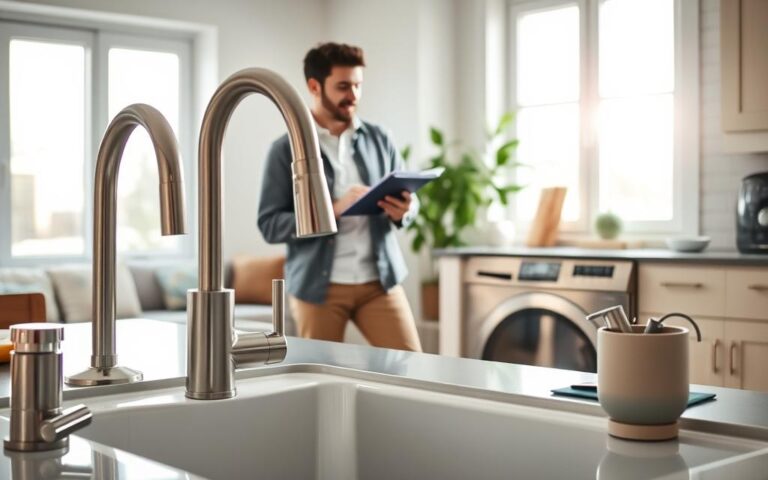
Change out your showerheads, faucets, and toilets to ones that use less water without losing strength. Showerheads under 1.8 gpm and faucet aerators between 0.5 and 1.5 gpm are ideal. They maintain good pressure while using less water.
Upgrading toilets to 1.28 gpf WaterSense models or adding dual-flush kits can save a lot of water. Most shower and faucet changes are easy to do yourself. But, you might need a pro for toilets or big plumbing changes. These upgrades are smart ways to save water and support a green living lifestyle.
Rainwater harvesting techniques
Use rain barrels to collect water for your garden, or larger cisterns for yard irrigation. Simple devices can link your gutters to these barrels. There are also tools to keep out leaves and dirt.
Always check your local laws before using rainwater for drinking. Many places let you use it for watering plants. To get started, figure out how much water your roof can collect. Put barrels under downspouts and get them ready for winter to avoid freeze damage. These steps help make the most of rainwater for a green home.
| Measure | Typical Water Savings | Ease of Implementation | Cost Range (USD) |
|---|---|---|---|
| ENERGY STAR front-load washer | 20–50% per wash | Moderate (installation may require hookup) | $600–$1,200 |
| WaterSense dishwasher | 10–30% per cycle | Easy (plug-and-play) | $400–$1,000 |
| Low-flow showerhead (≤1.8 gpm) | 30–50% per shower | Very easy (DIY) | $15–$120 |
| Faucet aerator (0.5–1.5 gpm) | 30–60% at hand sinks | Very easy (DIY) | $2–$20 |
| WaterSense toilet (1.28 gpf) | Up to 60% per flush | Moderate to hire a plumber | $200–$500 plus labor |
| Rain barrel (50–100 gal) | Reduces irrigation from mains | Easy to moderate (placement, gutter hookup) | $75–$300 |
| Cistern for irrigation (100–1,000+ gal) | Substantial seasonal savings | Moderate to complex (may need site work) | $500–$5,000+ |
Best Practices for Eco-Friendly Landscaping
Landscaping can greatly cut outdoor water use and enhance green home water management. Simple design tweaks can create yards that need less water and upkeep. By adopting eco-friendly water-saving methods, homeowners see reduced bills and healthier yards.
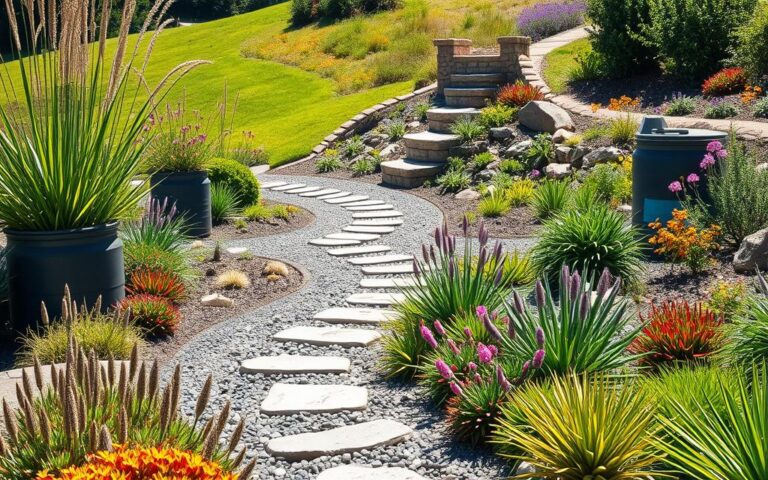
Planning ahead is key. It’s smart to group plants by their water needs and lay out irrigation zones. Opting for permeable hardscapes allows rain to seep into the ground. Adding compost to soil helps it hold more water and supports plant health.
Xeriscaping Benefits and Techniques
Xeriscaping is about using water wisely through thoughtful design, soil improvement, choosing the right plants, and efficient watering. It relies on seven core principles: careful planning, soil amendment, smart plant selection, reducing lawn size, using water-saving irrigation, applying mulch, and regular upkeep.
Effective techniques include grouping plants by water needs, installing drip irrigation systems, and reducing the size of lawns. By switching to xeriscaping, homeowners can cut their outdoor water usage by 50–80% in many places.
Native Plants for Reduced Water Needs
Native plants flourish with minimal help because they’re suited to the local climate. This means they need less water, fertilizer, and pesticides. For guidance on the best plants, check resources like the University of California Cooperative Extension and Texas A&M AgriLife. They offer lists of regional plants.
When planting, it’s wise to group plants with similar water needs and start them off with deep watering. After establishment, these plants usually thrive on less frequent watering. Buying from local native nurseries promotes local ecosystems and increases plant survival.
Embracing these eco-friendly practices can lead to significant savings on water and maintenance. Homeowners committed to saving water can enjoy beautiful, resilient landscapes. These landscapes not only save water and time but also boost the house’s curb appeal.
Efficient Water Use in the Kitchen
Simple steps in the kitchen can reduce water use without much cost. Changes in how we wash dishes, cook, and prepare food add up. By following water-saving tips, families can conserve water, save energy, and make eco-friendly choices without sacrificing food safety or convenience.

Techniques for Washing Dishes
Using a dishwasher at full capacity saves more water than hand washing or running partial loads. Opt for ENERGY STAR dishwashers from brands like Bosch or KitchenAid, which show water usage per cycle. Choosing light cycles for less dirty dishes can also save energy.
To save water while hand washing, use one sink for washing and another for rinsing instead of letting the tap run. Attaching aerators to faucets can also help by reducing water flow without affecting the cleaning power.
Regularly check for leaks in dishwasher hoses and sink pipes. Even a small drip can waste a lot of water over time. Fixing leaks is a simple way to maintain the benefits of water-saving habits.
Smart Cooking Practices to Save Water
Don’t throw away water used for cooking vegetables. If it’s unsalted and cool, use it for watering plants or making broth. This way, nothing goes to waste, and you avoid using water with salt or oil.
Defrost food in the fridge instead of under running water. Also, covering pots while boiling helps keep water from evaporating quickly, which saves time and water.
Wash fruits and vegetables in a bowl, not under running water. Choose the right size pot for cooking so you only use the water you need. These small changes can make a big difference in saving water.
Sustainable Bathing and Hygiene Habits
Making small changes to our daily routines helps us use less water at home. By adjusting how we shower and what type of toilets we use, we can save lots of water. The tips shared here are easy to follow and very effective.
Shortening Showers for Conservation
Try to keep your showers to five minutes. Use a timer in the kitchen or bathroom to help you. Shortening your shower by five minutes saves 10–25 gallons of water, based on how fast water flows from your shower.
Switch off the water when you’re applying soap or shampooing. Catch the initial cold water in a bucket to water plants with. A water-efficient shower valve makes short showers feel just as good by maintaining pressure.
Water-Saving Toilets and Their Impact
For toilets, go for a 1.28 gpf low-flow model or a dual-flush toilet. Pressure-assisted toilets work best for houses that need more flushing power. Make sure to look for toilets with WaterSense certification to guarantee they are efficient and clean well.
Consider retrofitting your toilet with a fill cycle diverter or a displacement device to use less water per flush. While there are initial costs, local rebates might help lower the long-term costs. You can even DIY some simple installations, but hire a pro for the tricky parts.
Adopting these habits is part of a bigger picture of using water wisely at home. They are simple, everyday steps towards a more eco-friendly way of living. Not only do they cut down on water use, but they also keep our homes comfortable and clean.
Collecting and Reusing Water
Collecting and reusing water helps save money. It also reduces the demand on local water supplies. Simple systems and creative habits allow eco-friendly water use at home, making it easy for most families. These methods are part of broader strategies that aim at sustainable water conservation.

Gray Water Systems Explained
Gray water is the water that drains from showers, sinks, and washing machines. It’s used water but doesn’t include waste from toilets. Homeowners can reuse this water for things like watering plants or flushing toilets. This reduces the need for fresh, potable water.
There are many options for gray water systems. They range from simple setups that use gravity to more complex ones that might need a pump. In places like California, there are specific rules about using these systems. It’s important to know your local regulations before you start.
Maintenance is crucial for keeping gray water systems running smoothly. Checking for clogs, changing filters, and making seasonal adjustments can prevent smells and health hazards. It’s also important to label everything clearly and teach your family how to use the system correctly.
Creative Ways to Reuse Water Around the Home
Using the discharge from your washing machine to water your garden is a good idea. Just make sure not to use it on edible plants if you’re using high-salt detergents. Try to use biodegradable detergents to avoid soil buildup.
You can also save water from washing fruits or dishes. Use it to water non-edible plants. Water from fish tanks is great for fertilizing plants because it’s rich in nutrients.
Water from air conditioners or dehumidifiers can water plants too. You can also use water from making ice or steaming vegetables for plants. Just make sure it doesn’t have any harmful substances in it.
All these methods provide a way to conserve water. They fit into bigger plans to save water and are easy on your wallet. These steps help make your home more eco-friendly.
Mindful Watering Practices for Gardens
Gardeners can save water and help their plants by using smart watering methods. These methods are great for the environment and keep gardens looking beautiful.
Watering at the right time is key. Do it early in the morning or late in the evening. This helps reduce water loss to evaporation. Water deeply but not too often to help roots grow deep.
Pick the right way to water. Drip irrigation and soaker hoses work best for getting water to plant roots. For young plants and pots, use a wand to water directly without wasting water.
Know when and how much to water. Sandy soils dry out faster than clay soils. Plants like lavender need less water. Checking the soil moisture or using a smart controller can save a lot of water.
Mulch is a gardener’s friend. It keeps moisture in the soil and enriches it too. Just make sure to keep it away from plant bases to prevent rot.
Choosing the right mulch is important. Organic mulches improve the soil over time. Stones reduce water loss but don’t add nutrients. Remember to add more organic mulch every year.
| Practice | Why It Works | Practical Tip |
|---|---|---|
| Morning or evening watering | Reduces evaporation and promotes deep root growth | Water before 9 AM or after 7 PM during summer |
| Drip irrigation / soaker hoses | Delivers water to roots, cuts runoff | Place lines near root zones; hide under mulch |
| Hand-watering with a wand | Targets specific plants, prevents waste | Use a low-flow nozzle and water slowly |
| Soil-based scheduling | Prevents overwatering across soil types | Test soil moisture 2–4 inches deep before watering |
| Organic mulch (wood chips, leaves) | Improves moisture retention and soil health | Apply 2–4 inches; refresh each year |
| Inorganic mulch (gravel) | Reduces evaporation without adding nutrients | Use where soil enrichment is not needed |
By following these tips, gardens can stay healthy with less water. It’s great for saving money and helping the planet. Every little bit helps in making our homes more eco-friendly.
Innovations in Water Conservation Technology
Homeowners now have new tools for easier sustainable water conservation. Smart devices and user-friendly apps encourage eco-friendly habits. These innovations minimize waste and provide valuable data to guide our water use decisions.
Today’s smart irrigation systems come equipped with advanced features. We have weather-based controllers, soil moisture sensors, and flow monitors. Brands like Rachio, Rain Bird, and Hunter let these controllers work with your sprinklers. They adjust watering times based on the weather and soil moisture to prevent excess.
Switching to smart irrigation can save 20–50% in outdoor water use. Many families find the upfront cost pays off quickly. Savings come from lower water bills and fewer issues with landscaping. Plus, flow sensors can detect leaks early to save water and money.
Smart Irrigation Systems
Smart irrigation uses technology to water plants just right. It can skip watering during rain or reduce it on cool days.
Soil sensors check moisture levels to avoid unnecessary watering. And, you can set different watering schedules for your lawn, flowers, and vegetables. This customization meets the unique needs of each plant type.
These systems come with mobile apps for easy control and monitoring. This way, you can make smart choices for water conservation. The apps provide reports and tips for improved watering efficiency.
Water Tracking Apps and Their Benefits
Water tracking apps help families keep an eye on their water use, set savings goals, and detect leaks. Even without smart meters, you can manually input usage in some apps. This feature is a great help for those without advanced metering.
Seeing your water use in real-time can encourage better habits. Just being aware of daily use prompts small but impactful changes. Many users see a marked decrease in their water consumption over time.
| Feature | Benefit | Example Brand or Service |
|---|---|---|
| Weather-based control | Reduces unnecessary watering after rain | Rachio, Rain Bird |
| Soil moisture sensors | Prevents overwatering by measuring root-zone moisture | Hunter, AquaSpy |
| Flow and leak detection | Alerts to leaks and burst pipes to prevent loss | Flume, Phyn |
| Water tracking apps | Monitors usage, sets goals, compares to neighbors | Utility portals, third-party tracker apps |
| Zone-specific scheduling | Optimizes irrigation for varied plant needs | Most modern smart controllers |
When smart irrigation is paired with water tracking, you get a powerful tool for saving water. This combination uses data from apps to fine-tune watering schedules. It’s a practical approach that makes a real difference in achieving eco-friendly water use and stronger conservation habits at home.
Engaging the Family in Water Conservation
When a family uses water wisely at home, they develop lasting habits. Doing simple tasks together with a common goal makes chores educational and fun. Small changes lead to big results with everyone’s involvement.
Educational Activities for Children
Show kids the water cycle with a fun experiment. Use a pitcher and clear plastic to simulate a greenhouse. This visual lesson explains why saving water is key.
Time showers with a bucket and stopwatch. Kids can note the time and amount of water used, learning to save water in a tangible way.
Explore EPA’s WaterSense for Kids and local centers for materials. Stories about rivers and lessons on local water sources make learning fun and easy.
Team Efforts for Sustainable Practices
Set a family water-saving goal and track progress together. Celebrate achievements with rewards, keeping everyone motivated.
Make a daily checklist for saving water: take short showers, run full dishwashers, fix leaks. This gives everyone a clear role.
Take part in local water conservation efforts. Working together teaches responsibility and shows how home habits affect the community.
| Activity | Age Range | Time Required | Outcome |
|---|---|---|---|
| Mini water cycle experiment | 5–10 years | 30–45 minutes | Visualizes evaporation and condensation |
| Shower water measurement | 8–14 years | One shower session | Tracks gallons per minute and promotes shorter showers |
| Leak hunt chore | 6–12 years | 15–30 minutes | Finds drips and teaches maintenance habits |
| Meter reading check-in | All ages | 10–15 minutes per month | Monitors progress toward household goals |
| Community conservation day | All ages | 2–4 hours | Links home practices to local watershed health |
Local Resources for Eco-Friendly Water Solutions
Local groups provide help for using water in a green way at home. They offer workshops, money-back offers, and hands-on projects. This support makes saving water both doable and budget-friendly.
Workshops teach about collecting rainwater, choosing drought-tolerant plants, and smart ways to water plants. Classes and outdoor learning events are held by water offices, universities, and gardening groups.
City utilities offer free checks on how water is used at home and programs to replace grass with less thirsty plants. Nonprofits and colleges sell rain barrels and hold events to upgrade homes water-wise. These efforts guide homeowners to save water, following advice from local experts.
Community Workshops and Initiatives
Check city water websites or your local extension service for event times. In these workshops, you’ll learn how to set up rain barrels, drip water systems, and water-saving devices.
- Finding leaks and ways to use less water through home water tests.
- Incentives for removing grass to cut down on water use outdoors.
- Lower-priced rain barrels and high-tech irrigation controllers on sale.
State Programs Supporting Water Conservation
State organizations offer money back and grants for buying efficient toilets, energy-saving washers, and smart water controllers. Whether you can get these depends on your home and the project.
Places like California and Colorado have rules for using gray water and catching rainwater. Get in touch with your water service for the latest on rebates and how to apply. They’ll tell you what you need to know to get the funds.
Together, workshops, utility deals, and state aid help families use water wisely. They support green water habits at home and help neighborhoods save water.
Conclusion: Embracing Sustainable Water Use at Home
Making your home water use eco-friendly starts with easy choices. A basic water check can show leaks and fixtures that use a lot of water. Switching old toilets for ones like the Niagara Stealth, getting efficient showerheads, and adding faucet aerators cuts water use fast. These steps lower bills and help our local water supply.
Changing your garden to use less water, like with xeriscaping, and planting local plants helps too. Gathering rainwater and recycling grey water gives extra water for your garden and toilets. Local programs might help pay for these changes, and sites like Ever After Homes have guides for rain barrels (rainwater harvesting options).
Small changes, like shorter showers and fixing leaks right away, add up. Make a plan starting with simple fixes (aerators, new showerheads) and think about bigger projects (new appliances, changing your garden). Using tools to track progress and getting your family involved keeps everyone focused on saving water.
By using water more wisely, families save money and help local nature thrive. Start with a small change this week and add more over time. Consistent effort brings real savings and strengthens our community.