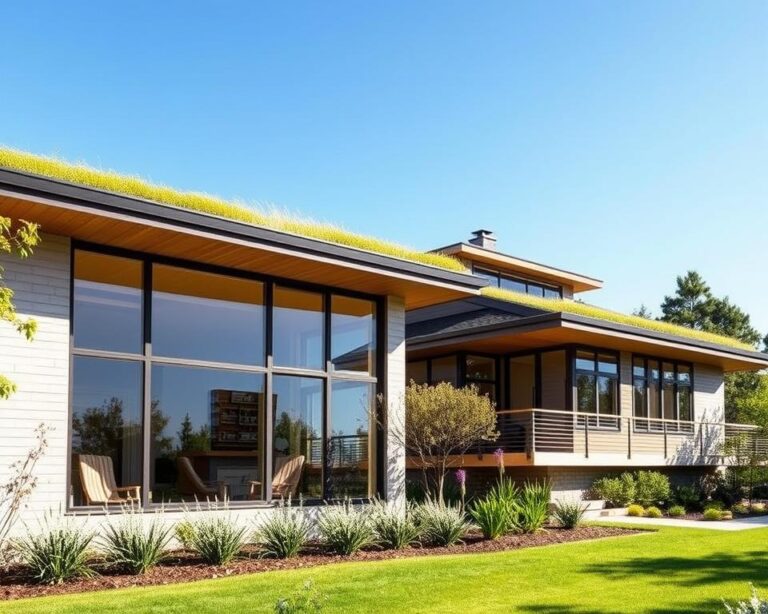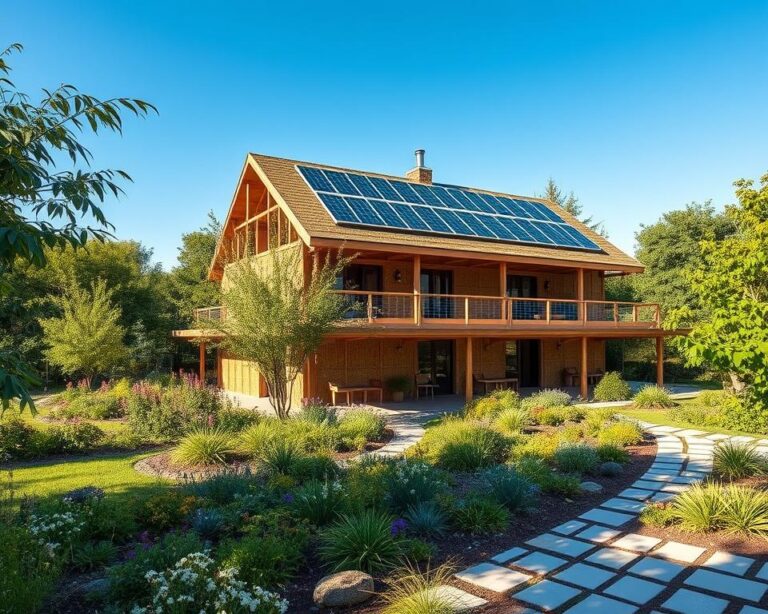

This guide shares green home renovation tips for homeowners, renters (with their landlord’s okay), contractors, and DIY fans. It aims to make homes across the U.S. healthier, more efficient, and eco-friendly.
Here, you’ll get ideas on eco-friendly house updates and sustainable remodeling. These range from simple, low-cost changes to big projects that can make your house use less energy and water. The main goals? Use less energy and water, breathe cleaner air indoors, lower your bills, increase your home’s value, and reduce its impact on the environment.
Expect real benefits. Adding insulation and upgrading your HVAC can cut energy use by 20–30%. Installing low-flow fixtures can save 20–60% on water use. And with state incentives, solar panels can pay off in a few years.
The guide goes deeper into important topics. These include energy and water saving tips, eco-friendly building materials, renewable energy systems, smart home gadgets, green landscaping, financing options, and ways to make your home future-ready.
Key Takeaways
- Green home renovation ideas include small and large projects to improve health and efficiency.
- Eco-friendly home improvements can save you energy, water, and money, and make the air cleaner.
- Tips for a sustainable remodel include better insulation, efficient HVAC systems, water-saving fixtures, and safe materials.
- Energy-efficient updates can lead to big savings on energy and water use.
- The guide is useful for different types of homes and climates, offering tips for both DIY enthusiasts and pros.
Understanding Green Renovation Concepts
Eco-friendly home design focuses on how homes use energy, water, and materials. Homeowners want to reduce waste, lower costs, and make indoor air healthier. They also think about making their homes last longer.
What is Green Renovation?
Green renovation is about making homes use fewer resources and create less waste. It also focuses on keeping people healthy at home. This can mean installing newer, energy-saving appliances or adding insulation to keep temperature steady.
The main goals are to use less energy, choose sustainable materials, save water, and improve air inside. It’s all about reducing, reusing, and recycling. Builders try to use what’s already there and recycle when they can’t.
Benefits of Going Green
Choosing green improves your home in many ways. You might pay less for utilities, enjoy more steady temperatures, and breathe cleaner air. Your home’s value could go up because of these green updates.
Going green is good for health, too. Less harmful chemicals in paints mean cleaner indoor air. This is really important for people with asthma or allergies. Upgrades can make symptoms much better.
There’s money help available for these projects. Programs offer advice, certifications, and rebates to make green choices more affordable. This demand also helps homes sell faster and may give tax breaks.
To pick the best projects, think about your budget and what you hope to save. Start with sealing leaks and adding insulation. Then upgrade to efficient heating and cooling and appliances. Lastly, consider adding solar power.
| Priority | Typical Upgrade | Primary Benefit | Estimated Payback |
|---|---|---|---|
| 1 | Air sealing and insulation | Lower heating and cooling costs | 2–6 years |
| 2 | High-efficiency HVAC and thermostats | Better comfort and reduced energy use | 3–8 years |
| 3 | ENERGY STAR appliances | Lower electricity and water consumption | 2–7 years |
| 4 | Low-VOC paints and improved ventilation | Improved indoor air quality | Immediate to 3 years |
| 5 | Solar PV installation | Long-term energy independence and savings | 6–12 years |
Energy Efficiency Upgrades
Energy upgrades boost comfort and reduce bills. They are key in eco-friendly home renovations. Homeowners enjoy more comfort, lower energy costs, and savings. This happens when upgrades are picked and installed right.
https://www.youtube.com/watch?v=I_sshqewLBk
High-efficiency windows
Choose windows with two or three panes. They have special coatings and gases to stop heat loss. Look for frames made of energy-saving materials. Match their ratings with your local weather for the best fit.
ENERGY STAR windows make choosing easier. Installing them the right way stops heat leaks and moisture issues. For tight budgets, retrofitting windows is a cheaper eco-friendly option.
Smart thermostats
Smart thermostats offer automated control and can learn your schedule. They slash heating and cooling costs by a good percentage. ENERGY STAR models even adjust based on your location for extra savings.
Check if the thermostat works with your system before buying. A pro check ensures it works with HVAC zones and utility programs. This boosts your project’s eco benefits.
Insulation improvements
Focus on the attic, walls, and floors for insulation. Pick materials that match your home’s needs and local regulations. Well-chosen insulation cuts energy use and keeps temps steady.
Seal leaks before adding insulation for the best results. This combo lowers noises and improves comfort. Make sure air flows right in bathrooms and kitchens.
- Cost vs. benefit: Costs vary, but planning helps find the best deals and incentives.
- Performance metrics: Use ratings to choose the best eco-friendly upgrade options.
- Installation quality: How well upgrades are installed affects savings as much as the products themselves.
Eco-Friendly Building Materials
Choosing the right materials is key for eco-friendly home upgrades. Green building materials reduce waste and improve air quality inside homes. This guide offers practical tips for picking green materials that match your budget and design plan.
Sustainable wood alternatives
Products certified by the Forest Stewardship Council (FSC) ensure eco-friendly harvesting. Reclaimed lumber adds character while saving trees. Bamboo and engineered wood are also smart picks for eco-conscious choices in flooring and cabinetry.
Always check for the FSC label and opt for local reclaimed wood when possible. Look into the materials used in products to make sure they are safe and durable. These steps help make your home remodel both sustainable and long-lasting.
Recycled materials
Countertops from recycled materials like Richlite or glass cut down on environmental harm. Reclaimed brick and stone add a historic touch. Cellulose insulation, made from recycled paper, boosts warmth and cuts noise.
Recycled composite decking stops wood and plastic waste from ending up in landfills. Certifications like Cradle to Cradle help you pick truly green products. These choices help make your renovation project more eco-friendly.
Low-VOC paint options
Traditional paints can release harmful chemicals. Low-VOC paints reduce these risks. Some top brands offer certified eco-friendly options.
Choose the right primer and ensure good ventilation. Consider natural finishes for a unique look. Focusing on products’ full life cycle adds to your home’s sustainability.
Comparative choices at a glance
| Material Type | Common Uses | Key Benefits | Certifications to Check |
|---|---|---|---|
| FSC or reclaimed wood | Flooring, cabinetry, trim, structural | Reduced deforestation, unique aesthetics, durability | FSC, chain-of-custody labels |
| Bamboo | Flooring, cabinetry | Rapid renewability, strong and stable | FSC, ISO harvesting standards |
| Recycled-content countertops | Kitchen, bathrooms | Lower embodied energy, waste diversion | Cradle to Cradle, recycled-content % |
| Cellulose insulation | Wall and attic insulation | Thermal performance, uses recycled paper | GREENGUARD, recycled-content labels |
| Low-VOC paints | Interior walls, trim | Improved indoor air quality, reduced odors | Green Seal, GREENGUARD |
Using green building materials helps create durable, healthy homes. Choosing wisely and verifying certifications can make your home remodel eco-friendly. Paying attention to the lifecycle of materials ensures your renovation is both sustainable and effective.
Water Conservation Techniques
Small changes can make a big difference in water and energy bills, and even improve your home’s comfort. This guide talks about easy updates for a more eco-friendly home. It highlights devices and systems that give you real savings and value over time.

Low-Flow Fixtures
Pick showerheads with a flow of 1.5–2.0 GPM and faucets with 0.5–1.5 GPM aerators to save water without losing water pressure. Try toilets labeled by WaterSense at 1.28 GPF or choose dual-flush toilets to greatly reduce water use per flush.
It’s easy to add aerators and switch out showerheads quickly. These keep a strong spray and save hot water, which then uses less energy for heating. Combine these fixtures with ENERGY STAR washers and dishwashers for even more savings.
Smart leak detectors can find hidden leaks in your home. Fixing leaks saves water and prevents expensive damage. These ideas are great for green home renovations within any budget.
Rainwater Harvesting Systems
Collecting rainwater can help water your garden, flush toilets, and wash clothes, if your local laws allow it. A setup includes ways to collect rain from your roof, store it, filter it for safe use, and get it where it’s needed.
To pick the right size tank, look at how much rain your roof can catch and your area’s rainfall. Look for tanks that work by gravity to save on energy and costs. Make sure to include safety features to keep out mosquitoes.
Watching over these systems is easy: just clean tanks, check gutters, and change filters as needed. Always check your local laws in the U.S. before using rainwater inside to make sure it’s allowed.
Quick comparison for choices
| Option | Typical Water Savings | Installation Effort | Notes |
|---|---|---|---|
| Low-flow showerhead (1.5–2.0 GPM) | 20–40% vs standard | Low — DIY swap | Keeps hot-water comfort with pressure-compensating models |
| Faucet aerator (0.5–1.5 GPM) | 30–60% at taps | Low — minutes to install | Cheap, immediate savings; minimal maintenance |
| WaterSense toilet (1.28 GPF) | Up to 60% per flush | Medium — plumbing skill helpful | Dual-flush adds control for liquid vs solid waste |
| ENERGY STAR washer/dishwasher | Reduces water and energy | Medium — appliance replacement | Long payback through lower utility use |
| Rainwater harvesting system | Variable — high for irrigation | High — design and installation | Best for landscaping; check local code and permit rules |
Combining water-saving measures is a great way to remodel your home sustainably. Adding low-flow fixtures and rainwater systems are among the top eco-friendly home improvements that make a lasting difference.
Renewable Energy Solutions
Turning a house into an eco-friendly home does more than just save on bills. It also lowers carbon footprints. People who choose this path often combine rooftop solar panels with energy-saving measures. Here, you’ll find tips on using solar and wind power, including how to pick the right size, incentives, and what to consider for energy-smart upgrades.
Solar Panel Installation
For many in the U.S., solar panels are the way to go. You can choose from systems connected to the grid, ones with battery backups, or completely off-grid options. Homes usually need systems between 4 kW and 10 kW, depending on how much energy they use.
Figuring out the right size means looking at past energy use, roof slope, shade, and sunlight in the area. Checking the roof beforehand helps avoid unexpected costs. Experts like those from Tesla or SunPower provide advice on warranties and whether to go for string inverters, microinverters, or optimizers.
There are incentives to help cover the costs. The Federal ITC gives homeowners a tax break. Each state offers different rebates and policies. Combining solar power with things like smart thermostats and better insulation makes projects even more valuable.
Wind Energy Options
Small wind turbines work best on property with lots of wind and few obstacles. They make 1–10 kW of power and can work alongside the grid or solar setups.
It’s important to check the site first. Look into wind patterns, how to set up the tower, and local rules to avoid issues. Wind power is more suited to open areas away from cities.
Wind systems can be pricier and harder to install than solar ones. They need regular checks and sometimes parts need replacing. Consider noise, how they look, and the time it takes to get permits.
Hybrid and Integration Strategies
Mixing wind and solar power can make energy production more reliable. Batteries can store electricity for use during an outage or at night.
Combining renewable energy techniques with an overall plan for a green home is smart. An energy review can help figure out the best steps to create a home that’s eco-friendly, efficient, and comfortable.
Sustainable Landscaping
Landscaping can lower water usage, help wildlife, and improve how your home looks. When homeowners choose sustainable landscaping, they pick options that are easy to take care of and good for the planet. Small changes in design can lead to big savings and help nature.
Native Plant Landscaping
Native plants do well in the local ground and weather. They don’t need as much fertilizer or water as plants from other places. Choosing native plants helps bees, butterflies, and birds, and means you don’t need as many bug killers.
Plan your garden by putting plants with similar water needs together. Use mulch to keep moisture in and weeds out. Add a mix of flowers that come back every year, bushes, and trees that are from your area. They make your yard look good all year long and give animals a place to live.
Looking for the right plants? Check out the help from state programs or local nurseries that specialize in native plants. The Lady Bird Johnson Wildflower Center has lists of plants for your region. This makes choosing the right ones easier.
Why go native? You’ll use less water, manage rainwater better, need fewer chemicals, and your yard will look great. These benefits fit well with eco-friendly home improvements and living a greener life.
Xeriscaping Techniques
Xeriscaping focuses on planning and using soil and water smartly. It uses plants that don’t need much water along with mulch and rocks to save water. This method works great with eco-friendly home updates that aim to save resources.
Put in a drip irrigation system and smart timers that know when it’s going to rain or when the soil is dry. Water your plants early in the morning to keep water from evaporating too fast. Doing this saves you money and helps save water.
Think about using paving that lets rain through, rain gardens, and ditches filled with plants to handle rainwater and help the ground soak it up. Changing over to a garden that doesn’t need much water can be done bit by bit. This spreads out the cost and work needed.
People who try xeriscaping usually use a lot less water for their yards. When you combine this with planting native plants, your yard can handle tough weather, look great, and support living greener.
Indoor Air Quality Improvements
Making your indoor air better is vital for green home remodeling and eco-smart design. Small steps can lessen pollutants, lower moisture, and make your home more comfortable. Choosing the right blend of air cleaning and moving air can keep your home healthy and save energy.
Air Purification Systems
HEPA filters catch tiny stuff like dust, pollen, and animal fur. Activated carbon catches smells and lots of harmful air particles. UV-C lights can kill germs if used right. Systems that work with your home’s heating and cooling keep the air clean all the time.
Pick purifiers that fit the room size and have a good clean air score. Choose ones that save energy to support green living. If your system can, use high-quality MERV 13 filters and keep them up to date.
Change filters as needed, keep pre-filters clean, and get a pro to check big systems. Stay away from devices that make ozone—they’re bad for the air. Use good ventilation tools, like ERV or HRV, to manage moisture and bring in fresh air when needed.
Natural Ventilation Practices
Cross-ventilation moves fresh air through using openings on opposite sides. Stack ventilation pulls air up using high and low openings. At night, in certain places, you can cool your home naturally without air conditioning.
Windows that open and have screens let you use natural air. Keep an eye on the air quality outside. Don’t open windows when it’s polluted. Mix natural air with filters to keep the indoor air clean when it’s okay outside.
Designing homes with passive features and natural light reduces the need for artificial systems. Keeping moisture low stops mold and is healthier. These ideas are perfect for green home designs and eco-friendly remodeling.
Smart Home Technology
Smart home technology makes homes more cost-effective and comfortable. By combining energy monitors with automated lights, homeowners reduce waste and fine-tune comfort levels. These innovations are perfect for eco-friendly home improvements aimed at adding value over time.

Energy monitors clearly show how power is used. Systems like Sense and Emporia measure power use of entire homes. They use sensors to track electricity usage by circuits. Smart plugs can monitor how much energy individual appliances use. This information helps find which devices use too much energy.
With real-time data, homeowners can take specific actions. If the data shows unused devices using power, smart plugs or new, efficient appliances can be added. Adding solar panels or battery storage makes energy use even smarter, especially for billing based on the time of day.
Different devices require different setup efforts. Smart plugs are easy to install by anyone in just a few minutes. However, whole-home monitors often need a professional to safely connect them to your home’s electrical system. Once set up, these devices work with smart thermostats for better home energy management.
Automated lighting helps avoid wasted electricity. Using LED lights with motion sensors means lights are on only when needed. Smart bulbs can be controlled for comfort and energy savings, through programming schedules and dimming levels.
LEDs that change color to match the time of day can make you feel better. Before installing, make sure they work with your current dimmers. Having one system control all your lighting can save energy and make your home more accessible.
Linking lighting with energy monitoring has big benefits. This system can lower light levels during expensive energy hours and turn off lights in empty rooms. It’s a smart choice for those looking to make their homes greener and save money in the long run.
| Feature | Example Products | Primary Benefit | Typical Installation |
|---|---|---|---|
| Whole-home energy monitor | Sense, Emporia | Circuit-level usage, energy hog detection | CT clamps in panel; professional recommended |
| Smart plug | TP-Link Kasa, Wemo | Appliance-level tracking and control | Plug-and-play; user install |
| Smart thermostat | Nest, Ecobee | HVAC efficiency and scheduling | Wiring to HVAC system; optional pro help |
| LED retrofit + sensors | Philips Hue, Lutron occupancy sensors | Reduced lighting energy, automatic control | Bulb swap; sensor wiring or battery models |
| Central lighting control | Control4, Lutron HomeWorks | Coordinated scenes, accessibility, energy scenes | Panel and wiring; professional design |
Financial Incentives for Green Renovations
Going green with your home updates can save money and make living spaces more comfortable. Before starting eco-friendly remodels, check out which incentives can help with costs. Finding the right incentives can make your green ideas more budget-friendly.
Federal tax breaks can help pay for things like solar panels and energy-saving home improvements. The solar Investment Tax Credit is a popular choice for solar panels on roofs. Look for discounts on ENERGY STAR appliances and deals for installing heat pumps. Save all your purchase records to get these perks.
Rebates from your state or city can also lower costs, and they change depending on where you live. The DSIRE website is a good place to look for these deals. Your utility company might offer discounts on energy-saving gadgets or help pay for a greener home. They might even check your home’s energy use for free.
Tax Credits and Rebates
Tax credits help you owe less in federal taxes, while rebates can lower the price when you buy. To get these advantages, you often need to show proof and maybe get approval first. Make sure to check if there are deadlines or special requirements.
As laws and budgets change, so do these programs. For tips on applying and what you’ll need, check out how Canada supports eco-friendly home updates through the Canada Greener Homes Initiative via Canada’s retrofit program.
Financing Options
For big projects, many people use home equity loans or lines of credit. These loans give you money upfront, and credit lines let you borrow more gradually. Always compare interest rates and how long you have to repay.
There are also financing options just for green upgrades, like PACE programs or energy-saving mortgages. These can make it easier to afford your projects by offering better repayment terms. For solar projects, you can either buy the system, lease it, or enter a power purchase agreement. Leasing or PPAs can lower initial costs.
| Funding Type | Best for | Typical Benefit | Key Requirement |
|---|---|---|---|
| Federal Tax Credits | Solar, heat pumps, insulation | Reduces federal tax owed | Proper documentation and certified equipment |
| State/Local Rebates | HVAC, appliances, insulation | Immediate cost reduction at purchase | Application via DSIRE-listed programs or utilities |
| Utility Programs | Smart thermostats, audits | Low-cost upgrades, rebates | Participation in demand-response or audit |
| PACE Financing | Major retrofits | Long-term repayment tied to property tax | Availability varies by jurisdiction |
| HELOC / Home Loan | Whole-home projects | Flexible funding, competitive rates | Home equity and credit approval |
| Leases / PPAs | Solar installations | Minimal upfront cost | Long-term contract terms |
Before making big changes, seeing if they’re worth it financially is smart. Working with pros can give you a clear idea of potential savings. Picking the right help and financing options can make your green home dream doable and affordable.
Future-Proofing Your Home
Making your home ready for future challenges increases comfort, value, and safety. It connects green renovation with practical steps for weather protection and easy tech updates. Planning now for a resilient and adaptable home brings homeowners peace of mind.
Resilience Against Climate Change
Floodproof basements and raise electrical systems to lessen storm damage. Use battery storage or generators to keep essential systems running during power cuts. Reflective roofing and rust-proof fixtures cut repair costs and last longer.
Don’t overlook the yard: windbreaks and drought-friendly plants prevent erosion and reduce flood risks. Planning for emergencies, like having a sturdy HVAC system, ensures support for households with health needs and fast recovery for communities.
Adapting to Technological Advances
Plan your home’s electrical system to support EV chargers and solar expansions easily. Use flexible wiring standards to make smart home systems work well together and avoid being stuck with one brand. Pick appliances and tech that are easy to update as new versions come out.
Monitor heat pumps and solar setups remotely to address problems quickly. Sustainable remodeling and design choices raise your home’s value, simplify future tech upgrades, and prepare your home for new energy standards and lifestyle changes.