
Home irrigation efficiency is about watering plants properly. It means using the right amount of water, when needed, and in the correct spots. This practice helps maintain healthy lawns and gardens and reduces wasted water. Homeowners and property managers who use efficient irrigation enjoy lush lawns, fewer dry spots, and lower water bills.
For efficient watering, match how long you water with what your plants need. Remember to check the water flow and use soil moisture as your guide. In the U.S., it’s suggested to use about 1 to 1.5 inches of water per week for most grasses. This can change with the weather and season. Keep an eye on the amount of water used, the consistency of the sprinkler’s coverage, water flow in gallons, how long the system runs, and the moisture in the soil.
This guide talks about different systems, how to check them, smart sprinklers, and tips for effective watering. It also covers maintenance, rules to follow, devices that save water, and new technologies. We’ve used information from the EPA’s WaterSense program, the Department of Agriculture, the University of California Agriculture and Natural Resources, and the Irrigation Association’s standards.
Key Takeaways
- Home irrigation efficiency reduces waste and supports plant health.
- Measure water use with inches per week, flow rate, and soil moisture.
- Adjust watering to seasons and local climate for sustainable lawn watering.
- Smart sprinkler technology and timers help improve irrigation efficiency.
- Follow guidance from EPA, USDA, and local extension services for best results.
Understanding Home Irrigation Systems
Knowing the options and how they work is key to efficient home irrigation. The right system can save water, keep plants healthy, and cut costs. We will look at common systems and important parts to help match your landscape needs.
Types of Irrigation Systems
Spray and sprinkler systems, with fixed-head or rotor nozzles, are great for lawns. Brands like Rain Bird, Hunter, and Toro have adjustable rotors. Properly spacing the heads and choosing the right nozzles ensures even coverage.
Drip systems target water right to the roots with emitters and drip lines. This approach is used by Netafim and Rain Bird for efficient watering. It’s perfect for beds, shrubs, and trees, reducing evaporation.
Soaker hoses, placed on the soil, are ideal for garden beds. They’re best for small areas but can have uneven wear over time. They work well for temporary or small planting spaces.
Subsurface drip systems are hidden under the ground. They greatly reduce evaporation, perfect for high-value or discreet watering needs.
Hose-end tools like wands and timers are for spot or small area watering. They are handy where full systems aren’t needed.
How Irrigation Systems Work
Systems need a water source, backflow preventer, and other core parts. Rain or soil moisture sensors can stop watering when it’s not needed.
Design is based on hydraulic principles. The right water pressure and flow are critical. Proper design prevents overwatering and ensures even coverage.
Controllers manage watering zones based on plant needs. Smart technology can adjust watering based on weather. This makes systems more efficient and plants healthier.
How you set up the system matters a lot. Choosing the right pipes and spacing the emitters properly is crucial. Experts can help design complex setups, but DIY kits work for simple areas.
Choosing the right system makes a big difference. Drip systems are generally more efficient for beds and trees. Upgrading systems with efficient parts can also boost efficiency.
Importance of Irrigation Efficiency
Efficient irrigation keeps water supply safe, makes soils healthy, and cuts costs for homeowners. Small changes to equipment and how often we water can make a big difference. They allow us to save water through smart ways and offer watering solutions that are good for our environment.
Environmental Benefits
Using less water outside helps city systems work better during dry periods. The EPA’s WaterSense program shows that smart controllers and efficient nozzles greatly reduce outdoor water use. These improvements prevent wasting water in gardens and help save water in our reservoirs.
Efficient irrigation also stops too much water from running off. This keeps nutrients and pesticides from reaching storm drains. Cleaner runoff means safer streams and oceans, which is good for wildlife.
Using less water means we also use less energy. Homes focused on efficient irrigation cut down on pollution from treating and delivering water. Healthy soil from the right amount of water supports more plant and soil life, increasing biodiversity.
Cost Savings
Homeowners can reduce water bills by 15–30% with smart controllers or by fixing leaks. Switching to drip systems from sprinklers can save even more money over time. These changes also reduce water waste in gardens.
Less watering means fewer sick plants and less need for new ones or new grass. This lowers the cost of keeping gardens beautiful and valuable.
In places like California, Texas, and Arizona, utilities offer rebates for eco-friendly watering equipment. Rebates help pay for these smart devices quicker. This, along with reduced bills, make investing in eco-friendly watering options more beneficial in the long run.
Assessing Current Irrigation Practices
Before making any changes, it’s helpful to review how much water you use outside. This review will show leaks, areas that don’t get enough water, and scheduling issues. The goal is to check the irrigation practices to ensure the system works only when and where it’s needed.
Conducting a Water Audit
To start, check your water use by reading the meter before and after watering. Run each area for a set time, then measure how much water is used. This helps adjust the watering schedule to fit the actual needs.
Test water pressure at different points and compare the flow rate to what it’s supposed to be. If the pressure is low or the flow is too high, there might be leaks or worn parts affecting the system.
Look closely at all parts of your irrigation system for any signs of problems. Check for dry spots or areas where water collects too much. Also, see how quickly water absorbs into the soil by doing a simple test.
Identifying Areas for Improvement
Organize what you find into different areas: how the zones are set up, the watering schedule, the equipment, and the type of plants. Often, using the same zone for grass and plants that don’t need much water leads to waste. Changing zones or using drip irrigation for certain areas can make things more efficient.
Check if you’re watering too often or for too long. Use information about local weather and plant needs to plan better. Adjusting when and how long you water can help save water and prevent runoff.
Focus on fixing or upgrading equipment. Replacing leaky parts, using better nozzles, and adding smart controllers or sensors can make a big difference. Small changes can greatly improve how efficiently your system uses water.
Think about changes to your yard that require less water, like less grass, more mulch, or plants that don’t need much water. These changes can help your irrigation system work better and save water in the long run.
Keep track of your irrigation system with a log and a map. Writing down meter readings, changes, and fixes can make it easier to see what works and what doesn’t. This way, you’ll know if your watering practices are getting more efficient over time.
Choosing the Right Irrigation Method
Choosing an irrigation method affects water use, plant health, and costs. The decision is based on climate, soil, types of plants, and budget. A mix of targeted and overhead systems often works best for different plants.
Drip vs. Sprinkler Systems
Drip systems water plants right at the roots. They use emitters that put out 0.5 to 2 gallons per hour. Companies like DripWorks and Netafim are good choices for parts. This method is perfect for garden beds and trees. It reduces wasted water and is great for saving water.
Sprinkler systems are best for covering large areas like lawns. Using the right nozzles, like Hunter MP Rotators, helps spread water evenly. Yet, they don’t work as well on slopes or near driveways because of water runoff and evaporation.
When deciding, consider things like soil and what you’re growing. Drip irrigation costs less to run and is more precise. Sprinklers are better for covering grass evenly. Many people use both types to meet different needs in their garden.
Benefits of Soaker Hoses
Soaker hoses let water seep out along their length. They are good for garden edges and veggie rows. They work under low pressure, which cuts down on evaporation and runoff. Soaker hoses save money while giving lots of the same benefits.
They’re easy to set up on your own. You can move them around, making them great for temporary spots or changing garden designs. Adding a timer makes watering consistent and helps save water.
They might not last as long as drip systems and can get clogged if you have hard water. You should use a filter if you can. Hiding them under mulch helps them last longer and keeps your plants happy.
- Best use: Drip for beds and plants, sprinklers for turf, soaker hoses for temporary or budget rows.
- Maintenance: Filters and periodic flushing for drip, nozzle checks for sprinklers, pressure regulation for soaker hoses.
- Hybrid approach: Combine systems to balance efficiency and coverage across the landscape.
Smart Irrigation Technologies
Modern tools help families improve their irrigation at home while saving water. These smart systems use weather, soil data, and what users prefer. They make sure watering happens only when necessary. This way, they help keep plants healthy in different gardens and save water.
Automatic Timers
Timers vary from simple clocks to smart devices from names like Rachio and Rain Bird. While old-fashioned timers stick to a set plan, smart ones adjust based on the current weather or soil moisture. This means they only water when it’s truly needed.
There are types that watch the weather, can be managed from your phone, and even sense soil wetness. By doing this, homeowners can cut back on water use by 15–30%. This makes their gardens smarter and more eco-friendly.
What it takes to put these systems in place can differ. They need the right wiring and setup. Yet, many smart devices can be added to systems that are already there. They can also work with data on water shortages, offering more ways to save water.
Soil Moisture Sensors
Soil moisture sensors check how much water is in the ground and water the plants when needed. There are different kinds, like tensiometers and gypsum blocks, each with its own pros and cons. They help in making sure the soil moisture is just right for plants.
When these sensors are used with smart systems, they can stop watering when it’s not needed. They’re great for gardens that have both sunny and shady spots or different types of soil. Putting them in the right place is key to getting accurate moisture readings.
They not only keep plants healthier but also cut down on water use. When combined with advanced sprinkler tech, these sensors save more water and money. Experts say that using these sensors leads to real benefits for managing water in gardens.
Best Practices for Efficient Water Usage
Good irrigation isn’t just about saving money. It also helps keep your yard looking great. Here, we’ll show you how to water your plants well. You’ll learn the best times for watering, how to set a smart schedule, and other tips to cut down on wasting water.

Timing Your Watering
It’s best to water plants early in the morning, before the sun comes up. This helps reduce water loss to evaporation and can lower the chance of plant diseases. Avoid watering in the middle of the day when it’s hot, because you’ll lose a lot of water. Watering in the evening isn’t great either, as it can leave the plants too damp overnight and lead to fungal diseases.
How often you water should match what your plants, soil, and local climate need. Lawns usually do well with 1–1.5 inches of water each week. This can be spread out over one to three watering sessions. It encourages the roots to grow deeper. You should water less when the grass isn’t growing as much and right after a big rain. During very hot periods or when plants are growing fast, you might need to water more.
Using data on local evaporation and transpiration rates can help you water smarter. Tools like NOAA or extension service guidance can work with smart controllers. This way, your watering schedule automatically adjusts with the seasons. It also makes sure you don’t water too much on rainy days.
Optimal Watering Techniques
Watering deeply but not too often is key to making your plants tough during dry spells. When you just give them a little bit of water each day, their roots stay shallow. This makes them need water more often.
Put plants with similar water needs together and pick ones that don’t need much water if you can. This helps you water more efficiently. Your garden stays healthy and you don’t waste water.
Make sure all sprinklers in an area spray water at the same rate. If they don’t, swap them out with ones that do. This helps avoid dry spots and soggy areas. For sloped or hard-packed ground, try splitting your watering time into several short periods. Let the soil soak up the water between each. Also, putting 2–4 inches of organic mulch around plants helps keep the moisture in and keep the ground temperature stable. Keep an eye on your plants for signs they’re not getting enough water, like wilting or leaves turning brown, and adjust how much water you give them as needed. These tips will help your garden stay healthy while keeping your water use down.
| Practice | Why It Works | Quick Action |
|---|---|---|
| Morning watering | Reduces evaporation; lowers disease risk | Run system 30 minutes before sunrise |
| Deep, infrequent cycles | Encourages deep roots and drought tolerance | Set longer runs once or twice weekly |
| Matched-rate nozzles | Even distribution prevents overwatering | Replace mixed heads in a zone |
| Cycle-and-soak | Improves infiltration on slopes and clay soils | Split run into 2–3 short cycles with pauses |
| Smart controllers with ET data | Automates seasonal adjustments | Program with local ET or weather inputs |
| Mulch 2–4 inches | Limits evaporation; stabilizes soil temp | Apply organic mulch around plants |
| Hydrozoning | Groups plants by water needs for efficiency | Rearrange or retrofit zones by plant type |
Water-Saving Devices for Home Systems
Homeowners can reduce outdoor water use with affordable tools and systems. These work well for various budgets and yard designs. Picking the right one helps your grass, decorative plants, and veggies.
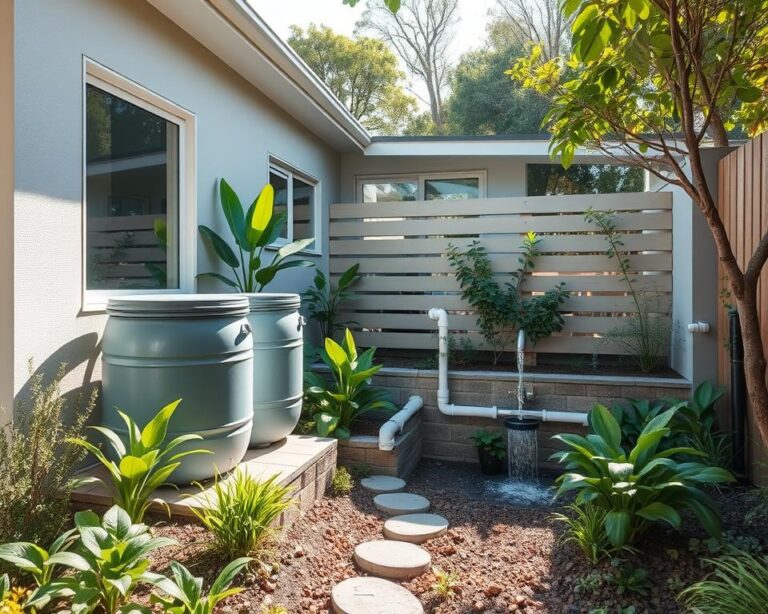
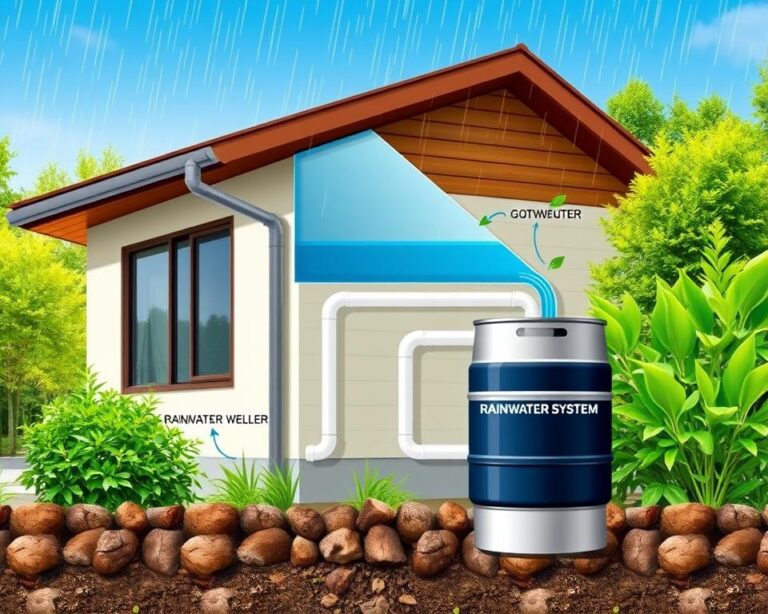
Rain barrels catch water from your roof to use later. They are available in sizes from 40 to over 100 gallons. They’re placed under downspouts and have an overflow path and a screen to block debris and bugs.
Rain barrels can be used with gravity watering or connected to a pump for drip systems and hoses. This lowers the need for clean water and reduces storm runoff. In places like California and Colorado, you can get rebates for collecting rainwater.
Keep rain barrels working well by cleaning screens, preparing them for winter, and ensuring they’re secure. Adding a first-flush diverter removes debris and makes the water better for your garden.
Rain Barrels
Put your rain barrel on a solid base to get more water pressure. Use filters for watering sensitive plants. Always check your local rules about using rainwater, especially for veggies.
Greywater Recycling Systems
Greywater systems take used water from your home and use it for watering plants. They can be simple, like sending washing machine water to your yard, or more complex with filters and underground pipes.
In dry areas, these systems greatly reduce the need for tap water outside. States like California and Arizona have rules to follow. Make sure the water goes underneath the ground and doesn’t remain on the surface.
Key parts of a greywater system include a switch valve, a rough filter, maybe a pump, tubes for water flow, and areas covered with mulch or underground emitters. It’s important to use plant-safe soaps and detergents.
| Feature | Rain Barrels | Greywater Systems |
|---|---|---|
| Typical Capacity | 40–100+ gallons | N/A — continuous flow from household sources |
| Best Uses | Ornamentals, hand-watering, small drip lines | Subsurface irrigation for shrubs, lawns, nonedible landscapes |
| Installation Complexity | Low — DIY friendly | Medium to high — professional recommended for complex systems |
| Maintenance Needs | Screen cleaning, winterizing, check overflow | Filter checks, line inspection, diversion valve maintenance |
| Regulatory Notes | Often eligible for municipal rebates and incentives | Subject to state and local codes; follow health guidelines |
| Compatibility with Water-Saving Irrigation Systems | Feeds drip systems and soaker hoses effectively | Integrates with subsurface drip and mulch basin networks |
Both systems, rain barrels and greywater recycling, are good for the environment when used with efficient irrigation. Planning well, following safety and local laws, ensures savings.
Maintenance of Irrigation Systems
Keeping your home irrigation system in tip-top shape is crucial. It avoids wasting water, cuts down on repair bills, and boosts irrigation efficiency.

Regular Check-ups
Check your system each month during the watering season and after big storms. Look for any issues like clogged or misaligned sprinklers, leaks, or low pressure signs. Make sure to test the controller and that valves are working right.
Do performance checks yearly. This includes measuring how evenly your system waters, checking pressure, and filling in any gaps in coverage. Also, make a schedule to check rain and soil moisture sensors.
Write down what you do for maintenance. Having logs, maps, and records helps find problems faster. You can fix small things yourself but get a pro for bigger issues.
Seasonal Preparations
Begin spring with a thorough system check. Turn the water on, clean filters, and make sure everything’s working. Fixing small problems early on makes the system work better when it’s needed most.
Adjust settings for summer. Increase watering as needed, watch for leaks, and use smart controls for watering while away. These actions keep watering even and prevent waste.
Get ready for colder months if you live where it freezes. Turn the system off and use compressed air to clear the pipes. After winter, check for any damage and get everything set for spring.
Local Water Regulations and Guidelines
Local rules help guide how we use water outside. Cities set watering schedules and rules based on your address to save water when it’s dry. This helps make watering our yards more efficient and mindful.
Understanding Watering Restrictions
Watering restrictions often include specific days for watering, bans during droughts, and nighttime sprinkler use limits. If you have a drip system or new plants, you might not have to follow some rules. But it’s best to check your local rules.
Breaking these rules can lead to warnings, fines, or even mandatory checks on your irrigation. When water is scarce, some uses might be cut down or stopped to save water for more important needs.
Officials use a set of rules to decide how water is used – for drinking, nature, or farming. For more info on how these choices are made, check out Ontario’s guidance on water use priorities.
Resources for Homeowners
Water districts give rebates for water-saving tools like smart sprinkler controllers and rain barrels. This is through programs in places like Southern Nevada, Southern California, and Austin. They help you save water and manage your yard better.
Universities offer advice tailored to your region. The University of California and Texas A&M give tips on what to plant and when to water. This helps reduce outdoor water use.
There’s help available to make watering your yard smarter. You can find ET calculators, savings tools, and apps for scheduling. Also, there are directories to find certified help for installing these systems right.
| Resource Type | What it Offers | How it Helps |
|---|---|---|
| Water District Programs | Rebates for smart controllers, nozzles, rain barrels | Reduces costs and encourages upgrades to conserve water with smart irrigation |
| University Extensions | Region-specific planting and scheduling guides | Improves watering timing and plant selection for better home irrigation efficiency |
| Professional Directories | Certified auditors and installers, contractor locators | Provides vetted help for audits, system upgrades, and compliance |
| Digital Tools | ET calculators, WaterSense tools, smart controller apps | Enables data-driven schedules and monitoring to cut waste |
| Legal & Safety Guidance | State plumbing codes, rainwater and greywater rules | Ensures compliant alternative water use and safe installations |
Future Trends in Home Irrigation
Home irrigation is getting smarter, with systems that save both water and time. Innovations include IoT sensors and controllers that use weather data. These technologies work with efficient nozzles and emitters to reduce water waste.
Materials and designs are also advancing. We now have durable driplines, self-cleaning emitters, and filters that prevent clogs. Smart home features, like voice control and analytics, let users manage their water use better. They can easily track and improve their system’s efficiency.
Climate change is making us adapt faster. With unpredictable rainfall and more droughts, irrigation schedules need to be flexible. Smart sprinklers and soil sensors help shift from set schedules to watering based on plant needs.
Landscape and policy changes are coming too. We’re moving towards plants that need less water and lawns that reduce runoff. Rebates and programs encourage using WaterSense products and making systems more efficient. These changes help homeowners save money and support water conservation efforts.