
Are you ready to give your home a fresh, new look? We’ll show you 10 creative upcycling ideas that can turn trash into treasure. By focusing on reusing and recycling, you can make old items stylish again. Plus, it’s a great way to reduce waste. Upcycling not only improves your home but also supports a greener lifestyle. Let your creativity shine and join us on this exciting upcycling adventure!
Key Takeaways
- Upcycling allows you to creatively repurpose old items into new decor.
- These eco-friendly crafts contribute to sustainability by reducing waste.
- Transforming furniture can bring unique character to your home.
- Incorporating upcycled items reflects your personal style and values.
- Engaging in upcycling projects can save you money while enhancing your space.
- Upcycling encourages mindfulness and resourcefulness in your daily life.
What is Upcycling and Why You Should Care?
Upcycling lets you turn trash into treasures. It adds value to things that would otherwise be thrown away. By finding upcycling ideas, you make your home look good without creating waste.
Understanding Upcycling
Upcycling transforms old items into something new and useful. An unused chair can become a cool plant stand. Or, glass jars might turn into lovely storage. These eco-friendly crafts boost your creativity and make you see waste differently. See the potential in what seems like trash with sustainable DIY projects.
Environmental Benefits
Upcycling is great for the planet. It lowers the amount of trash piling up in landfills. You also use fewer natural resources, which is better for the earth. Every upcycling project you do helps reduce your impact on the environment.
Cost-Effective Solutions
Upcycling is easy on your wallet. You might not know you can create beautiful things with items you already have. This approach saves you money and unleashes your creative side. With sustainable DIY projects, you can design unique items that reflect your taste and save cash.
Upcycling Furniture: Transforming Old Pieces
Upcycling furniture is a great way to add your touch to your home. It lets you turn old items like wooden chairs, a used dresser, or an outdated coffee table into something special. You’ll find lots of DIY upcycling projects to try. Here are three fun upcycling ideas that can make these common furniture pieces into amazing recycled home decor.
Revamping Wooden Chairs
Revamping wooden chairs is a creative and comfy project. Here’s how to start:
- Sanding the surface to remove old paint or stains.
- Applying a fresh coat of paint or stain to match your room’s color scheme.
- Adding new cushions or upholstery for a pop of color and comfort.
These steps let you customize your chairs. They mix style with practicality perfectly.
How to Make Over a Dresser
A dresser makeover can transform your bedroom. Kick off with these upcycling ideas:
- Repainting the dresser in a cool color or finish.
- Replacing old hardware with modern knobs and handles.
- Incorporating contact paper on drawer fronts for a stylish edge.
This makeover not only looks good but also offers unique storage options.
Upcycling Coffee Tables
Turning coffee tables into standout pieces can upgrade your living room. Try these ideas:
- Applying decoupage with decorative paper or fabric for a creative flair.
- Using mosaic tiles to make an eye-catching tabletop.
- Paining it for a new look while maintaining its structure.
With these DIY upcycling projects, your coffee table will spark conversations. It shows off your crafty side and your unique style.
Creative Decor Ideas for Your Living Space
Transforming your living space into something special can be fun. It’s exciting to use upcycling ideas to add your own touch. Doing eco-friendly projects helps the planet and makes your home look great.
Using Glass Jars as Candle Holders
Glass jars are great for holding candles and making a room feel cozy. You can decorate them with paint, twine, or pretty paper. Putting them on shelves or tables makes any space welcoming.
Making Wall Art from Old Magazines
You can turn old magazines into beautiful wall art. Just cut out colorful pictures or cool text and make a collage. This fun project lets you decorate your walls and recycle at the same time.
Repurposing Picture Frames
Picture frames are full of upcycling possibilities. Just painting an old frame can make it look new. Use it to display fabric or art for a personal touch. Upcycling frames is a great way to be eco-friendly and creative.

| Repurposing Projects | Materials Needed | Benefits |
|---|---|---|
| Glass Jar Candle Holders | Glass jars, paint, twine | Easy to personalize, eco-friendly |
| Wall Art from Magazines | Old magazines, glue, scissors | Creative expression, upcycling |
| Updated Picture Frames | Old frames, paint, fabric scraps | Unique decor, sustainable solution |
Upcycling in the Kitchen: Innovate and Organize
The kitchen is a great place for upcycling ideas. With creativity and effort, we can turn trash into useful DIY projects. These projects keep our kitchen tidy and help the environment.
Turning Bottles into Kitchen Storage
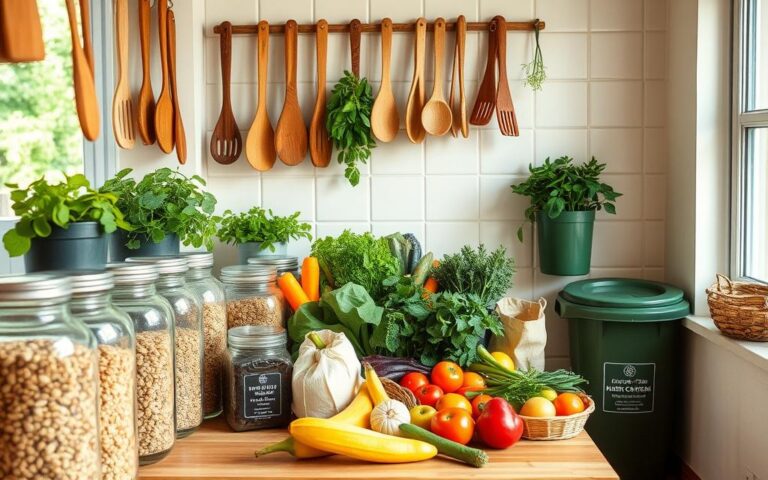
Old bottles have lots of uses. First, clean and label them for storing foods like pasta and spices. Use bottles of different sizes and colors to decorate your shelves. Chalkboard labels are a smart touch for identifying contents easily.
Creating Herb Gardens from Old Containers
Old containers can be turned into mini herb gardens. Drill holes in the bottom for water to get out. Fill them with soil, add herb seeds, and water them. Place them near a window to make your kitchen look great and add fresh tastes to your food.

| Project | Materials Needed | Steps |
|---|---|---|
| Turning Bottles into Storage | Old bottles, labels, chalkboard paint | 1. Clean the bottles. 2. Label as desired. 3. Fill with dry goods. |
| Creating Herb Gardens | Old containers, soil, herb seeds | 1. Drill drainage holes. 2. Fill with soil. 3. Plant seeds and water. |
Outdoor Upcycling Projects for Your Garden
Turn your garden into a creative haven with exciting upcycling ideas. Repurpose common household items for your outdoor space. These DIY projects are good for the planet and add special charm to your garden.
Creating a Birdhouse from a Milk Carton
Turn a simple milk carton into a charming birdhouse easily. Clean the carton and cut a small entrance. Decorate it with safe paint or twine to catch the eye. This project is eco-friendly and lets you enjoy watching birds closely.
Upcycling Pallets into Garden Furniture
Pallets can be made into beautiful garden furniture instead of being thrown away. With basic tools, make rustic benches or tables that are stylish and useful. Smooth out edges and add a weather-resistant coat to make them last longer. This is a cost-effective and green way to repurpose pallets.
DIY Planters from Old Tires
Old tires can become eye-catching planters. Paint them bright colors and stack them for a vertical garden. This idea reduces waste and brightens up your yard. Plant flowers or herbs in them to boost your garden’s appeal.

Fashion Upcycling: Redefining Your Wardrobe
Fashion upcycling lets you refresh your clothes in a creative way. It turns old clothes into new, stylish pieces. This approach is both neat for your style and good for Earth.
Transforming Old T-Shirts into Tote Bags
Turning old t-shirts into tote bags is a fun project. You don’t need to sew, just cut the fabric. It’s a simple way to reduce waste and gain a handy bag for shopping.
Repurposing Jeans into Fashionable Accessories
Repurposing jeans is a smart way to update your look. You can make bags, wallets, or headbands from old denim. Each creation is unique, showing off a cool style and your eco-awareness.
Kids’ Crafts: Fun Upcycling Ideas for Children
Getting kids involved in creative activities boosts their imagination and teaches important sustainability lessons. Upcycling is a great way to turn everyday items into fun toys and games. It makes kids think about their environment in a creative way and have fun at the same time. Check out these environmentally friendly crafts great for young creators.
Making Toys from Recycled Materials
Kids can make cool toys from recycled stuff. For instance, a cereal box can turn into a puppet theater for shows. And bottle caps can be game pieces or used in a sorting game, helping with motor skills and creativity. These projects teach kids to be resourceful and creative, making something new from potential waste.
DIY Games from Cardboard Boxes
Cardboard boxes are great for making DIY games. You can make a tic-tac-toe board from a big box for a fun activity. Or create a race track for toy cars from cut and decorated boxes. These projects encourage teamwork, thinking skills, and activity, showing the value of recycled materials in creative work.
Upcycling Tips and Tricks for Beginners
Starting with upcycling can be both rewarding and enjoyable. For beginners, it’s important to have the right tools. These tools help turn everyday items into beautiful, useful pieces. This is done using sustainable DIY methods. Here are some insights to guide you.
Tools and Materials You Will Need
Gathering a basic toolkit is your first step before starting upcycling projects. Essential tools and materials you’ll need include:
- Scissors for cutting fabric, paper, or cardboard.
- Adhesives, such as glue or tape, for assembling your creations.
- Paints to add a personal touch and complete the look of your projects.
- Sandpaper for smoothing rough edges on wooden materials.
Sourcing Items for Upcycling
Looking for materials to upcycle can feel like an exciting search. You might want to check out:
- Thrift stores often provide a wealth of unique objects perfect for thrift store crafts.
- Garage sales can offer inexpensive materials and one-of-a-kind items.
- Your own home is a goldmine for discarded items that could be repurposed creatively.
By using the tools suggested and finding materials, you can start your sustainable DIY path. This allows you to explore your creativity through upcycling.
Inspiring Upcycling Success Stories
Many brands and communities have awesome success stories about upcycling. They’re turning old stuff into stylish, useful products. Companies like Reclaimed Wood Exchange and TerraCycle are doing great by using repurposed materials. Their work not only makes waste valuable again but also encourages people to see trash differently.
When you join in community projects, you make a bigger difference. You can try local workshops, clean-ups, or group art projects. These activities are perfect for meeting others who care about the planet like you do. Working together boosts the positive impact on the environment and gives you new ideas too.
If you love DIY or are curious about upcycling, these stories can give you a boost. It’s your chance to get involved or start something in your community. This way, you and others can make your upcycling projects even better.
FAQ
What is upcycling?
How can I start with upcycling projects?
What are some eco-friendly crafts I can make?
Why should I consider upcycling furniture?
Can upcycling help reduce waste?
What are some fun upcycling ideas for kids?
How can I find inspiration for my upcycling projects?
What tools do I need to start upcycling?
Are there any notable brands in the upcycling movement?
Practical Implementation Layer
This section was added to increase user value with clearer execution steps and measurable outcomes.
How to Apply This Guide
- Define your objective and success metric
- Apply recommendations in a controlled sequence
- Document results and refine weak steps
- Repeat with small iterative improvements
Common Execution Mistakes
- Applying multiple changes at once without measurement
- Skipping baseline and relying on assumptions
- Not adapting recommendations to local constraints
Content Quality Boost: 2026-03-05
Article Trust & Methodology
Author: Rosalie Clark
Editorial Review Date: 2026-03-05
Purpose: Deliver practical, user-first guidance with clear limitations and realistic implementation steps.
How this article was prepared
- Topic intent mapping based on common reader problems
- Step-by-step structure with measurable checkpoints
- Risk notes and scenario-based adjustments
- Readability review for mobile and desktop
Who this article is for
This content is for everyday readers who need practical decisions they can apply safely and consistently, not theoretical advice only.
Sources and validation approach
Recommendations are organized around established best-practice principles (measurement, controlled testing, and periodic review). Readers should adapt guidance to local regulations, climate, infrastructure, and budget constraints.
For editorial standards and correction requests, see Editorial Policy and contact contact@everydaytechfinance.com.
Final Implementation Notes
For best outcomes, avoid changing multiple variables at once. Build a small decision log, review results weekly, and keep only changes that improve measurable outcomes over time. Consistency and clarity are more important than intensity.